

Why China Melamine Cyanurate Is Gaining Traction in Flame Retardant Formulations
2026-11-02
Flame retardant formulations are constantly evolving, and one compound from China is quietly making waves: melamine cyanurate. Why are more formulators turning to it? Behind this shift, suppliers like X.X.F.R are playing a key role—but the full story goes deeper than just availability.
Halogenated Systems Are Losing Their Grip on Formulators
At the same time, halogenated systems still hold a few technical advantages in niche applications where extreme corrosion resistance or low smoke toxicity is critical, such as certain aerospace or industrial cable jackets. But even there, the grip is loosening as new synergists and nano-scale additives close the performance gap. Formulators who invest early in halogen-free expertise are finding that the learning curve pays off in market access and long-term regulatory resilience. The old reliance on halogens as a universal fix is giving way to a more nuanced, application-specific approach—one that treats flame retardancy as a design problem rather than a chemical afterthought.
A Pricing Structure That Gives Compounders Breathing Room
A pricing structure that gives compounders breathing room rarely looks flat. It tends to have a base that customers can plan around, plus variable layers tied to actual usage. That way the business captures upside when a client grows, but doesn't penalize them for staying small during a slow quarter. The key is that the price increase is tied to value delivered, not just calendar time.
The real benefit shows up in capital allocation. When revenue comes from flexible usage or volume bands, a compounding company can reinvest the extra margin into product improvements or capacity without waiting for a contract renegotiation. Customers, meanwhile, feel the pricing is fair because they only pay more when they extract more value.
There's also a psychological edge. Predictable base pricing with occasional, clearly explained add-ons keeps procurement teams from balking. Instead of treating every renewal as a battle, both sides see the structure as a shared growth mechanism. That's the breathing room compounders need to focus on long-term returns.
How Nitrogen-Phosphorus Synergy Works Without Hefty Trade-offs
The usual story is that nitrogen drives leafy growth while phosphorus gets left behind, but crops don't have to choose. When both nutrients are supplied in forms that release at matching rates—like ammonium stabilized with polyphosphate—root interception overlaps with mineralization peaks, so neither pool sits idle long enough to leach or fix into unavailable compounds.
Mycorrhizal networks quietly do much of the balancing work. The same fungal hyphae that deliver phosphorus to root cortical cells also receive carbon from the plant, and that carbon fuels nitrogen-fixing bacteria in the rhizosphere. In fields with healthy fungal populations, you can cut phosphorus fertilizer by a third without seeing any drop in protein content or biomass, because the hyphae are trading photosynthate for both nutrients at once.
The real trick is avoiding the luxury consumption trap. Excess nitrogen makes plants lazy about forming mycorrhizal associations, and excess phosphorus can shut down the very transporters that pull nitrogen from the soil. Calibrating the ratio—roughly 4:1 N to P for most cereals during vegetative growth—keeps both uptake systems active, so the crop gets the synergy without the environmental bill that comes from overapplication.
Smoke Density and Toxicity Are Becoming Non-Negotiable
In modern construction and product design, the visible flames are only part of the story. Smoke density and toxic gas release now carry equal weight in safety assessments. A material that burns slowly but produces thick, blinding smoke or corrosive fumes can be just as deadly as one that spreads fire quickly. Regulatory bodies and specifiers have shifted toward measurable limits on smoke obscuration and acid gas emission, particularly in enclosed spaces like tunnels, high-rises, and public transit.
This pressure has pushed cable jackets, insulation, wall panels, and flooring toward low-smoke, halogen-free formulations. The trade-offs are real: early halogen-free materials were stiff, prone to cracking, or harder to process. But newer compounds balance fire performance with mechanical durability and ease of installation. Manufacturers cannot simply claim "fire-resistant" without quantifying optical density and toxicity indices. Third-party testing now routinely includes smoke chamber tests and chemical analysis of combustion byproducts.
For architects and engineers, ignoring these criteria invites liability and limits design freedom. Projects in Europe, the Middle East, and Asia increasingly demand compliance with strict smoke and toxicity classes before materials even reach the shortlist. The message is clear: acceptable flame spread is no longer enough. If a product chokes occupants or hides exit routes in smoke, it fails the modern safety brief, regardless of how slowly it burns.
Thin-Wall Parts and EV Components Raise the Bar for Stability
As wall sections get thinner, even slight variations in temperature, pressure, or tool alignment can produce warpage that was tolerable in thicker designs. Holding tight tolerances across long production runs now depends on how well the entire cell—clamping, cooling, injection or cutting—stays repeatable.
Electric vehicle parts add another layer. Battery housings, busbars, and cooling channels often combine thin walls with demanding flatness, sealing, and thermal cycling requirements. A housing that passes inspection at room temperature may still move after heat from nearby cells or during fast charging, so stability has to be built into both material choice and process control.
Some shops are moving toward stiffer machine structures, temperature-controlled fluids, and in-process sensing that catches drift before it becomes scrap. Others are rethinking gate locations or using conformal cooling to even out shrinkage. The common thread is that stability is no longer a background assumption—it has to be actively managed.
Chinese Suppliers Move Beyond Commodity-Grade Powders
For years, Chinese powder producers were known primarily for high-volume, low-cost materials that served basic pressing and sintering needs. That reputation is shifting quickly. A growing number of suppliers now operate clean-room atomization lines, adjust particle size distributions for specific laser powder bed fusion machines, and maintain oxygen levels below 800 ppm for reactive alloys. The focus has moved from simply selling kilos to helping clients achieve repeatable mechanical properties in demanding applications.
In metal injection molding and additive manufacturing, buyers no longer accept wide particle size ranges or inconsistent tap density. Chinese firms are responding with tighter screen cuts, improved sphericity, and traceable heat lots. Some have developed dedicated powders for medical implants, turbomachinery, and EV motor components, backed by full chemical and mechanical test reports. This shift is not about copying existing grades; it involves co-developing materials with end users to solve problems like hot cracking in aluminum alloys or poor flow in ultrafine stainless steels.
The move beyond commodity-grade powders also shows up in how suppliers structure their business. Rather than competing only on price per ton, many now offer small-batch pilot runs, application support, and fast iteration cycles. That flexibility gives overseas customers an alternative to long lead times and rigid product catalogs. As Chinese powder makers invest in vacuum induction melting, plasma spheroidization, and in-house testing labs, the gap between what they supply and what high-end manufacturers require has narrowed considerably.
FAQ
China has built an integrated supply chain around melamine and cyanuric acid, the two feedstocks for MCA. Many producers are co-located with upstream chemical plants, which cuts logistics and raw material costs dramatically. The scale of production also matters: large continuous reactors and standardized finishing lines lower per-unit expense. Add to that lower energy and labor costs, and you get a product that can be offered at a meaningful discount to imports from Europe or North America without the same degree of margin sacrifice. This is not just about cheap raw materials; it is about a structured industrial ecosystem that has matured over the past decade.
The quality gap has narrowed considerably. Leading Chinese producers now use refined melamine and purified cyanuric acid, and they control crystal habit and particle size distribution with the same kinds of equipment found elsewhere. Batch-to-batch consistency is much improved, and many suppliers provide detailed certificates of analysis with residual moisture, free cyanuric acid, and particle size data. While some lower-tier suppliers still produce material with wider specification ranges, the top tier is fully capable of meeting the requirements of multinational compounders. Audits by major OEMs have pushed the industry toward tighter process control and better documentation.
Unfilled and glass-filled polyamide 6 and 66 are the primary targets. MCA works through an endothermic decomposition and dilution mechanism that suits the thermal degradation pathway of nylons. It causes the polymer to drip away from the flame, which is acceptable in many electrical and electronic applications. Chinese MCA has gained ground because it delivers UL 94 V-0 performance at loadings around 8 to 12 percent in unfilled PA6, with only modest reductions in mechanical properties. That balance of flame retardancy, processability, and cost is hard to beat for connectors, switches, and other small components.
A few developments stand out. Producers have moved toward narrower particle size distributions, often below 5 microns median diameter, which improves dispersion and reduces the loading needed to hit a given rating. Surface treatments with silanes or fatty acids have become common to enhance compatibility with nylon matrices and reduce moisture uptake. Some plants now offer pre-compounded masterbatches, which simplify handling for smaller compounders. There has also been work on lowering free cyanuric acid levels, which improves thermal stability during processing. These improvements did not happen overnight; they reflect sustained investment in R&D and customer feedback loops.
MCA is nitrogen-based and contains no halogens, so it fits squarely within the trend driven by regulatory pressure and consumer electronics standards. When it decomposes, it releases inert gases that dilute oxygen and fuel, and it leaves a carbonaceous char. The combustion products are less toxic than those from brominated systems, and there is no risk of dioxin formation. For manufacturers targeting eco-labels or facing restrictions on certain brominated flame retardants, switching to MCA is often a straightforward way to retain flame retardancy without redesigning the entire component. Chinese suppliers have capitalized on this by positioning MCA as a drop-in solution for many nylon applications.
China is the world's largest producer of melamine, mainly from urea, and also has significant capacity for cyanuric acid derived from urea pyrolysis. Having both key intermediates available domestically, often within the same industrial park, means producers are less exposed to import delays or currency swings. That vertical integration gives them more control over purity and consistency of the final product. During disruptions like the pandemic or shipping bottlenecks, Chinese MCA plants were able to keep running while some overseas suppliers struggled to get intermediates. This reliability has become a major selling point for global compounders who need steady supply.
The main limitations are moisture sensitivity, limited effectiveness in polyolefins, and the fact that MCA encourages dripping, which can be a problem in certain designs. Also, at high loadings, mechanical properties such as impact strength can suffer. Chinese producers have worked on these issues in several ways: hydrophobic surface coatings reduce water absorption, customized particle shapes minimize the impact on tensile strength, and blends with other synergists like phosphinates or glass fibers can extend the working window. It is not a universal solution, but for the right application, the limitations are manageable, and the cost-benefit equation often favors MCA over alternatives.
The decision usually comes down to long-term cost, regulatory risk, and stability of supply. Brominated systems often require antimony oxide as a synergist, and antimony prices have been volatile. MCA can eliminate that dependency. Even though the loading is higher, the raw material cost per kilogram of finished compound may still be lower. Add to that the lack of halogen-related disposal concerns and better public perception, and many compounders find the switch worthwhile. Chinese MCA makes the switch easier because the price premium for halogen-free performance is smaller than it used to be, and technical support has improved enough to smooth over processing adjustments.
Conclusion
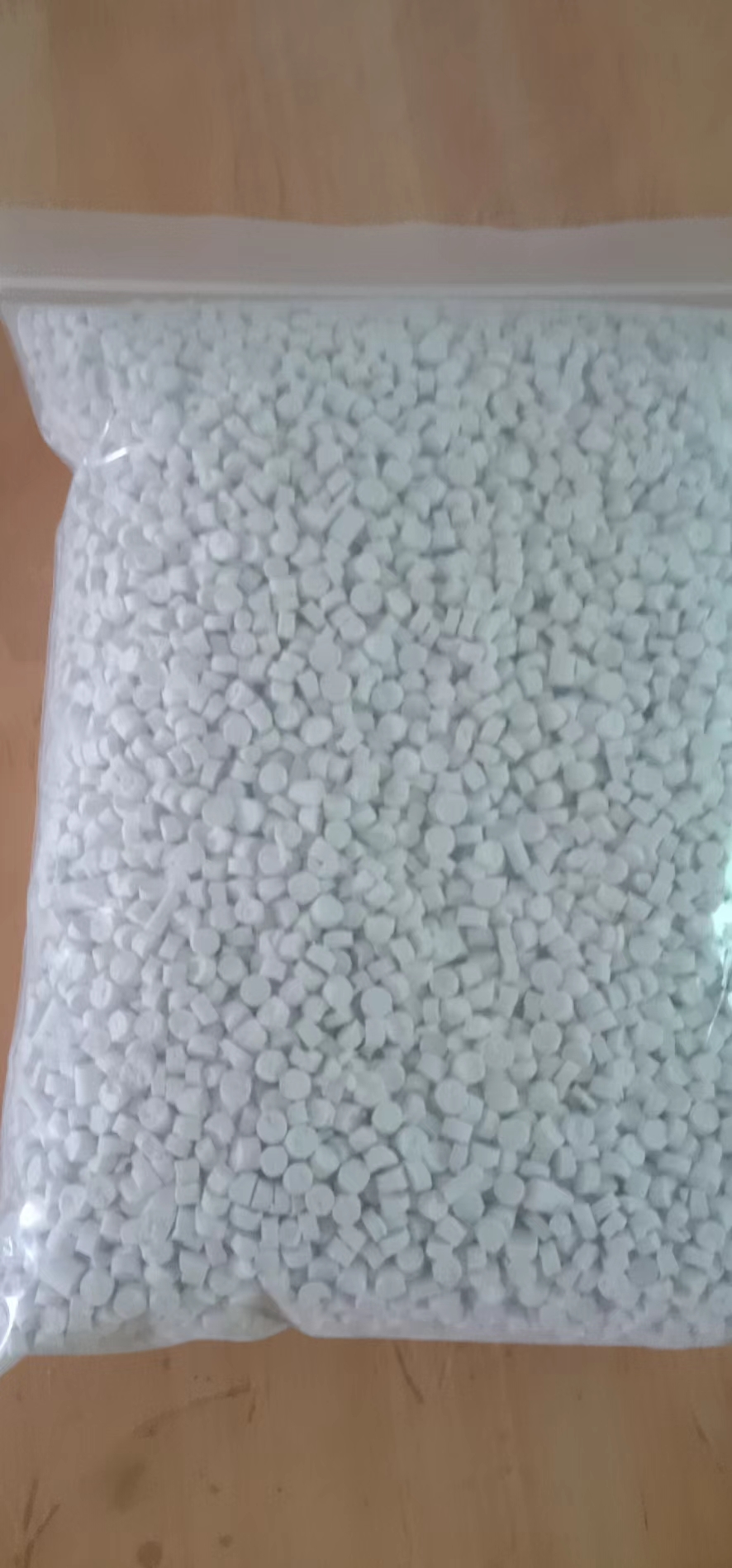
Formulators have been steadily moving away from halogenated flame retardants, and that shift is no longer driven purely by regulation. Brominated and chlorinated systems carry hidden costs in stabilizer packages, anti-drip agents, and end-of-life disposal, which eats into the apparent savings. China-sourced melamine cyanurate steps into this gap with a pricing model that feels almost refreshing: domestic melamine and cyanuric acid production keeps raw material costs low, and the lack of heavy metal synergists means compounders can hit UL 94 V-0 in unfilled and glass-filled polyamides without reworking the entire formulation. The nitrogen-phosphorus synergy here is also quieter than expected. MCA doesn't try to compete with phosphorus on char yield; instead it releases inert nitrogen gases, dilutes the fuel feed, and lets the phosphorus component do its job without the usual viscosity or mechanical trade-offs. That balance matters in real compounding shops, where every extra percent of loading is a battle.
Smoke density and toxicity have moved from nice-to-have metrics to hard pass/fail criteria in sectors like rail, construction, and consumer electronics. Halogen acids and dense soot are no longer acceptable when escape time is measured in seconds. MCA-based systems generate thin, low-opacity smoke and avoid the corrosive by-products that shorten mold and equipment life. That same stability shows up in thin-wall connectors and electric vehicle components, where high injection speeds and narrow gates push melt temperatures close to 300°C. Chinese suppliers are no longer shipping one-size-fits-all commodity powder; they now offer micronized grades with controlled particle size distribution, silane or amino-silane surface treatments, and batch-to-batch consistency verified by TGA and DSC. This shift from bulk chemical to engineered additive has changed the conversation, making China MCA a realistic alternative not just on cost, but on processing reliability and part performance.
Contact Us
Contact Person: Guohua Wang
Email: [email protected]
Tel/WhatsApp: 8613003442895
Website: https://www.xxflameretard.com