

Which China Biostimulant Is Truly Reliable?
2026-08-14
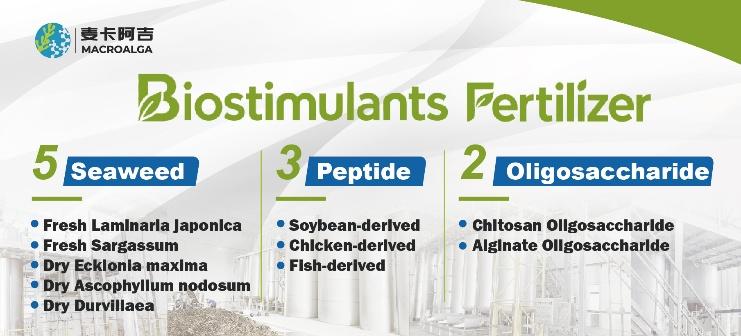
Every grower has faced the same dilemma: a shelf full of biostimulants, each claiming to be the missing piece for healthier crops, yet so many fall short when tested in real soil. The real question isn't whether China produces effective biostimulants—it's which one has earned trust through consistent field results rather than marketing noise. If you've been burned before by vague promises or inconsistent quality, you're not alone. That's exactly why we took a closer look at the options, and one name kept surfacing among growers who demand evidence over hype: MacroAlga. Before you place your next order, let's cut through the clutter and examine what actually separates a reliable biostimulant from a costly gamble.
Where Do Cheap Biostimulants Hide Their Weaknesses?
The first place to look is the raw material sourcing. Many budget products rely on hydrolyzed waste streams or unstandardized plant extracts, where the concentration of active molecules fluctuates wildly from batch to batch. This inconsistency rarely shows up on a label, but it becomes obvious in the field when one tank mix delivers a visible response and the next does nothing. Manufacturers often mask this variability by blending in cheap fillers or boosting the nitrogen content, so a quick NPK reading can mislead you into thinking the product is more potent than it actually is.
Another weak point sits in the formulation stability. Low-cost biostimulants are frequently shipped as simple liquid suspensions that settle, clog nozzles, or lose efficacy after a few weeks in storage. Without proper chelation or encapsulation, active ingredients like amino acids, seaweed polyphenols, or microbial metabolites degrade quickly under heat or UV exposure. You won’t see this on a spec sheet, but it shows up as uneven coverage, reduced shelf life, or the need to agitate the tank constantly.
The third weakness is in the supporting data. Cheap options usually come with generic claims or a single cherry-picked trial from an unfamiliar location, rather than replicated field studies across multiple seasons and soil types. When you dig into the fine print, the application rates are often inflated to compensate for low purity, which erases the initial price advantage. In the end, the hidden costs appear as repeat applications, inconsistent crop response, or extra labor for tank cleaning and filter changes.
The Testing Gap Many Importers Never Notice
Most importers assume that passing a few standard lab tests means their product is ready for the market. They check for lead in paint, maybe run a basic durability trial, then sign off. The problem is that real-world use rarely mirrors lab conditions. A toy that survives a drop test on concrete still might crack after a week in a child's humid playroom. A kitchen gadget that passes a heat-resistance check could warp when stacked in a hot shipping container for three weeks. These are the gaps nobody writes down on a spec sheet.
The real testing shortfall often hides in interaction, not isolation. A zipper works fine until it meets the fabric it's sewn into. A phone case survives drops but the button covers start peeling after repeated pocket friction. Importers rarely test how components behave together over time, or how materials age under combined stress—sunlight plus moisture plus repetitive use. By the time customers notice, the batch is already sold, and the return requests start trickling in. That's when the hidden cost of a shallow testing protocol shows up.
The fix isn't more tests per se, it's smarter scenario mapping. Walk through a full day in the life of your end user. Where does the product sit, get bumped, get cleaned, get dropped, get left in a car? Then test those specific sequences—not just individual failure points. One importer who did this discovered their enamel mug chipped not from impact, but from being stacked inside each other after washing. A single change to the rim profile solved a problem no standard test would have caught. That's the kind of gap that quietly separates profitable imports from costly callbacks.
A Crop-Specific Way to Judge Reliability
Judging reliability across all crops with one metric is like trying to size every shoe with the same last. Corn and soybeans, for example, both respond to summer rainfall, but corn's most fragile period is the week around tasseling, while soybeans can recover from a dry spell until pod fill begins. A reliability score that lumps them together hides which crop actually gets the forecast right when it matters.
A more honest approach separates the error analysis by crop. Take at least five years of yield monitor or trial data, then calculate the mean absolute error for each crop individually. Divide that error by the crop's own historical yield swings. A sorghum forecast that misses by 12 bushels per acre may look worse than a rice forecast that misses by 6, but if sorghum routinely swings 20 bushels and rice only 4, the sorghum prediction is actually the more reliable one.
Farmers already do this in their heads. A tomato grower under contract cares less about the precise total than about whether the model predicts the two-week harvest window for canning. A grape grower wants the frost alert to catch the one cold night in April. Crop-specific reliability means weighting each error by its cost at that crop's decision points, not by a generic R-squared printed in a dashboard.
Why Lab Data Alone Won't Save Your Harvest
Lab readings give you numbers, but they can’t tell you how roots are actually pulling water from the soil, or whether stomata stayed shut during a heat spike. A leaf analysis might show a magnesium deficiency, yet the real culprit could be compacted soil preventing uptake—no spreadsheet will point that out.
Field observations, weather microdata, and the feel of the crop at dawn matter just as much. Relying only on lab panels often leads to chasing isolated values while the orchard or field sends clearer signals through canopy color, sap flow, and fruit firmness. Let the lab inform your hunches, not replace them.
How to Spot Overhyped Formulations Before You Buy
The fastest way to cut through hype is to ignore the front of the bottle and read the ingredient list like a formulator. If a product screams "miracle" but the first five ingredients are water, glycerin, and thickeners, the star ingredient is likely there for label appeal, not efficacy. Look for compounds with established concentration ranges—retinol below 0.1%, vitamin C under 5%, or hyaluronic acid as a trace amount will not transform your skin no matter how many times the ad says "potent."
Another red flag is a clinical claim that lacks specifics. Phrases like "clinically proven to reduce wrinkles" mean little if there's no mention of study size, duration, or whether results were measured by machines or self-assessment. Overhyped formulas often lean on consumer perception surveys where 70% of 20 people "felt" smoother skin. Real evidence comes from independent, peer-reviewed research, not a PDF on the brand's website with a stock photo of a woman in a lab coat.
Finally, watch for pricing that doesn't add up. If a serum claims to contain 15% L-ascorbic acid, 1% retinol, and a novel peptide complex but sells for $12, the math is suspicious—raw material costs alone would exceed that. Genuine high-performance actives are not cheap, and brands that undercut the market usually dilute, destabilize, or substitute with cheaper analogues. Cross-check with third-party reviews that mention texture, smell, and long-term results, not just immediate glow.
The Real Difference Between Consistent and One-Season Products
A consistent product earns its place through repetition. You come back to it not because a new version dropped, but because the old version still works. The seams don’t show, the interface doesn’t fight you, and the promise made on day one is the same promise kept on day three hundred. This reliability isn’t accidental—it’s the result of choices made behind the scenes: the team says no to shiny detours, the roadmap is guarded against trend-chasing, and the user’s trust is treated as the actual product.
A one-season product, by contrast, runs on novelty. It spikes because it fills a gap no one saw coming, or because it captures the mood of a particular moment. But the moment passes, and the product has nothing underneath it. The novelty was the entire structure. Without a reason to return, without a layer of quiet dependability, the once-hot item becomes clutter. Users don’t hate it—they simply forget it. The difference isn’t marketing or luck. It’s the willingness to build something that can be trusted more than it can be admired.
FAQ
Look beyond glossy brochures. A dependable product usually has a transparent composition, a batch number you can trace, and results from independent field trials conducted over multiple seasons. If the manufacturer hesitates to share the exact active ingredients or only offers vague 'plant energy' claims, treat that as a warning sign.
The market is mixed. You will find plenty of low-cost powders with inflated hormone levels, but a growing segment of manufacturers invest heavily in fermentation technology and extraction processes. The serious players often collaborate with agricultural universities and publish their trial data openly, which separates them from the copycats.
Request a sample and run a small-scale side-by-side trial on your own crops. Also ask for the certificate of analysis from an accredited lab, not just the manufacturer's in-house report. Check whether the product has passed tests for heavy metals and pathogen limits according to EU or USDA standards.
Seaweed extracts from cold-water species like Ascophyllum nodosum, enzymatically hydrolyzed animal proteins, and fermentation-derived amino acids tend to be more consistent than chemically hydrolyzed alternatives. The source matters less than the processing method—gentle extraction keeps the active molecules intact.
Watch for exaggerated yield guarantees, missing safety data sheets, unclear expiration dates, and a refusal to provide references from other buyers. Also be cautious if the price is far below the regional average—quality microbial products cannot be produced for pennies.
Certification helps but is not everything. Look for China's organic input certification or compliance with REACH if exporting to Europe. However, many effective products are sold domestically without international certificates. The real test is whether they can show consistent trial data and a stable shelf life under your storage conditions.
Start with a small order and a technical audit—either in person or via video. Ask for a tour of their production line and quality control lab. Reliable manufacturers will welcome questions about fermentation parameters and raw material traceability. Over time, track batch-to-batch consistency and how they handle complaints or reformulations.
Conclusion
The question of which China biostimulant is truly reliable doesn’t have a one-line answer, because most failures hide in places spec sheets never cover. Cheap products often mask their weaknesses through diluted active compounds, unlisted carriers, or raw materials that shift from batch to batch. Many importers never notice a testing gap: they check total amino acid or humic acid content but ignore heavy metals, microbial load, and unintended hormonal activity. That gap becomes dangerous in the field, because lab data alone won’t save a harvest if the formulation behaves differently under heat, hard water, or tank-mix conditions.
A crop-specific way to judge reliability is to ask how the product performs on your own crop, not just in a generic greenhouse trial. Tomato seedlings under salinity stress need a different response than wheat in cool soil, and a supplier that cannot show multi-season, crop-specific data is likely selling a one-season product. Overhyped formulations often hide behind inflated percentages of 'active ingredients' or flashy before/after photos, but consistency across batches is what separates dependable products from lucky results. The real difference shows up in the second and third season: if the product still performs without increasing the dose, the formulation is stable. If not, the original success was probably due to weather or soil conditions, not the product itself.
Contact Us
Contact Person: Kevin ZHANG
Email: [email protected]
Tel/WhatsApp: 8613505438449
Website: https://www.macroalga.com/