

Water Pump Generator Set Manufacturing Concerns: Ensuring Quality and Reliability in Production
2026-05-28
When it comes to sourcing water pump generator sets, manufacturers often focus on specs and price—but what truly separates a lasting investment from a constant headache is the quality and reliability built into every stage of production. At Hichai Power, we’ve seen how small manufacturing concerns can make a huge difference in field performance. In this article, we’ll dive into the behind‑the‑scenes factors that ensure your water pump generator set won’t let you down when it matters most.
Material Integrity and Longevity in Component Selection
Selecting components that can withstand the test of time goes far beyond checking datasheet ratings. It demands a thorough understanding of how materials behave under prolonged stress, thermal cycling, and exposure to operational environments. Engineers must investigate corrosion resistance, fatigue limits, and the subtle ways that seemingly robust alloys can degrade through mechanisms like creep or embrittlement when placed in real-world conditions. This proactive mindset shifts the focus from simple compliance to genuine endurance, ensuring that parts don’t just work on day one but continue performing reliably years later.
One often-overlooked factor is the interaction between dissimilar materials within an assembly. Galvanic corrosion, differential thermal expansion, or chemical incompatibility can silently compromise longevity even when individual components meet all specifications. A thoughtful selection process accounts for these interfaces, favoring material pairings that harmonize rather than fight each other. Additionally, assessing supply chain consistency—such as variations in raw material sourcing or heat treatment—helps avoid premature field failures that cannot be detected during initial qualification.
Real-world feedback loops play a crucial role in refining material choices. Analyzing field returns, performing microstructural examinations of worn parts, and consulting with metallurgists reveal failure modes that no simulation can predict. This empirical evidence guides the adoption of more resilient alternatives, such as switching from standard stainless steel to a duplex grade for improved pitting resistance, or selecting a polymer with better UV stability for outdoor enclosures. By embedding these lessons into design guidelines, teams build an institutional knowledge base that elevates material integrity from a checklist item to a cornerstone of lasting product quality.
Precision Engineering for Consistent Pump Performance
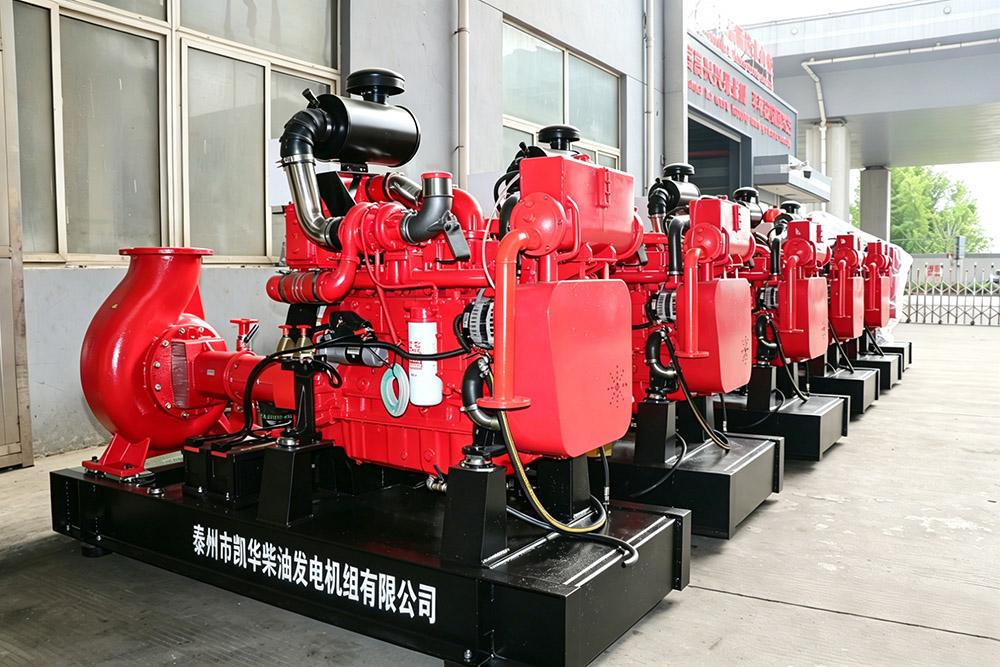
Every component in a high-performance pump is machined and assembled with exacting tolerances, eliminating subtle variations that can quietly erode efficiency over time. From impeller geometry to seal clearances, these precisely controlled dimensions ensure that fluid moves through the system exactly as engineered, cycle after cycle.
Thermal stability of materials and finely balanced rotating assemblies operate in harmony to maintain performance within a narrow band, even under fluctuating loads. This consistency means that output, pressure, and energy consumption stay predictable, allowing plant operators to rely on steady throughput without constant adjustment.
By pairing advanced metrology with a deep understanding of hydraulic behavior, manufacturers create pumps where the initial precision locks in long-term reliability. The result is less unplanned downtime, fewer recalibrations, and a noticeably lower total cost of ownership—all stemming from an almost obsessive attention to dimensional accuracy.
Advanced Quality Checks Across Production Stages
From raw material intake to final packaging, our inspection protocols leave no stone unturned. On the production floor, automated imaging systems scan components in real time, flagging microscopic cracks or dimensional drift before they ripple downstream. These aren't just pass/fail gates; they adapt to subtle shifts in material batches, learning from each new data point to tighten tolerances without constant recalibration.
What really sets us apart is how these checks communicate. A sensor on a stamping press doesn’t just register force—it correlates that reading with incoming coil thickness and tool wear predictions, triggering a mid-run adjustment before a defect pattern emerges. This layered vigilance means our team catches things that conventional audits miss, like a subtle change in surface finish that hints at coolant contamination three steps earlier in the line. It’s not about more inspections, but smarter ones woven into the rhythm of production itself.
Design Adaptations for Real-World Operating Stress
Electronic components rarely encounter the pristine conditions of a laboratory bench once deployed. Real-world environments expose them to thermal extremes, mechanical vibration, humidity, and electrical noise—often simultaneously. To endure these stresses, designs must incorporate adaptations that go beyond nominal specifications. For instance, thermal cycling causes solder joints and connectors to expand and contract at different rates. A robust design might specify high-reliability solder alloys, employ compliant lead-frame geometries, or introduce strain relief in wiring harnesses. Similarly, vibration resistance is achieved not merely by ruggedized enclosures but through careful PCB mounting, such as using multiple standoffs to minimize board flexure and staking heavy components with adhesive to prevent resonant fatigue.
Protection against moisture and contaminants demands more than just adding a conformal coating. Effective adaptation includes selecting inherently moisture-resistant materials for PCB substrates and connectors, designing enclosures with adequate sealing and drainage paths, and testing for condensation survival under rapid temperature changes. For high-voltage systems, altitude-dependent pressure reduction can lead to arcing, so designs often incorporate wider clearance distances and possibly potting to exclude air. In automotive electronics, the combination of wide temperature swings, chemical exposure, and continuous vibration forces a holistic design approach: automotive-grade components rated for -40°C to +125°C are paired with sealed connectors, and the entire assembly undergoes Highly Accelerated Life Testing (HALT) to uncover latent weaknesses before production.
Electrical stress adaptations are equally critical. Power supply designs, for example, must cope with real-world brownouts, load dumps, and transients that far exceed laboratory test patterns. This leads to input protection schemes using TVS diodes, rugged MOSFETs with ample safe-operating-area margin, and control loop compensation that remains stable across a broad range of input voltages and load steps. Even firmware plays a role: adaptive algorithms can derate performance when thermal sensors indicate rising temperatures, or implement graceful shutdown sequences during power disturbances. Ultimately, design for real-world stress is not about over-engineering every component, but rather identifying the intersection of stressors that a product will truly face and embedding targeted countermeasures.
Supplier Collaboration for Reliable Sub-Assemblies
Building sub-assemblies that hold up over time starts long before parts hit the production line. We loop suppliers into design reviews early, not just to review tolerances but to challenge assumptions about material choices, joining methods, and fatigue life that might only surface after thousands of cycles. That kind of back-and-forth, where a supplier’s process engineer can flag a subtle stress riser we overlooked, turns abstract reliability targets into something you can actually hold in your hand.
There’s no substitute for walking the floor together. When our quality team audits a supplier’s process capability, it’s not a checklist exercise—it’s a hands-on session measuring CpK data side by side, co-authoring control plans that lean on their tribal knowledge, and sometimes stripping down a problem batch right on their bench until root cause clarifies. That shared ordeal creates trust that no quarterly business review can replicate.
Long-term agreements alone don’t guarantee consistency; shared incentives do. We structure partnerships so that suppliers benefit directly when field failure rates stay below threshold—meaning they’re just as invested in our end-customer’s uptime as we are. Over time, this aligns everyone’s definition of reliability around actual performance data, not just spec sheets, and pares away safety factors that added cost without adding protection.
Testing Protocols That Simulate Extreme Conditions
Creating a testing protocol that faithfully replicates extreme conditions demands more than just turning up the heat or dialing down the cold. It requires a nuanced understanding of how materials, components, and systems degrade when pushed beyond their design limits. At every stage, engineers must account for synergistic effects—like how thermal cycling combined with vibration can accelerate failure modes that wouldn't appear under a single stressor. This means designing test sequences that not only mimic the worst-case scenarios but also compress years of field exposure into hours or days without producing artificial failure signatures.
One of the most overlooked aspects is environmental sequencing. A device might survive a rapid temperature shift if it starts from room temperature, but the story changes completely when that same shift follows prolonged humidity exposure or salt spray. We've learned to layer these stressors in a deliberate order, pulling data from real-world telemetry to inform the profile. Instead of following generic industry standards, we tailor each cycle based on where and how the product will actually be used, right down to the rate of temperature change and the dwell times at each extreme. That specificity is what separates a robust validation from a box-ticking exercise.
Documentation and interpretation of results are just as critical as the testing itself. A crack that forms during a sustained low-pressure test might be dismissed as a manufacturing fluke, but when correlated with humidity and vibration data from earlier stages, it reveals a systemic weakness. We train our teams to look for those connections, resisting the urge to write off anomalies. By building our protocols around cumulative damage theory and regularly feeding field performance data back into the test design, we continuously refine the conditions to be both aggressive and authentic. It's this iterative, evidence-based approach that uncovers hidden vulnerabilities long before they manifest in the hands of users.
FAQ
We follow a structured quality control process that starts with incoming material inspection. All components, from castings to electrical parts, are checked against specs before assembly. During production, we monitor critical operations like rotor balancing and winding insulation. Finished units go through a full-load test run, where we verify output, vibration, and temperature rise. Any deviations trigger a root cause analysis, and we hold a final sign-off before shipment.
Reliability testing involves several stages. First, we do a dry run without water to check mechanical sounds and bearing temperatures. Then we connect the pump to a closed-loop water system and run it at rated load for at least 8 hours, sometimes longer for bigger units. We simulate real-world conditions by varying the load and checking how the engine and generator respond. Vibration analysis and thermal imaging help catch potential weak points. Only units that pass all checks get a test certificate.
Common issues include casting porosity in pump housings, misalignment between the engine and generator, and poor winding connections. We prevent porosity by using vacuum-assisted casting and doing dye penetrant tests. Alignment is checked with laser tools during assembly. For electrical connections, we use torque-controlled crimping and test each joint for resistance. Regular audits of our assembly line help catch process drift before defects occur.
The materials directly impact how long the unit can withstand tough conditions. For impellers and wear rings, we use duplex stainless steels or bronze alloys to resist corrosion and abrasion. Generator windings need high-grade copper with proper insulation class to handle temperature spikes. We avoid cheap bearings by opting for name-brand ones with proven load ratings. If you cut corners on materials, you'll see early failures like bearing seizures or winding short-circuits.
Design sets the foundation for reliability. We ensure the pump's operating point is away from the critical speed to avoid resonance. The base frame must be rigid enough to prevent flexing that would misalign the drivetrain. We also design the cooling circuit to keep the engine and generator within safe temperature limits even at full load in hot environments. Simple things like using labyrinth seals instead of lip seals can greatly reduce maintenance needs.
We build to ISO 8528 for generator sets and relevant pump standards like ISO 5199. Depending on the application, we may need compliance with UL, CSA, or CE marks. For maritime use, DNV or ABS certification is often required. Our welding procedures follow AWS D1.1, and pressure vessels meet ASME Section VIII if applicable. Every unit is tagged with the applicable standards, and we keep full traceability of all certified components.
Supply chain is a big part of quality. We only work with suppliers who have a proven track record and are willing to sign our quality agreements. Critical items like engines and controllers come with a Certificate of Conformance. We do random sample testing of batches, especially for castings and seals. Building long-term partnerships allows us to influence their processes and ensure consistency. If a supplier has a defect, we quickly clip the issue to avoid it reaching our assembly line.
After the extended run test, we drain all fluids, inspect the oil and filter for debris, and check bolt torque on critical joints. The control panel is tested for all safety shutdowns, like low oil pressure or high water temperature. We verify the pump's flow and head curve matches the test data. A visual inspection covers paint quality, labels, and loose wiring. Once everything passes, we package it with a manual, test report, and the necessary accessories.
Conclusion
Manufacturing a water pump generator set that stands up to years of service demands rigorous attention to material choices and machining precision from the very first component. The selection of materials like corrosion‑resistant stainless steels, engineered polymers, and durable elastomers directly dictates how well seals, impellers, and housings will resist wear, cavitation, and chemical attack. Even the finest raw inputs lose their advantage without tight‑tolerance machining: impeller volute clearances held within microns, shaft runout minimized, and balance maintained across rotating assemblies all prevent vibration, efficiency loss, and premature bearing fatigue. Electronically controlled end‑of‑line tests only catch a fraction of problems; instead, inspection must be woven throughout production, from ultrasonic casting checks to in‑process coordinate measurements, so that deviations are corrected before they cascade into field failures.
Real‑world operating conditions rarely match the steady‑state assumptions of a datasheet, so the design must accommodate pressure spikes, intermittent dry running, and prolonged high ambient temperatures without sacrificing reliability. This often means reinforcing bearing arrangements, adding thermal relief features, and selecting seals that tolerate minor shaft misalignment under load. Supplier partnerships are equally critical: sub‑assemblies like mechanical seals or electronic controllers must arrive with certified performance histories and pass incoming audits that verify dimensional and functional consistency. Finally, the entire generator set is subjected to testing that replicates extreme conditions—cycled from full flow to dead‑head, exposed to voltage fluctuations, and run continuously at elevated coolant temperatures—to expose latent weaknesses before the unit ships. By integrating these disciplines, manufacturers deliver water pump generator sets that perform reliably when lives, infrastructure, and operations depend on them.
Contact Us
Contact Person: Ms. Lu
Email: [email protected]
Tel/WhatsApp: 8618917899306
Website: https://www.hichaipower.com