

Warning Heat Transfer Labels Vendor: Essential Safety and Compliance Tips
2026-09-12
If you're sourcing warning heat transfer labels, the line between passing an audit and facing a compliance nightmare often comes down to details you won't find on a standard quote. A label that fades under heat, peels in transit, or misses a mandatory symbol can halt shipments overnight. That's where Victorygen heat transfer label steps in—pairing durable materials with up-to-date regulatory know-how. Before you sign off on your next batch, these safety and compliance tips will help you avoid the mistakes that keep compliance officers up at night.
Heat Transfer Warning Labels That Survive Engine Bay Temperatures
Engine bays subject labels to punishing heat cycles, often exceeding 250°F near exhaust manifolds and turbochargers. Standard vinyl or paper labels degrade quickly, leaving safety warnings unreadable. Heat transfer warning labels built for this environment use polyimide or polyester facestocks paired with ceramic or high-solids thermal transfer ribbons, keeping print contrast intact after thousands of thermal shocks.
The adhesive layer matters as much as the print surface. Specialized acrylic or silicone adhesives hold onto rough metal and plastic substrates even when temperatures swing from -40°F cold starts to sustained 300°F peaks. They resist wicking from engine oil, coolant, and brake fluid, preventing edge lift and bubbling that plague conventional labels.
For long-term legibility, these labels often include a clear overlaminate or topcoat that shields the printed text from abrasion and chemical splash. Installers should wipe the surface with an isopropyl alcohol prep pad before applying, as contaminant-free bonding prevents premature failure. When selected correctly, a single label can outlast the component it warns about, reducing maintenance checks and improving safety compliance.
What Suppliers Won’t Tell You About Label Adhesive Shelf Life
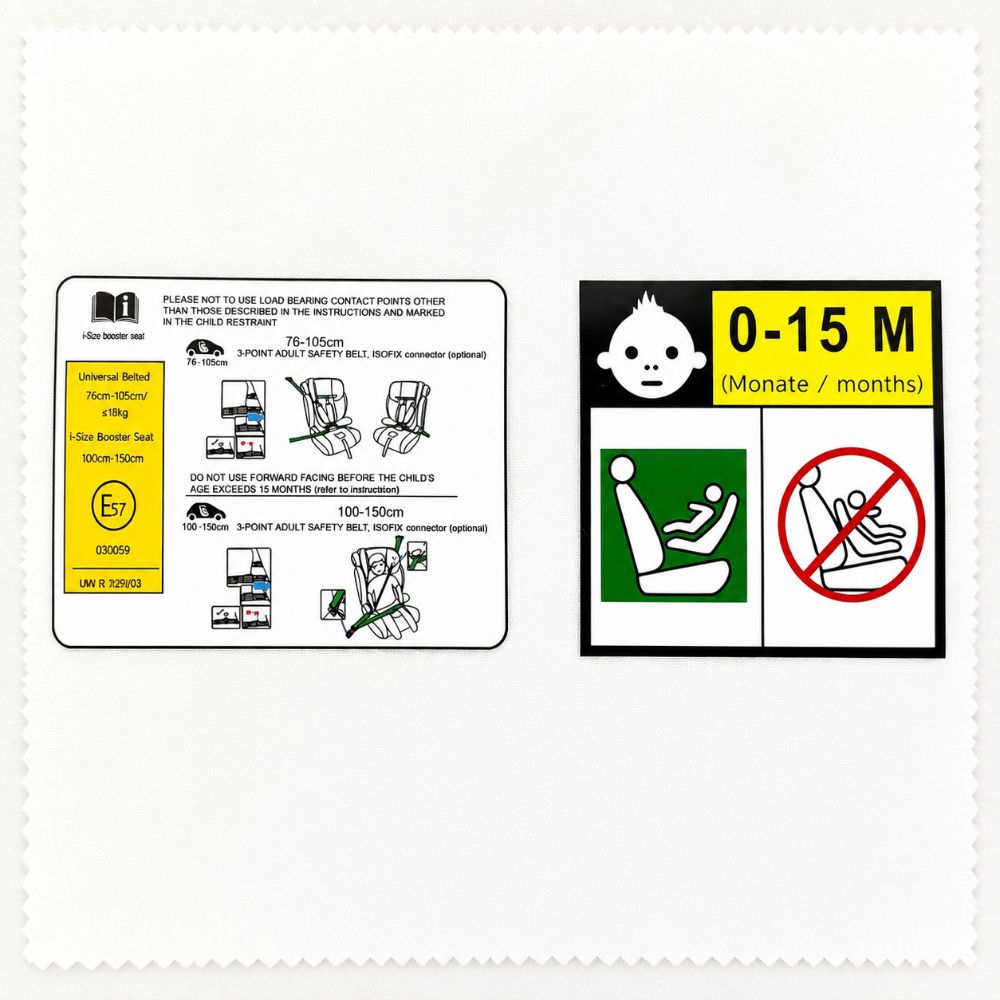
Most data sheets list a shelf life of one to two years for pressure-sensitive adhesives, but that clock starts the moment the adhesive is coated, not when the roll lands on your dock. Warehousing conditions, film porosity, and even the release liner's silicone cure can quietly shorten that window. A roll stored near a heat source or in fluctuating humidity may lose tack weeks before the printed expiry date, leaving you with labels that lift at the edges or fail on corrugated surfaces.
Suppliers rarely mention that adhesive performance degrades unevenly across a roll. The outer laps are exposed to more oxygen and moisture, so the first few hundred labels often behave differently than the core. You might run a successful trial with fresh outer labels, then hit dead zones mid-roll where peel adhesion drops by thirty percent or more. This variation is invisible until you're halfway through a production run and suddenly facing flagging corners or jamming dispensers.
Another unspoken issue is the liner itself. Silicone release coatings can migrate into the adhesive over time, especially with acrylic emulsions, causing a greasy residue that kills tack on the label face. If your labels are pre-die-cut or sheeted, the exposed adhesive edges accelerate oxidation and plasticizer bleed from facestock films. The practical shelf life under real storage may be half the published figure, so testing a roll from the middle of your inventory before a critical run is worth more than the certificate of conformance.
Compliance Audits: Will Your Warning Labels Pass a Close Read?
A compliance audit rarely hinges on whether your warnings exist—it hinges on whether they hold up when someone reads them line by line. Regulators and opposing counsel don’t skim. They parse sentence structure, check font sizes against ANSI or ISO standards, compare symbol placement with the latest revisions, and flag inconsistencies between a product label and its manual. If your in-house team wrote the warnings years ago without a documented review cycle, assume there’s drift: a weatherproof label on a new material that now peels, or a pictogram that doesn’t match the text’s severity level.
The close read also exposes softer failures. Passive phrasing like “care should be taken” reads as advisory rather than mandatory, which can weaken a defense if an injury claim lands in court. Punctuation matters too—an omitted comma in a multi-step instruction can alter the sequence a user follows. Before an external audit, have someone outside the design team read each label into a voice recorder. Hearing the words often reveals ambiguity that looked fine on screen. Then check your revision log: if you can’t prove which version was on a unit shipped in a given quarter, you’re already behind on traceability.
Overcuring Warning Labels: The Silent Killer of Legibility
When a warning label gets overcured, the first casualty isn't adhesion or chemical resistance—it's the fine print. The extra dwell time under UV lamps or excessive heat doesn't just darken the substrate; it creeps into the letterforms themselves. Edges that should be crisp start to bloom, thin strokes close up, and small regulatory text becomes a smudge that no one can decipher. What was meant to communicate danger ends up looking like a barcode that's been through a wash cycle.
Legibility failures rarely announce themselves. They accumulate quietly: a slight halo around each character, a loss of contrast between black ink and yellow background, tiny cracks in the over-cured varnish that scatter light across the surface. By the time someone notices that a safety instruction is unreadable, the entire batch is often already packed, shipped, and mounted on equipment. The real danger is that people stop looking. If a warning label cannot be read at arm's length in normal light, it has stopped being a warning.
Matching Surface Energy to Your Heat Transfer Label Stock
Heat transfer label stock arrives with a specific surface energy, and that number dictates whether your adhesive, topcoat, or print receptive layer will anchor properly. If the stock's dyne level sits below what the liquid coating requires, you'll see crawling, pinholes, and weak edge definition before the label ever reaches the heated platen.
Checking dyne level isn't a one-time formality. Corona or plasma treatment can lift a substrate to the needed range, but the effect fades during storage. Test every incoming roll near the unwind and again on the liner side if you're applying a release modification, because a one- or two-dyne drop is enough to turn a reliable run into rework.
A practical mismatch shows up when a UV-cured adhesive formulated for 42+ dynes hits a face stock sitting at 38. The adhesive beads instead of wetting out, and post-transfer wash durability suffers. Keep a written target range for each adhesive and ink system, and reject rolls that fall short—no amount of line speed adjustment fixes a surface energy gap once the job is running.
Sample Kit Red Flags Every Buyer Should Catch Early
Most suppliers will hand you a sample kit that looks impressive at first glance, but experienced buyers know to inspect the small details before placing a larger order. One early warning sign is a mismatch between the printed ingredient list and the actual contents inside the vial. If the label mentions a specific active percentage or a botanical extract, check for supporting documentation like a certificate of analysis. A missing or vague batch number, or a sample that arrives in a generic plastic bag without tamper-evident sealing, often points to sloppy quality control further down the line.
Another red flag hides in the sensory profile. Scoop a little product onto your hand and compare the texture, color, and scent against the brand’s standard description. A serum that separates into layers, a powder that clumps unevenly, or a fragrance that smells “off” from the expected profile can indicate unstable raw materials or improper storage during transit. You should also ask for the retention sample reference and stability data—reputable suppliers keep these on file and won’t hesitate to share them.
Finally, watch out for sample kits that arrive with no usage instructions, no pH or solubility guidance, and no direct contact for a technical representative. A legitimate supplier wants you to succeed with the formula, so they’ll include formulation tips, recommended inclusion rates, and clear reorder codes. If the only thing in the box is a business card and a price list, treat that as a signal to dig deeper before committing to a bulk purchase.
FAQ
Focus on material certifications, printing durability, and whether they document compliance with relevant safety standards. Ask for samples that have been tested under your actual use conditions rather than relying on generic spec sheets.
Request a copy of the test report for the specific substrate and adhesive combination. Standards like UL 94 or ASTM E84 may apply depending on the end product, and the vendor should be able to confirm which tests their labels have passed.
Yes. Depending on market, you may need to address REACH, RoHS, or Prop 65. A reliable vendor will have declarations ready and can tell you exactly which substances are present in the ink, adhesive, and carrier.
The label material and adhesive must be rated for continuous and peak temperatures. Heat transfer labels can degrade, delaminate, or release fumes if pushed beyond their limits, so insist on aging test data from the supplier.
Absolutely. Car seat and toy warning labels often have strict requirements for adhesion, abrasion resistance, and non-toxicity. A knowledgeable vendor should guide you on which constructions pass the applicable CPSIA or ASTM tests.
Verify the vendor's manufacturing location, request traceability documentation, and ask for references from companies in your industry. If the price seems too low, it's worth digging into how they source raw materials and test finished lots.
Choosing a label based only on appearance, skipping accelerated aging tests, ignoring application temperature and pressure settings, and failing to confirm that the label remains legible after repeated cleaning or exposure.
For safety and compliance labels, yes. Batch consistency matters because a single lot with weak adhesive or off-spec ink can lead to product recalls. Ask for a certificate of conformance with each shipment and spot-check critical parameters.
Conclusion
Heat transfer warning labels that survive engine bay temperatures are not just a nice-to-have; they are the first line of defense when a part gets hot enough to turn cheap adhesive into a sticky mess. The real issue often starts before installation, though. Suppliers rarely volunteer that label adhesive has a shelf life, and once that window closes, you are left with edges that lift and text that smears under heat. Ask for batch dates and test a sample from the lot you will actually receive, not the fresh roll they brought to the showroom.
Compliance audits do not care how good the label looked when it left the vendor. Inspectors read every line, check contrast, and look for overcuring that turns crisp letters into ghosted outlines. Overcuring during application is a silent killer of legibility, and it usually comes from rushing the heating cycle or mismatching surface energy. Different plastics and powder coats demand different heat transfer stocks, and a vendor who does not ask about your substrate before shipping labels is guessing. Get a sample kit, check adhesive tack after aging, and watch for inconsistent color density or peeling. If the sample kit already shows red flags, like thin ink coverage or adhesive that feels dry, walk away before you are stuck explaining a failed audit.
Contact Us
Contact Person: Wang Song Lin
Email: [email protected]
Tel/WhatsApp: +8613751282193
Website: https://www.heat-transferprinting.com/