

Walk-In Glass Door Cooler Supplier How to Choose the Right One for Your Needs
2026-11-16
Choosing a walk-in glass door cooler supplier isn't just about finding a unit that cools—it's about securing a partner who understands your space, your customers, and your bottom line. With so many options flooding the market, the wrong choice can lead to fogged doors, uneven temperatures, and costly downtime. That's why we've put together this guide to help you cut through the noise. Whether you're outfitting a bustling convenience store or a high-end restaurant, ART has built a reputation for reliable, beautifully engineered coolers that keep products visible and perfectly chilled. Read on to learn exactly what to look for—and what to avoid—when selecting the right supplier for your needs.
Figure Out Your Shelf Layout and Door Swing Before You Start Shopping
Most people get excited about cabinet colors and hardware finishes long before they think about how the doors will actually swing open. But here's the thing: a gorgeous pantry door that bangs into your refrigerator every morning will drive you crazy faster than a dated paint color ever could. Spend a quiet hour with a tape measure and some blue painter's tape on the floor. Mark out the exact footprint of your future cabinets, then stand in the middle of it and pretend to cook. Open an imaginary oven door. Reach for a plate. Where do your elbows go? Where does the dishwasher door land when it's fully open? This simple rehearsal reveals tight corners and awkward clearances that no catalog photo will ever show you.
Door swing direction is the quiet chaos-maker of kitchen design. A single wrong hinge can turn a perfectly good corner cabinet into a bruise factory. For base cabinets near a walkway, consider drawers instead of doors whenever possible—they keep everything visible and don't require clearance space to open. If you must have doors, pair them with pull-out trays inside. And for upper cabinets, pay attention to whether doors open left or right. A door that opens toward a wall instead of away from it means you'll be leaning over the counter just to see what's inside. Draw a simple arrow on your layout sketch for every door and drawer front. If two arrows point toward each other and the gap between them is less than your body width, rethink the plan.
Finally, leave breathing room around appliances and corners. The rule of thumb is at least 15 inches of clear countertop beside a refrigerator or oven, and 24 inches in front of a dishwasher for loading. But these numbers mean nothing until you actually mime the motions. Go ahead—stand in your taped-off kitchen with a laundry basket and see if you can open the oven, pull out a heavy roasting pan, and turn around without stepping on a cabinet toe kick. Adjust the layout until it feels natural, not just mathematically possible. Small tweaks at this stage cost nothing. Once the cabinets are ordered, moving a wall or swapping a door swing gets expensive fast.
Look at the Glass Door Construction Like You're Buying a Display Case, Not Just a Cooler
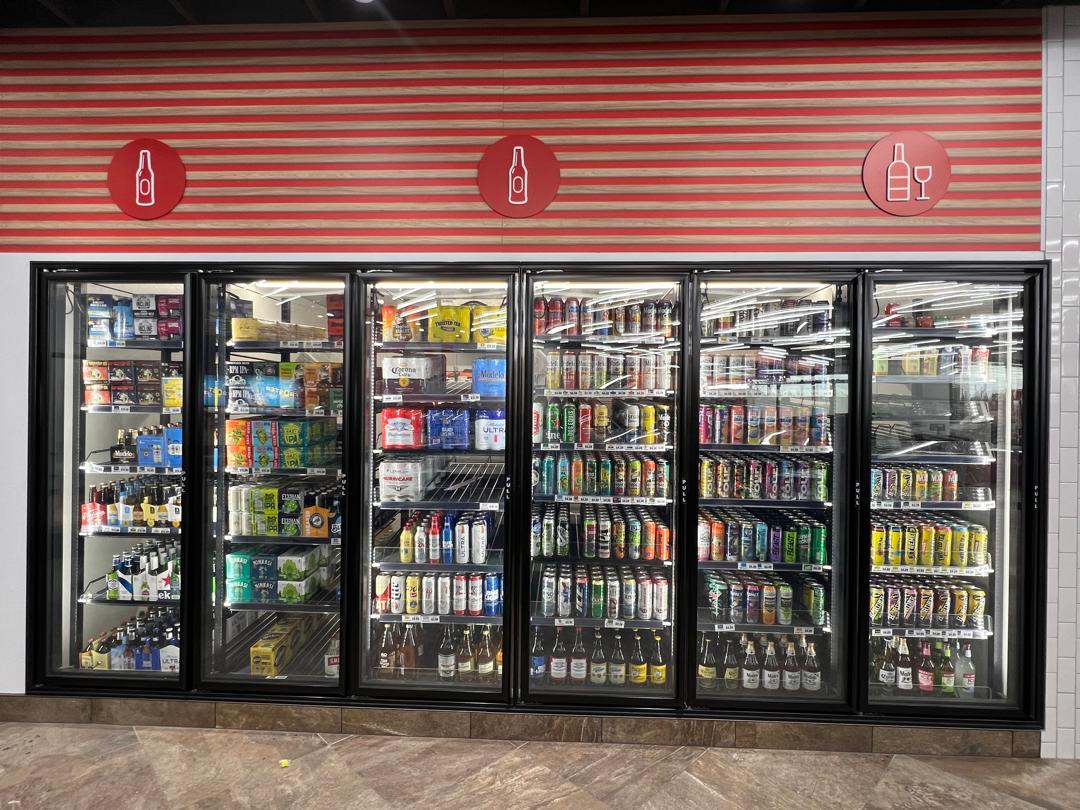
When you invest in a commercial refrigerator, the glass door deserves the same scrutiny you would give a high-end display case. It is the transparent barrier that invites customers to look closer, so its construction matters far beyond simple temperature retention. A flimsy or poorly sealed door undermines both product appeal and energy efficiency.
Think about the glass itself—opt for low-emissivity, double-pane designs that resist fogging and condensation, keeping products visible even in humid kitchens. The frame should be reinforced yet slim, maximizing the viewing area while preventing warping from constant opening. Cheap hollow frames flex over time, cracking seals and letting cold air escape.
Seals and hinges are the unsung heroes. A well-built door closes with a soft, confident pull, locking in cold air without slamming, and the gasket material should feel supple, not brittle, to maintain that display-case clarity for years. Test the door swing before buying; if it wobbles or needs force, walk away.
Ask Suppliers About Recovery Time After the Door Has Been Open for a While
It’s easy to focus on the initial cooldown when a fridge door gets opened, but what happens after it’s been left open for a while is where real performance shows. Ask suppliers how their units recover once the door has been sitting open long enough for the internal temperature to climb. A well-designed fridge shouldn’t just blast cold air at maximum power; it should have a smart sensing system that detects the prolonged gap and adjusts fan speed and compressor output accordingly. Many cheaper models simply run at full tilt, causing uneven cooling and frost buildup near the vents, while better ones bring the temperature back down gently and evenly across all shelves.
Recovery time also depends on how well the insulation and door gaskets hold up during that open period. If warm, humid air has already seeped into the walls or around the seal, the compressor has to work much harder once the door finally closes. You’ll want to ask about the thickness and material of the insulation, as well as whether the door closes with a positive latch that can handle repeated long openings without warping. Some suppliers will give you a simple “X minutes to return to 4°C” figure, but that number means little without knowing the ambient temperature, how full the fridge is, and how long the door was actually open. Request a test scenario that mirrors your real usage—say, door open for five minutes at 25°C room temperature with the unit half loaded.
Beyond the raw time, listen for how the supplier talks about recovery. Do they mention air curtain technology, variable-speed compressors, or multi-zone sensors? Do they ask about your specific use case, like how often staff will be leaving the door open during busy periods? A supplier who only quotes a spec sheet figure without asking about your environment is likely selling a generic product. The best answers come with a clear explanation of the control logic: how the unit prioritizes food safety, how it prevents short cycling, and what happens if the door is accidentally left open for twenty minutes instead of five. That level of detail tells you the recovery system was actually engineered, not just bolted on as an afterthought.
Dig Into the Warranty Details That Most Quotes Leave in Fine Print
Most people look at warranty quotes and only see the monthly payment or deductible, but the real differences hide in the fine print. A plan that promises "comprehensive coverage" might exclude electrical components, seals, or even specific labor charges. That's why you need to ask for the full contract before signing—not just the summary page.
Start by comparing how long coverage lasts and what actually triggers a claim. Some warranties only kick in after a mechanical failure is diagnosed, while others offer wear-and-tear protection earlier. Also check whether you can choose your own repair shop or if you're locked into a network. If the provider requires you to use their approved facilities, that convenience gap can mean extra towing costs or long waits.
Don't ignore the cancellation and transfer policies either. A warranty that looks cheap now might have a hefty cancellation fee or lose most of its value if you sell the car. The fine print on refunds and ownership changes can make the difference between a useful safety net and a piece of paper that's hard to escape.
Compare Real-World Energy Costs Instead of Sticker Price Alone
A low sticker price can be seductive, but it rarely tells the full story. The real cost of ownership often hides in the monthly utility bill. An inexpensive air conditioner, for instance, might save you a hundred dollars at checkout, yet consume enough extra electricity over a single summer to wipe out that saving and then some. The same logic applies to refrigerators, water heaters, and even cars. What matters is not just what you pay today, but what you will pay every month for years to come.
To make a fair comparison, look at the energy consumption rating or estimated annual operating cost rather than the price tag alone. Two washing machines may sit side by side with a fifty-dollar difference, but the cheaper model could use twice as much water and electricity per load. Over a typical lifespan of ten years, that gap compounds into hundreds of dollars. Tools like the yellow EnergyGuide label in the United States or the EU energy label exist for exactly this reason. They translate efficiency into a tangible dollar figure, allowing you to compare the true long-term cost at a glance.
Keep in mind that your actual usage patterns matter just as much as the ratings. A highly efficient model that runs constantly will still cost more than a moderately efficient one used sparingly. Think about how often you really use the appliance, the local price of electricity or fuel, and whether you plan to keep it for two years or twelve. The smartest purchase is rarely the cheapest one on the shelf; it is the one that aligns with your real-world habits and delivers the lowest total cost over the time you will actually own it.
Find a Supplier Who Can Show You Recent Installations in Similar Businesses
Before you commit to any supplier, ask to see recent installations they’ve completed in businesses much like yours. A glossy brochure or a polished website won’t tell you how their equipment holds up in the real world. If you run a busy restaurant, you need to see how their refrigeration units perform in a high-volume kitchen, not just in a showroom. Similar businesses share similar constraints—space, foot traffic, health codes—so a supplier who has navigated those before is far less likely to hit snags during your own setup.
When you ask for examples, be specific: request installations from the past twelve months, in companies of comparable size and industry. Photos and videos are a start, but if possible, arrange a quick site visit. Pay attention to details like how neatly cables and pipes are routed, whether the equipment is easy to access for cleaning, and if the layout makes sense for the staff who use it daily. A supplier who can walk you through a live installation and explain why they made certain choices is one who understands their craft, not just their sales pitch.
Don’t stop at the supplier’s own presentation, either. Ask for contact details of the business owners or managers at those installation sites, and actually call them. A short conversation can reveal more than any case study: did the equipment break down in the first month? Was the supplier quick to fix issues? Would they hire them again? If a supplier hesitates to share references or claims every client is confidential, treat that as a major red flag. A confident, competent supplier will be proud to show off their work—and the businesses they’ve served will be happy to vouch for them.
FAQ
Look at how they handle the details that show up after installation. Do they ask about your product mix, traffic patterns, and peak hours? Will they put a service timeline in writing? Ask for two or three recent clients you can call, not just written testimonials. A supplier worth your time talks about failure rates and parts availability without being prompted.
Don't start with the equipment catalog—start with a tape measure and your busiest hour in mind. Measure door swing clearance, aisle width at the door, and how many people will open it at once. Then have the supplier visit the site and sketch the layout before quoting. A good one will recommend reducing door width or changing hinge sides if that improves flow.
Usually yes, but only if they match how you actually use the unit. Triple-pane glass and LED lighting pay off quickly in a busy convenience store but matter less in a low-traffic back room. Ask the supplier to show the projected duty cycle and defrost settings for your specific conditions. Skip generic 'energy efficient' labels and get numbers.
Get specific about response times, not just 'we have support.' Ask who comes out—an employee or a subcontracted tech—and whether common parts like gaskets and controllers are stocked locally. A written service level agreement with a four-hour callback window is far more useful than a toll-free number.
If your operation can't afford a full day of downtime, local support usually wins. National suppliers may have lower sticker prices, but their service might be routed through a distant call center. Ask both for the nearest technician's distance and average response time in your zip code, then compare that against the price gap.
Line them up side by side and strip out anything not essential to your store. Check whether delivery, rigging, electrical hookup, old unit disposal, and first-year maintenance are included. Then ask each supplier to justify the variance in compressor brand and glass type. The cheaper quote often hides those items as add-ons.
Try asking for something modest, like a different shelf depth or a door that opens from the left. A flexible supplier will give you a straight answer about lead time and upcharge, while a rigid one will tell you to pick from stock options. You don't need full custom, but you do want someone who understands that every floor plan differs.
Conclusion
Before you even start comparing suppliers, get clear on your shelf layout and which way the doors need to swing—this alone can eliminate a lot of models that look fine on paper but would drive you crazy during a busy rush. Then look at the glass door as if you're buying a display case, not just a cooler: check the glass clarity, frame sealing, and hinge sturdiness, because these details affect both product visibility and how hard the unit has to work. Don't forget to ask about recovery time after the door has been open for a while; a unit that takes forever to pull back down to temperature will cost you in product quality and energy use.
Warranty details are where many quotes hide their real limitations, so dig into what's actually covered for the compressor, door hardware, and labor—not just the number of years printed on the brochure. Energy cost is another area where sticker price misleads you: a cheaper cooler can easily burn through the difference in a single season, so compare real-world consumption figures or ask for utility bill examples from similar setups. Finally, ask any supplier to show you recent installations in businesses like yours, not just polished showroom photos. Seeing a unit working in a comparable setting—and talking to the owner about what they'd do differently—is the fastest way to separate honest suppliers from those who only look good in a brochure.
Contact Us
Contact Person: Ellen
Email: [email protected]
Tel/WhatsApp: +86-535-2229725
Website: https://www.artrefrigeration.com/