

Top Distillation Equipment for High-Performance Separation and Purification
2026-09-08
Distillation remains the workhorse of modern separation, but not all equipment is built to deliver the sharp cuts and pure fractions that high-performance processes demand. From pilot-scale trials to full production lines, the right column internals, reboiler design, and control strategy can mean the difference between a clean 99.9% product and a costly rework. If you are evaluating systems for fine chemicals, pharmaceuticals, or specialty solvents, start by understanding what truly separates top-tier hardware from the rest. DYE has spent years refining modular and custom distillation solutions that push purity and yield without compromising throughput — and in this post, we break down the key equipment features worth your attention before you invest.
Short Path Distillation Kits for Heat-Sensitive Compounds
Heat-sensitive materials fall apart under ordinary distillation temperatures, but short path rigs keep the vapor journey almost impossibly brief. A heated flask sits close to the condenser, and the distance between evaporation and condensation shrinks to a few centimeters, so molecules spend less time in the hot zone. That narrow window helps preserve fragile esters, terpenes, and cannabinoids that would otherwise degrade into off-flavors or lose potency.
What really changes the game is vacuum depth. With a good pump pulling below 50 mTorr, boiling points drop by hundreds of degrees, meaning things like vitamin E or omega-3 fatty acids can be distilled without scorching. Glassware sets with a built-in cold finger or jacketed head let you collect separate fractions cleanly, while a magnetic stirrer keeps the puddle moving so no single spot overheats.
Setup matters more than most people expect. A short path kit with a digitally controlled heating mantle and an accurate thermocouple gives better repeatability than manual knob-turning. And because these compounds can be unforgiving, a simple wipe-film or roller-wiper add-on makes a real difference for thicker feedstocks. Skipping that upgrade often leaves resin stuck to the walls, so the extra cost pays for itself after a few runs.
Wiped Film Evaporators That Handle Viscous Fluids Without Degradation
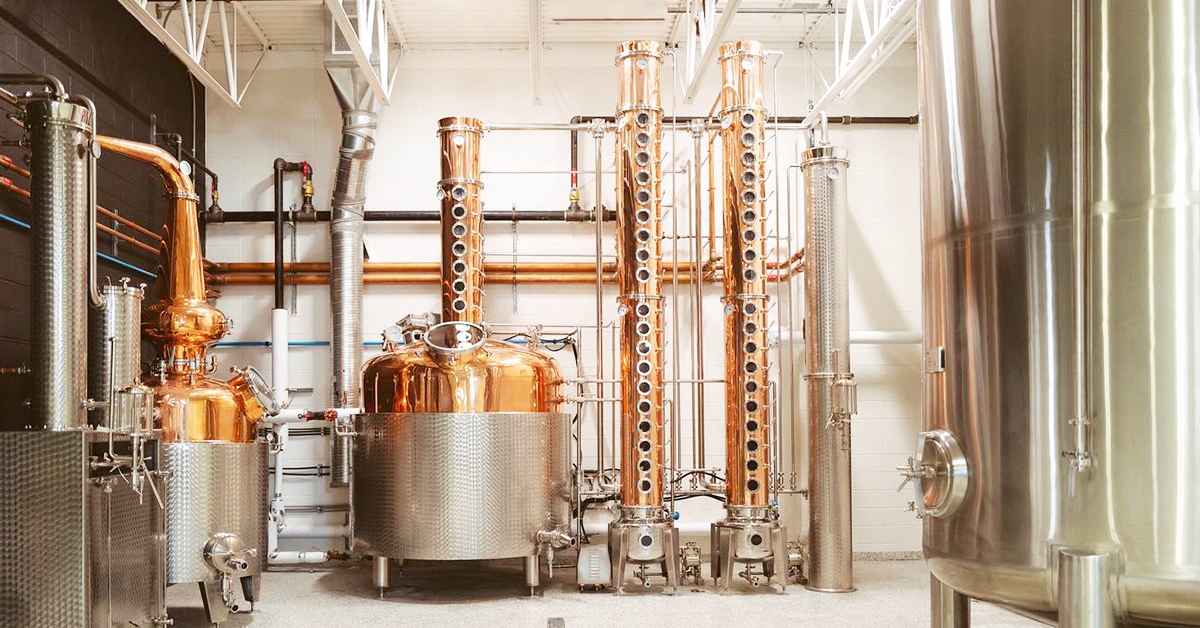
When a fluid can barely flow under its own weight, conventional evaporators tend to punish it with hot walls and long residence times. Wiped film evaporators take a different route: a rotor continuously spreads the incoming material into a thin, mechanically agitated film on a heated cylindrical wall. That film is continuously renewed, so even high-molecular-weight polymers, heavy oils, or concentrated food pastes are exposed to heat for only seconds. The result is a vapor separation step that does not force the product through narrow channels or stagnant zones where degradation typically begins.
The key is in the wiping mechanism. Adjustable blades or rollers maintain a controlled clearance from the wall, regardless of viscosity swings, and they push the residue downward in a helical path. Because the fluid is not relying on gravity alone, heat transfer coefficients stay high even at 100,000 centipoise or more. Volatile fractions flash off under deep vacuum, while the non-volatile fraction moves quickly to the outlet. This means thermally fragile actives, polymers, and esters can be stripped of solvents or monomers without color change, gel formation, or loss of molecular weight.
Operators often see the biggest difference during start-up and product changeovers. A wiped film unit is less sensitive to feed viscosity than a falling film or forced circulation evaporator, so it avoids the long preheating zones that can degrade a batch before evaporation begins. By keeping wall temperatures modest and residence time short, the unit preserves the original rheology and functionality of the concentrate. For processes that cannot tolerate scorched films or polymerized residues on heat transfer surfaces, that mechanical wiping action is not an extra feature; it is the reason the technology works.
Fractional Distillation Columns for Tight Boiling Point Separations
Designing a fractional distillation column for close-boiling mixtures demands more than just extra theoretical stages. The real challenge lies in managing pressure drop, liquid distribution, and reflux ratio with enough precision to exploit differences of only a few degrees Celsius. Structured packing often beats trays here because its low pressure drop keeps relative volatility from collapsing near the bottom, while high-efficiency distributors ensure that the thin liquid films don't channel or dry out. Even a modest deviation in weir levelness or packing wetting can erase the separation you were counting on.
Operators quickly learn that these columns punish haste. Ramping up boil-up rates too fast floods the packing, yet running too slow starves the wetted area and drops stage efficiency sharply. Temperature control loops need tight tuning on both the reboiler and condenser, since a swing of half a degree can push off-spec product into the overhead or bottoms. Many plants add an intermediate reflux or side-draw to handle trace impurities that accumulate in the middle of the column—otherwise those components cycle endlessly, building concentration until they break through at the worst possible moment.
The payback comes from treating the column as a single integrated system rather than a collection of internals. Preheating the feed to the exact bubble point, minimizing subcooling in the reflux, and choosing a packing with a high specific surface area but low HETP all work together. When you get it right, a column that once seemed marginal can split isomers or azeotrope-forming pairs that were previously written off as uneconomical to purify.
Molecular Distillation Units for High-Purity Cannabinoid and Essential Oil Processing
When working with heat-sensitive materials like cannabinoids and essential oils, the usual distillation approach falls short. Molecular distillation units, especially those built around short-path or wiped-film designs, rely on very low operating pressures to drop boiling points well below what standard vacuum distillation can achieve. That means the compounds spend less time under heat, and the risk of degrading delicate terpenes or converting cannabinoids into unwanted isomers is much lower.
Most units designed for this space feature a heated cylindrical body with an internal wiper or roller that spreads the feed into a thin, constantly renewed film. This film evaporates almost instantly under high vacuum, and the vapor travels only a few centimeters to an internal condenser. Because the distance is so short, heavier molecules like CBD or THC can be separated from lighter fractions without being pulled through long transfer lines where they might recondense or oxidize.
In practical processing, these systems are often run in multiple passes to isolate specific fractions. A first pass might strip residual solvents and moisture, a second can remove waxes and pigments, and a final pass sharpens the main active or aromatic fraction. Temperature, feed rate, and vacuum level need to be balanced carefully for each feedstock, but the result is a cleaner product with less post-processing compared to conventional wiped-film evaporation.
Rotary Evaporators Built for Solvent Recovery at Scale
Scaling solvent recovery isn't just about bigger glassware—it's about maintaining thermal precision when your evaporation surface area doubles. Industrial rotary evaporators designed for high-throughput labs use jacketed condensers with staged cooling zones, so recovering acetonitrile or methanol at 20 liters per batch doesn't leave you chasing vapor leakage or boiling bump carryover.
What separates true workhorse units from benchtop afterthoughts is how they handle continuous duty cycles. Look for models with dual-flask capability, automatic vacuum bleed valves that respond to foam surges, and collection reservoirs that swap without breaking vacuum. These details mean your team can run three shifts of solvent recycling without babysitting the bath temperature or degassing the pump every two hours.
Maintenance often gets overlooked until a seal fails mid-recovery. Flanged connections with PTFE-encapsulated gaskets, corrosion-resistant shaft sleeves, and externally serviceable drive belts keep downtime measured in minutes rather than days. If your lab routinely processes mixed solvent waste or heat-sensitive extracts, the right rotary evaporator becomes less of an instrument and more of a production partner that pays for itself in reclaimed solvents within a quarter.
Turnkey Distillation Skids with Customizable Automation
Every distillation skid we deliver arrives as a fully assembled, pre-piped, and pre-wired unit. The mechanical scope—columns, reboilers, condensers, pumps, instrumentation—is built and tested before it leaves our shop, so your team handles a single lift and a handful of tie-ins rather than coordinating multiple vendors on site. That turnkey approach removes a lot of the usual schedule risk, especially when a plant is already running and shutdown windows are tight.
The control system is not a one-size-fits-all add-on. We start with your operating philosophy and build the automation layer around it, whether that means a simple local panel with alarm management or a fully redundant PLC/HMI package tied into a plant-wide DCS. Recipes, interlocks, data historians, remote access, batch sequencing—each element is selected only if it serves the way your operators actually run the unit.
Because the skid is engineered around the specific mixture, throughput, and separation targets, the automation and mechanical design reinforce each other. We have supplied systems with aggressive turndown requirements, heat-sensitive streams, and hazardous-area classifications that forced custom instrument layouts. The result is not a catalog item with a few options bolted on; it is a packaged unit matched to the process, and it gets wet-tested on water or a surrogate fluid before shipping.
FAQ
High-performance systems usually combine precise temperature control, efficient condenser design, and low-pressure operation. This lets you separate heat-sensitive or closely boiling components without degradation or excessive energy use.
Short-path works well for small batches and high-boiling compounds, thin-film handles viscous or fouling-prone materials, and fractional columns give sharper cuts when boiling points are close. The feed composition and target purity usually narrow the choice quickly.
The ratio of heated surface area to vapor volume matters a lot, as does the distance vapor travels before condensation. Internal baffles or structured packing can also reduce channeling and improve contact, so small design tweaks often shift plate counts noticeably.
Very important. Pressure swings change boiling points and can ruin a narrow cut. A well-sized vacuum pump with a buffer tank and a sensitive control valve keeps the system steady, especially when working with thermally fragile materials.
Regular inspection of seals, gaskets, and condenser surfaces prevents hidden leaks and fouling. Flushing the evaporator with an appropriate solvent after each campaign and checking vacuum pump oil condition are simple habits that avoid most performance drift.
Even basic automation helps by holding jacket temperature and reflux ratio more consistently than manual adjustments. For fragile products, that consistency often translates into higher yield and fewer failed batches, so it pays for itself faster than many assume.
Frequent bumping or foaming, longer-than-expected run times to reach the same purity, and excessive degradation products in the distillate are all hints. These often point to insufficient surface area, poor vacuum control, or too aggressive heating rather than operator error.
Stainless steel is common, but borosilicate glass offers visibility and avoids metal ion leaching. For acidic or halide-containing streams, PTFE or glass-lined components prevent corrosion and trace contamination that would otherwise show up in the purified product.
Conclusion
For labs and production lines that need sharp separations without damaging delicate molecules, the right hardware makes all the difference. Short path distillation kits keep heat exposure brief, which matters when working with temperature-sensitive APIs, vitamins, or natural extracts. Wiped film evaporators handle thick, sticky feeds—think heavy oils, resins, or polymers—by spreading them into a thin film under vacuum, so viscosity never becomes a bottleneck and thermal degradation stays low. When you have two compounds with boiling points only a few degrees apart, fractional distillation columns provide the extra theoretical plates needed to pull them apart cleanly, turning a nearly impossible split into a routine step.
Molecular distillation units push purity even further, especially for cannabinoids and essential oils where a single pass can reach the high percentages that processors demand without repeated runs. Solvent recovery at scale calls for rotary evaporators built with rugged vacuum systems and large evaporation flasks, cutting down cycle times while keeping operators safe. For facilities that want to skip the piecemeal approach, turnkey distillation skids bundle the whole process—feed, evaporation, condensation, and collection—with automation that adapts to different recipes and production volumes. Together, these systems cover everything from delicate lab-scale purification to continuous, high-throughput operations, giving teams a clear path from raw mixture to refined product.
Contact Us
Contact Person: Ada Xu
Email: [email protected]
Tel/WhatsApp: 0577-86806088
Website: https://www.dayuwz.com/