
Top 10 Swim Paddles for a More Powerful and Efficient Stroke
2026-11-16
Most swimmers settle for whatever paddle is on sale, then wonder why their stroke hasn't improved. The right paddle should feel like an extension of your hand—not a plastic slab that throws off your rhythm. We put ten models to the test, including the OCORT lineup, to find the ones that actually build power and refine efficiency. Here's what made the cut.
Why Your Hands Deserve Better Than Basic Plastic Paddles
There's a reason those cheap plastic paddles feel like hitting a ball with a cafeteria tray. Every shot sends a sharp vibration straight up your arm, and after twenty minutes your wrist starts asking why you're punishing it. The hollow clack might sound fine in a backyard game, but it's doing nothing to help you place the ball where you want it.
Upgrade to a paddle with a polymer or carbon fiber core and the difference is immediate. The ball sinks into the face for a fraction of a second, giving you actual feedback instead of a numb thud. Your grip stays relaxed, your wrist doesn't ache, and suddenly the idea of playing three games in a row doesn't seem like a chore.
Your hands are doing the real work out there—reading spin, adjusting angle, absorbing impact. They shouldn't have to fight against a paddle that's working against them. A well-built paddle respects that effort, and once you've felt the difference, you'll wonder why you ever settled for plastic.
The Hidden Shoulder-Saver: Paddles That Won't Wreck Your Rotator Cuff
Most players blame their shoulder pain on overuse or poor technique, but the paddle itself often plays a bigger role than expected. A paddle that's too heavy or carries too much weight in the head forces your rotator cuff to work overtime just to control the follow-through. Over a long session, that extra strain shows up as a dull ache in the back of the shoulder or a sharp pinch on high reaches. Switching to a design with a lower swing weight and a balance point closer to the handle can dramatically reduce that load without sacrificing power.
What separates a shoulder-friendly paddle from a standard one isn't just static weight, though that matters. Look for a combination of reduced head weight, a larger sweet spot, and a dampened core that absorbs vibration before it travels up your arm. Some paddles use polymer or foam cores specifically to mute feel, which helps if you already have irritation. A grip that's slightly too small forces you to squeeze harder, adding tension through the forearm and into the shoulder, so experimenting with grip size or adding an overgrip can be just as useful as changing the paddle itself.
The real test is how your shoulder feels after a full match, not just during warm-up. If fatigue or soreness creeps in around the third game, that's a signal the paddle is asking too much of your rotator cuff. A low swing weight paddle lets you react quickly at the net and still generates enough pop when you meet the ball in the center of the face. Many players find that once they make the switch, their shoulder problems fade not because their technique changed overnight, but because the equipment stopped fighting their body.
From Sprints to Endurance Sets: Matching Paddle Size to Your Workout
Sprint work rewards a paddle that adds resistance without wrecking your stroke rhythm. A mid-sized blade with just enough surface area keeps the catch sharp and the turnover high, so you're building specific power instead of fighting the water. Going too large here turns a 15-meter burst into an arm-wrestle, and that misses the point.
Endurance sets shift the priority. Longer intervals demand a smaller paddle—something that gives a mild feel for the water without overloading the shoulders over 800 or 1,500 meters. The goal is consistent pressure and clean technique, not max force. A compact paddle lets you hold that line for the whole set without your stroke falling apart.
The real trick is staying honest about what the session is for. If you're chasing top-end speed, pick a paddle that lets you hit race tempo with a little extra grip. If the set is about aerobic base, drop down a size and let your mechanics do the work. The paddle should adapt to the workout, not the other way around.
Catch More Water Instantly: Small Technique Tweaks with the Right Paddles
You don't need a longer reach or stronger shoulders to grab more water on every stroke. It starts with your blade angle. Most paddlers twist their wrists too early, letting the paddle slice through instead of loading against the water. Try keeping your top hand stacked above your bottom hand a split second longer at the catch. That small delay lets the blade sink fully before you pull, so you're pushing against something solid rather than air.
But even perfect timing falls apart if your paddle fights you. A blade with too much surface area feels like dragging a bucket, while one too narrow slips on the power phase. Look for a shape that enters cleanly but holds firm through the mid-stroke—think of a slightly cupped face or a gentle dihedral. Swap your paddle for one with a shorter shaft or a smaller blade, and suddenly that same technique tweak gives you a firmer connection without extra effort.
The real difference shows up in rough water or when you're tired. A paddle that matches your stroke style lets you relax your grip, which in turn keeps your wrists loose and your catch quiet. Next time you're out, experiment with a friend's paddle for ten minutes. You'll likely feel the water grab sooner, and that instant feedback teaches your body more than any drill could.
Ditching the Drag: Paddles That Actually Promote a Clean Entry
Many paddlers know the frustration of a blade that slaps the water and drags before it bites. That initial splash doesn't just waste energy—it disrupts your forward glide and makes each stroke feel heavier. Achieving a clean entry means the blade slices in with minimal disturbance, letting you transfer power immediately.
Look for blades with a slightly cupped face and a sharp, tapered tip. The cupping helps the paddle grab water without fluttering, while a narrow tip eases through the surface instead of slamming into it. Stiff materials like carbon or reinforced nylon keep the blade from flexing at the catch, so the edge stays predictable. Even the edge profile matters—rounded or beveled edges reduce turbulence compared to thick, blunt rims.
With a clean-entry paddle, you'll notice a smoother stroke cadence and less shoulder strain. The boat or board maintains speed between strokes because you're not fighting that initial resistance. On long paddles or in choppy conditions, this efficiency adds up quickly, letting you focus on route and technique rather than muscling through each catch.
Durability That Outlasts Chlorine: Materials Worth Your Money
Cheap plastics and thin-walled metals might save you a few bucks at checkout, but they start degrading the moment they meet chlorinated water. Pool-grade PVC and CPVC fittings hold up because they're formulated without plasticizers that chlorine attacks. Look for fittings stamped with NSF-PW or ASTM D1784—these aren't just letters; they mean the material passed long-term immersion tests in harsh chemical baths. If you're replacing a pump housing or filter valve, spending extra on reinforced polypropylene or a high-nickel stainless like 316L pays off. The difference shows up as fewer hairline cracks, no chalky surface residue, and threads that still seal after five seasons.
The real test isn't a single summer—it's what happens after repeated shock treatments and pH swings. Materials that outlast chlorine tend to shrug off oxidation instead of slowly turning brittle. For seals and gaskets, skip generic rubber and get EPDM or Viton. These elastomers resist chlorine attack far better than nitrile or neoprene, which swell and lose compression set. In practice, that means your pump lid O-ring won't crumble when you open it in July, and your multiport valve won't start bypassing water because the spider gasket warped. You pay more per part, but you're not replacing them every spring.
Think of it as buying time. A well-made chlorinator housing or a titanium heat exchanger might cost triple the budget version, yet it'll still be tight and functional when the cheap one has been in a landfill for two years. The math works because chlorine damage is cumulative—every exposure weakens inferior materials a little more until failure. By choosing components built from corrosion-resistant alloys, UV-stabilized polymers, and properly cured elastomers, you're front-loading durability. That's not overspending; that's avoiding the hidden cost of repeated teardowns, leaks, and emergency replacements on a hot weekend when the pool store is closed.
FAQ
Focus on a paddle that's just slightly larger than your hand, with a curved shape that follows your palm. Too much surface area forces you to muscle through the water instead of holding form. Look for soft silicone straps or a comfortable hole pattern, because anything that digs into your fingers will make you shorten your pull.
Not really. Oversized paddles often ruin your catch because they slow your stroke rate down to a crawl and load your shoulders. A medium-size paddle with good wrist alignment lets you keep your normal rhythm while adding just enough resistance. Power comes from maintaining that rhythm under load, not from fighting a giant blade.
Most beginners should hold off until they can comfortably swim a few hundred meters without losing body position. Paddles magnify bad habits, especially a dropped elbow or crossing over. If you're eager to try, go for finger-only paddles or the smallest size available and use them for short drills, not the whole workout.
Keep the paddle no wider than your hand plus a thumb, and never wear both paddles and pull buoy for long sets if your shoulders are already tight. Enter the water cleanly and rotate your body so the load moves through your lats, not just the shoulder joint. If anything pinches, ditch the wrist straps and use finger-only versions.
Flat paddles give consistent resistance and are great for early catch drills, but they can feel dead if you have a naturally high stroke rate. Curved paddles cup the water more, which rewards a smooth, patient catch. In practice, many swimmers find curved paddles more comfortable over longer sets because they release water more cleanly at the back.
No, that's a fast track to fatigue and sloppy technique. I'd cap paddle work at maybe 30 to 40 percent of your total yardage, and alternate paddle sets with unweighted swimming so your nervous system remembers the rhythm. Use them for focused technique sets, not as a default.
Freestyle and backstroke respond best because the pulling path is relatively simple. For butterfly or breaststroke, paddles often distort your timing and make the stroke feel clunky. If you want to use them for those strokes, pick a very small paddle and do short drill work only.
Conclusion
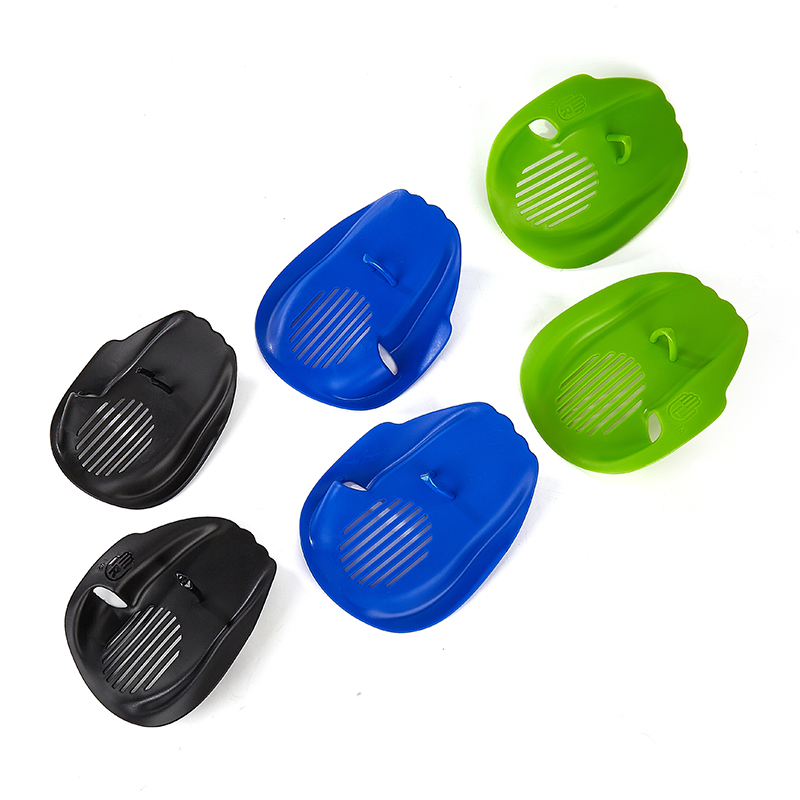
Most swimmers grab a pair of flat plastic paddles off the rack and wonder why their shoulders ache or their stroke feels sloppier by the end of a set. The truth is, your hands deserve better than rigid, one-size-fits-all slabs that force your fingers into an unnatural spread and punish your rotator cuff on every pull. The right paddles—especially those with a slight curve, strategic drainage holes, or a softer silicone edge—let you feel the water instead of fighting it. They sit balanced in your palm, so you stop overgripping and stop flaring your elbows. That small shift spares your shoulder while putting the load where it belongs: your lats and forearms. After a few hundred meters, the difference isn't just comfort; it's a cleaner, longer stroke that actually builds strength instead of bad habits.
Not every workout calls for the same blade size. Sprinters might want a compact, stiffer paddle for quick turnover and immediate feedback, while distance swimmers often prefer a slightly larger or more flexible surface to encourage a patient catch without wrecking their tempo. Pairing the right size with a couple of small technique tweaks—like pressing your fingertips down first and keeping your wrist neutral—helps you catch more water instantly and stops the paddle from dragging through the entry. You'll know it's working when the pull feels heavy but smooth, not choppy. And since chlorine eats cheap plastic faster than you'd think, look for paddles made from polypropylene, reinforced nylon, or medical-grade silicone. These materials shrug off pool chemicals and UV exposure, so the straps don't crack and the edges don't sharpen into irritating ridges. Across our top 10 picks, you'll find combinations that balance power, feel, and joint safety for every kind of swimmer.
Contact Us
Contact Person: Wendy
Email: [email protected]
Tel/WhatsApp: 86 18807398467
Website: https://www.zlfswim.com