
Top 10 Soy Wax Companies from China You Should Know
2026-11-03
If you’ve ever melted a candle that tunneled or left soot on the jar, you know soy wax isn’t all created equal. China has quietly become a major force in soy wax production, yet most buyers still struggle to separate reliable suppliers from the rest. This list of the top 10 soy wax companies from China cuts through the noise—and yes, XUSHI earns its place with a focus on clean burns and steady supply. Whether you’re sourcing for a candle brand or just curious about where high-quality wax comes from, here’s what to watch.
The quiet rise of Chinese soy wax makers
A decade ago, most soy wax used in candle studios from London to Los Angeles carried a made-in-the-USA label. Today, an increasing share of those white flakes arrives in unmarked bulk bags from ports in Qingdao and Ningbo. Chinese producers have quietly built a supply chain that now rivals American and European refiners on both price and consistency, though few end consumers ever notice the shift.
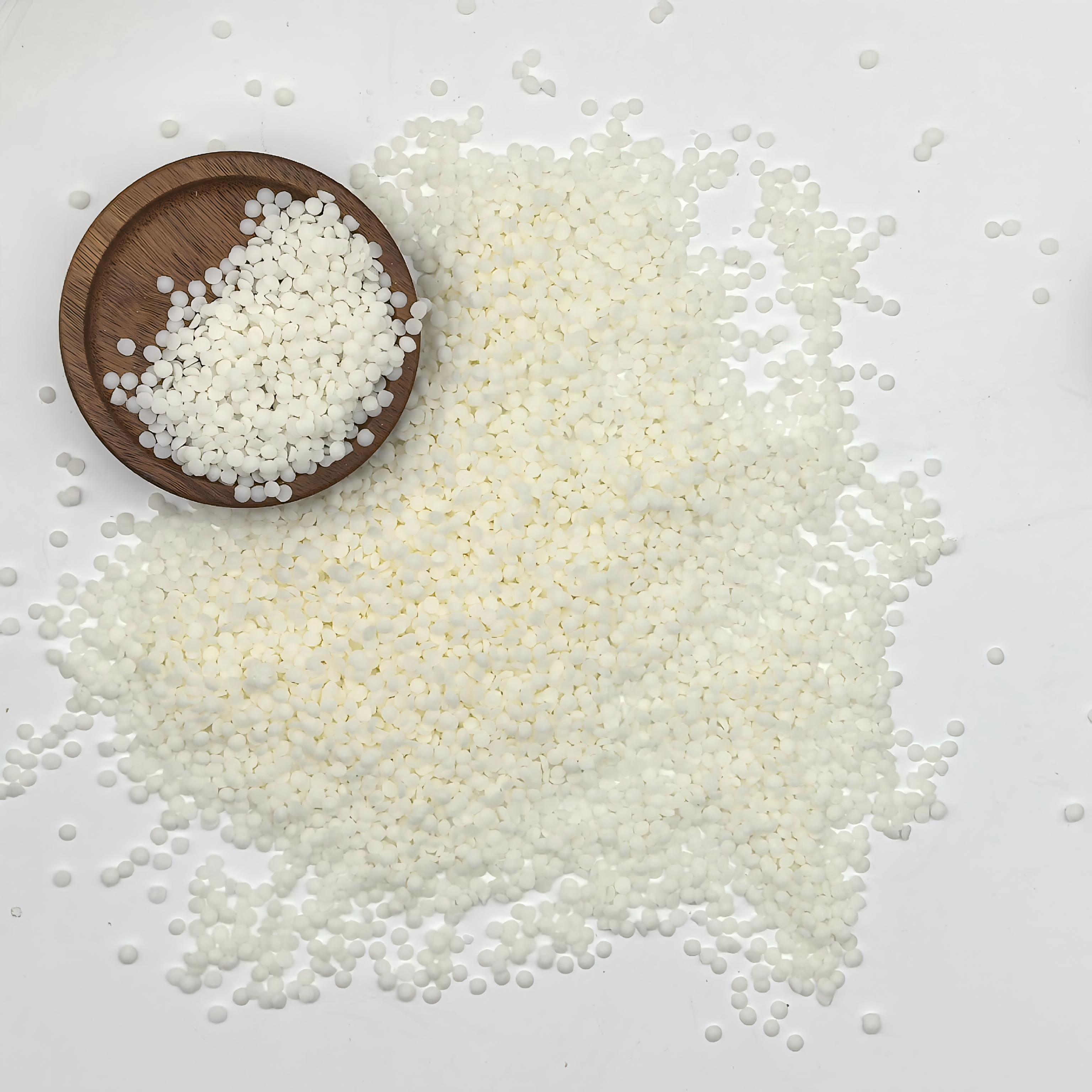
The rise stems less from a single breakthrough than from steady improvements in hydrogenation and blending. Small workshops that once made industrial lubricants have converted lines to handle food-grade soybean oil, tailoring melt points and fragrance retention to meet the demands of independent chandlers. Because many Chinese mills source soybeans from Brazil and Argentina as well as domestic farms, they can adjust raw material costs quickly, undercutting traditional suppliers without sacrificing purity. The result is a quiet but decisive realignment in a trade most buyers rarely question.
Inside the factories that supply global candle brands
The air inside these factories carries a heavy sweetness, a blend of paraffin, soy, and fragrance oils that clings to everything. Workers move between towering racks of cooling candles, trimming wicks and wiping glass vessels with practiced speed. Some lines are fully automated, with robotic arms filling jars to the exact gram; others rely on hand-pouring techniques passed down through generations. It is a strange mix of industrial precision and old-world craft, where a single misstep in temperature can ruin an entire batch meant for shelves in Paris or New York.
Quality control is relentless, because global brands demand identical results across continents. Every batch goes through burn tests, cold throw checks, and stability trials before a single box is sealed. Label alignment, wax adhesion, and wick centering are inspected under bright lights, often by workers who have done nothing else for years. The pressure to meet deadlines is intense, especially in the months before winter holidays, when production lines run around the clock and overtime becomes the norm.
Sustainability has begun to reshape the floor itself. More factories now use recycled wax blends, water-based coatings, and energy-efficient melting tanks to satisfy brand requirements. Yet the core rhythm remains unchanged: raw wax enters at one end, scented, colored, and poured, and emerges as a finished product that will flicker in homes thousands of miles away.
Why Chinese soy wax often beats the price-quality curve
For years, "budget-friendly" candles meant weak scent throw, uneven burns, and a wax blend that tunneled after the first light. Chinese soy wax flips that assumption. Local producers have invested heavily in hydrogenation and blending techniques that yield a harder, more consistent wax without the premium markup you'd expect from Western suppliers. The result is a product that holds fragrance better and burns cleaner, often at a fraction of the cost.
A big part of the advantage comes down to scale and proximity. Chinese manufacturers process enormous volumes of domestically grown soybeans, which lowers raw material costs and shortens the supply chain. Instead of shipping raw wax overseas for final refining, many factories now handle everything in-house—from bean crushing to wax flaking—so quality control stays tight and middlemen disappear. That efficiency shows up directly in the final price.
What really sets Chinese soy wax apart is its adaptability. Rather than pushing one generic formula, many suppliers offer custom blends for specific jar sizes, wick types, or fragrance loads. A small candle brand can request a wax that performs well in a 10-ounce tumbler with wood wicks, and get a consistent batch matched to that exact setup—without paying bespoke prices. This kind of targeted performance, at a price that undercuts older European or American options, is why Chinese soy wax keeps winning the value equation.
From soybeans to slabs: how these companies keep it consistent
Ask any plant manager who runs a soy processing line, and they will tell you the same thing: a soybean is not a fixed input. Moisture shifts from truckload to truckload, protein levels drift with the season, and the way a bean grinds on a humid Tuesday is different from a dry Friday. Keeping slabs uniform starts long before the press, with buyers who reject lots that fall outside a narrow spec and storage rooms where temperature and airflow are monitored like a server farm.
Inside the plant, the work is almost dull. Operators record slurry temperature every twenty minutes. They weigh the curd after cutting, not because someone asked them to, but because the number tells them whether the next press cycle needs an extra two minutes. Over time, those small decisions accumulate into a product that cuts the same way, browns the same way, and holds its shape in a pan without anyone on the line having to make a heroic adjustment.
Even then, the final say belongs to a tasting panel that compares every production run against a physical reference slab kept frozen from a gold-standard batch. They score snap, spring, and graininess with the same seriousness a brewery uses for off-flavors. If a batch drifts, it gets pulled, blended, or downgraded—never shipped and hoped for the best.
The application range most buyers overlook
When people shop for products like adhesives, sealants, or specialty tapes, they often fixate on the single use case they have in mind. They read the label, confirm it matches their current project, and move on. But that narrow focus causes them to miss a whole spectrum of applications hiding in plain sight. For instance, a high-temperature silicone marketed for engine gaskets might also excel at sealing outdoor light fixtures against rain, bonding heat-resistant fabric in a kiln repair, or creating a flexible waterproof barrier around rooftop vents. The true range only reveals itself when you stop asking “what is this made for?” and start asking “what properties does it have, and where else could those properties solve a problem?”
The overlooked range usually stems from two places: material properties that exceed the advertised use, and compatibility with surfaces or environments the manufacturer never highlighted. Take a UV-curing adhesive sold for glass repair. Most buyers assume it’s only for glass-to-glass bonds. But because it cures clear, withstands moisture, and remains slightly flexible, it can also secure acrylic diffusers in LED fixtures, seal small gaps in polycarbonate greenhouse panels, or create invisible joins in display cases. Similarly, a low-odor construction adhesive designed for interior trim might be the perfect solution for attaching acoustic foam to a home studio wall, mounting lightweight signage to painted drywall without nails, or reinforcing the back of a loose ceramic tile in a rental apartment. The application range expands dramatically once you ignore the product category name and focus on the actual behavior: How does it cure? What temperatures can it handle? Does it resist vibration, chemicals, or UV exposure? Does it stay flexible or become rigid? Each answer points to new possibilities.
To avoid missing that range, flip your research process. Instead of searching “best adhesive for [specific task],” search by the conditions your project must endure: “bonding rubber to metal outdoors with temperature swings,” or “sealing gap that moves slightly and gets wet.” Then compare the technical data sheets of whatever comes up. You’ll often find that a product originally marketed for automotive trim is ideal for weatherproofing a custom mailbox, or that a marine sealant beats a standard bathroom caulk for a shower with plastic wall panels. The application range most buyers overlook is not hidden in some secret manual—it’s visible to anyone who reads beyond the front label and tests against the real-world demands of the job, not the assumed category.
What to ask before partnering with a Chinese soy wax supplier
Start with the raw material itself. Ask whether the soy wax is 100% soy or a blend, where the beans are sourced, and whether the hydrogenation process is fully controlled in-house. A supplier who can explain their crystallization behavior and provide viscosity curves is far more useful than one who just quotes a price per kilogram.
Never sign off on a lab sample alone. Request a production-run sample from the same line that will fill your order, then burn it side by side with your current wax. Ask how many batches they run per month and what their tolerance is for melt point, scent throw, and color shift. If they hesitate to share batch records or won't let you visit the factory floor, treat that as a red flag.
Finally, nail down the commercial details that often get overlooked. Ask about minimum order quantities for custom blends, whether they can pack in your own labels or inner cartons, and who handles export documentation. If you sell in Europe or the US, confirm they have experience with the specific compliance paperwork your market requires—this can save weeks of back-and-forth later.
FAQ
Their edge often comes down to consistent hydrogenation control. Leading factories in Zhejiang and Guangdong run closed-loop systems that keep melt points within a one-degree range, which smaller operations struggle to match. You'll also notice tighter impurity filtering and better batch traceability.
Most production clusters sit around Ningbo, Suzhou, and Dongguan. Ningbo stands out for export-focused refining, while Dongguan has a strong base of private-label candle manufacturers who blend their own soy wax in-house.
Yes, and this is where many of them shine. Rather than selling one-size-fits-all wax, several top-tier suppliers will adjust viscosity and fragrance load capacity based on your jar dimensions and wick series. Some even run burn-testing labs for clients before finalizing a formula.
Request a third-party gas chromatography report for each batch, not just a pre-shipment sample. Also ask for the paraffin content percentage in writing. Reputable companies have no problem disclosing this, while less scrupulous traders tend to deflect or offer vague assurances.
Look beyond the usual ISO 9001. Many forward-thinking Chinese soy wax manufacturers now hold RSPO supply chain certification for palm-free alternatives, and some have switched to non-GMO soybean sourcing with USDA or EU organic equivalence. Ask directly about their feedstock origin instead of relying on marketing language.
Absolutely. A handful of companies in the Yangtze River Delta have moved into ultra-low-soot formulations and single-origin soy wax with distinctive burn characteristics. They often partner with fragrance houses in Shanghai and Guangzhou to offer complete scent-plus-wax systems, which high-end brands find convenient.
It varies widely. Commodity-grade soy wax can start at one metric ton, while custom-blended or certified organic options may require five to ten tons. Some exporters are flexible for trial runs if you agree to cover inland freight and documentation fees.
The biggest shift is vertical integration. Instead of just selling wax flakes, many Chinese companies now offer ready-to-pour wax, pre-waxed wicks, and even finished candle filling under one roof. This consolidation has reduced lead times for overseas buyers but also means you need to vet a supplier's entire supply chain more carefully.
Conclusion
The quiet rise of Chinese soy wax makers has turned them from anonymous commodity suppliers into critical partners for global candle brands. Inside factories across Guangdong, Zhejiang, and Shandong, you'll find not just basic flake production but advanced hydrogenation, precision blending, and lab testing that keeps melt point, scent throw, and surface finish consistent from batch to batch. That consistency is what often surprises first-time buyers: Chinese soy wax frequently beats the price-quality curve because vertical soybean sourcing, automated lines, and high-volume logistics squeeze costs without cutting corners. And the application range many overlook—beyond container candles, there are blends for tealights, pillars, wax melts, massage wax, and even food-grade coatings—means one supplier can cover multiple product lines if you know what to ask.
Before partnering with a Chinese soy wax supplier, dig into batch-to-batch variation, request technical data sheets and third-party test results, and clarify minimum order quantities plus seasonal lead times. Ask how they trace soybeans from origin to finished slabs and whether they can customize blends for tropical climates, high fragrance loads, or specific adhesion needs. The top ten makers stand out not because they are the loudest marketers but because they answer these questions with evidence and adapt without drama. Their rise reflects a broader shift: buyers who used to default to legacy Western suppliers now have leverage to improve margins and product performance, provided they evaluate facilities, not just price lists.
Contact Us
Contact Person: Alan Zhu
Email: [email protected]
Tel/WhatsApp: 8613931838766
Website: https://www.cnxushibeeswax.com