

Top 10 Shipbuilding Steel Plate Companies Shaping Modern Marine Construction
2026-09-12
Modern marine construction has moved far beyond generic steel plates. Deep-sea wind platforms, Arctic tankers, and next-gen naval vessels all demand exacting specs that only a few mills can meet. Among the familiar giants in this year's ranking, Sanhe Steel has been gaining attention for reasons that go beyond price. So, which ten names are actively shaping the future of shipbuilding steel—and what sets their plates apart? The list ahead offers a few surprises.
Why Hull Steel Choices Now Decide a Yard’s Delivery Timelines
Lead times for hull steel have quietly become the single biggest scheduling variable in newbuild projects. A yard that once locked in standard AH36 plate from two or three approved mills now faces a market where specific grades, widths, and even rolling schedules dictate whether a block can be cut in week 18 or week 30. When the steel arrives late, everything downstream—panel lines, block assembly, erection—compresses or slips, and delivery penalties start eating into margins that were already thin.
The problem isn't just volume; it's mismatch. Some yards order steel based on the design's nominal requirements, only to discover that the mill's current production run doesn't include the exact thickness or toughness class needed for the mid-body sections. Substituting a higher-grade plate seems safe until the extra weight forces recalculations in stability and deadweight, or until the class society asks for revalidation of welding procedures. Those unplanned loops consume weeks, not days.
Smart yards now treat hull steel procurement as a design-phase decision, not a purchasing afterthought. They map the entire nesting plan against mill rolling campaigns, lock in multiple heat numbers for critical plates, and build buffer time only where it doesn't trigger storage corrosion issues. The result isn't just an on-time delivery; it's a schedule that can absorb the inevitable hiccups from coating shops, outfitting, and sea trials without collapsing.
The Shift Toward High-Strength, Low-Weight Plate Alloys
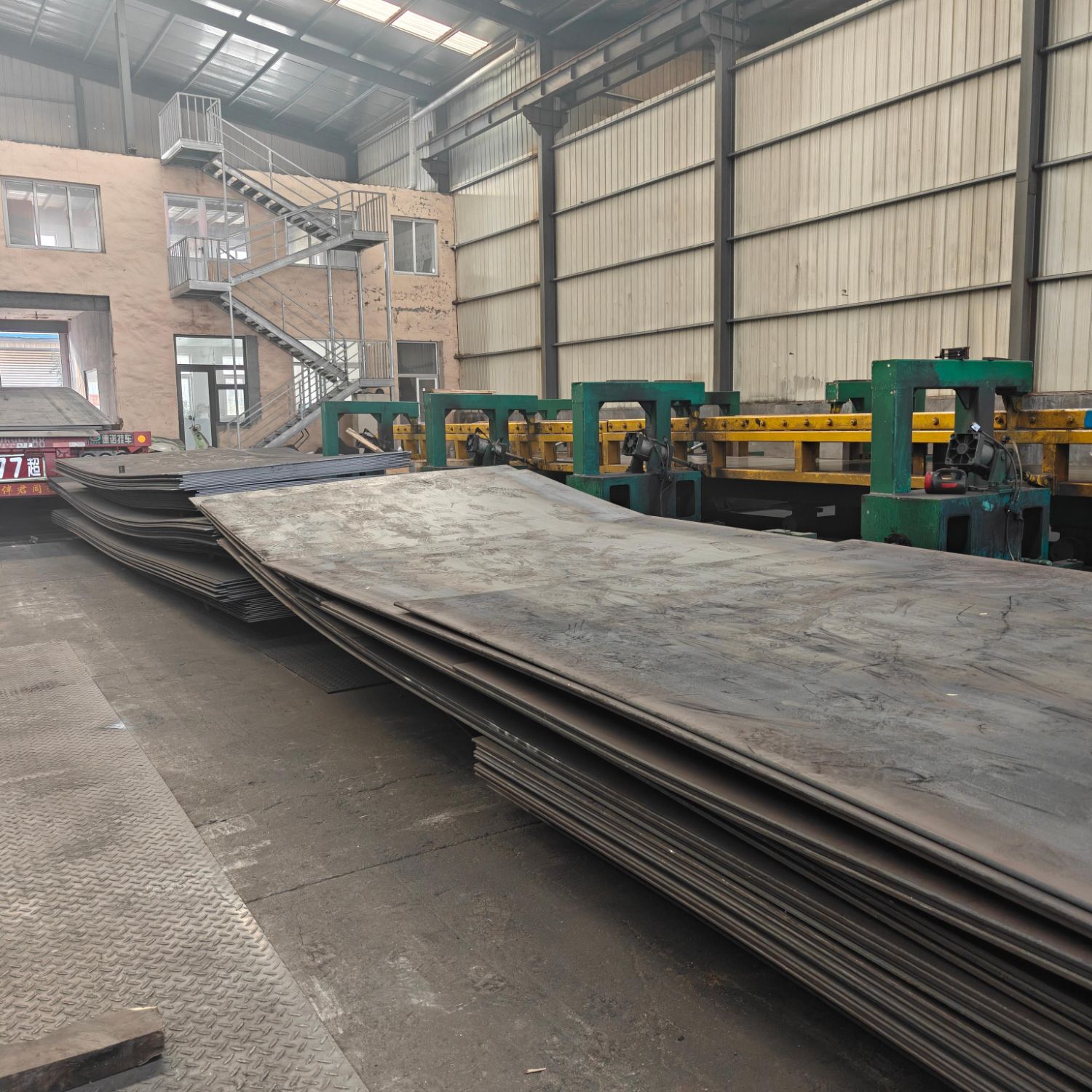
Manufacturing teams have spent years chasing the same pair of goals: cut weight without giving up toughness. Plate alloys are now moving in that direction faster than most people expected, driven by new rolling schedules and tighter control over precipitate distribution. Instead of simply thickening sections for safety, engineers are leaning on grades that hold their yield strength at thinner gauges.
This shift shows up in airframe skins, pressure vessels, and electric vehicle battery enclosures, where every kilogram matters. Alloy producers are tweaking zinc, magnesium, and copper ratios in aluminum plate, while steel mills push advanced high-strength grades with cleaner microstructures. The result is a quiet redesign of long-standing part geometries, allowing smaller weld lands and fewer stiffeners without compromising fatigue life.
How Coating-Friendly Surfaces Are Cutting Drydock Cycles
Shipowners have long accepted the brutal rhythm of drydock scheduling: strip, blast, coat, cure, repeat. The bottleneck rarely sits with the coating itself but with the surface left behind after years of salt, abrasion, and mechanical cleaning. New surface engineering methods now shift that balance. By reducing peak-to-valley roughness and locking in a stable anchor profile before the first coat ever lands, yards are seeing application windows compress from days to shifts. One operator reported a 40 percent drop in rework tied to surface contamination after switching to a pre-passivated substrate, simply because the coating grabbed hold the first time instead of sliding off a reactive layer.
The real breakthrough is not a single miracle primer but a whole class of coating-friendly finishes that eliminate the hidden enemy: flash rust between blasting and painting. Traditional workflows demand near-perfect humidity control and lightning-fast recoating, otherwise the freshly exposed steel turns orange overnight. Newly formulated surface passivators and laser-textured profiles keep the metal inert for up to 72 hours, even in coastal yards. That margin lets crews sequence tasks without panic, slice idle crane time, and push vessels out of the dock before weather windows slam shut. A mid-sized repair yard in Rotterdam cut average drydock time by six days per vessel simply by adopting these surfaces, without adding extra shifts or new equipment.
What gets less attention is how coating-friendly substrates change the economics of long-term maintenance. A smoother, more uniform anchor profile means thinner coats achieve the same corrosion barrier, cutting material volume per square meter. Fewer touch-ups after launch translate to fewer unplanned dockings down the line. When the hull returns years later, the old coating strips off cleaner, leaving less embedded salt and less aggressive blasting needed. The cycle tightens again. That compounding effect is why classification societies have started noting surface prep methods in their survey reports, not as a sideline, but as a predictor of how soon a vessel will need to come back.
Arctic-Grade Plates and the New Ice-Class Economics
For years, the cost logic of building an ice-class vessel was fairly straightforward: thicker hull plates, more steel, a heavier ship, and a predictable premium over open-water tonnage. Arctic-grade plates were seen as a necessary but unexciting line item. That arithmetic is now shifting. New high-strength, low-temperature steels allow shipyards to reduce plate thickness while maintaining the same ice resistance, cutting overall hull weight by up to 12 percent in some designs. The catch is that these steels carry a higher per-tonne price and demand more careful welding procedures. Yards with limited cold-climate experience are finding that the savings in steel volume can be partially eaten up by longer fabrication times and higher rework rates.
The real change, though, is in how the market values that hull. Charterers moving cargo through the Northern Sea Route or into the Baltic no longer treat ice class as a binary yes/no flag. They look at fuel burn per tonne-mile in broken ice, the number of days a ship can operate without icebreaker assistance, and the resale spread between an Arc4 and Arc7 unit. Insurance underwriters have followed suit, recalibrating premiums around actual hull performance data rather than class notation alone. For owners, this means the decision to specify Arctic-grade plates is no longer just an engineering call—it is a bet on how quickly route infrastructure, ice forecasts, and seasonal demand will mature. Some are ordering dual-purpose tonnage with reinforced bow sections and lighter aft structures, accepting a modest deadweight penalty in exchange for the flexibility to switch between ice and temperate routes without repricing the entire ship.
From Mill to Block: Traceability That Survives Class Inspections
Traceability begins with a unique identifier stamped or tagged onto each heat or lot at the mill. That mark stays with the material through cutting, machining, and assembly into a block, so no piece loses its origin along the way. Mill certificates are linked directly to those identifiers rather than stored as loose paperwork that can drift out of sync.
Every transfer between processes updates a single chain of custody record. The block number, the mill batch, the date of each operation, and the operator responsible all appear in the same log. When a surveyor asks to see the history of a particular block, the answer comes from one consolidated file, not from chasing emails or digging through archived folders.
During a class inspection, this approach turns the usual sampling exercise into a quick verification. The inspector can match the block’s stamped ID to its mill certificate, confirm the original heat analysis and mechanical properties, and close the loop without requesting additional destructive tests. Any gaps in the chain are visible immediately, which pushes suppliers to fix documentation issues long before an inspection ever starts.
What Leading Yards Demand from Plate Flatness and Dimensional Control
Top-tier fabrication yards rarely speak in vague terms when it comes to plate flatness. They specify exact tolerances, often tighter than mill standards, because any wave or crown translates directly into fit-up hours on the block. A plate that arrives with 6 mm of ripple across a 3-meter span might pass a generic commercial spec, but it will force welders to compensate with extra root gaps, heavier tack welds, and eventually more distortion correction after full penetration joints. Leading yards push for flatness measured on a 300 mm grid, not just a 1-meter straightedge, and they expect the data log to follow each plate from mill to cutting table.
Dimensional control goes beyond length and width. Experienced production engineers watch diagonal measurements, edge squareness, and thickness variation across the plate. A 20 mm plate that tapers to 18.5 mm in one corner is not just a material loss—it changes the preheat requirement, weld pass count, and the predicted shrinkage at the joint. The best yards demand that the supplier guarantees thickness tolerance as a band, not an average, and that edge camber is held under 0.1% of the plate length. These are not arbitrary hurdles; they come from hundreds of blocks where a 2 mm deviation in one plate cascaded into a 15 mm misalignment three decks up.
What separates leading yards from the rest is how they use flatness and dimensional data before cutting begins. They map each plate against the nesting plan, rotating or shifting parts so that local flatness deviations fall into non-critical zones like web stiffener spacing, not flange edges or butt weld lines. This requires the dimensional report to include a full surface scan, not just a few sample points. Yards that insist on this level of control routinely report 30–40% fewer hours in panel straightening and rework, which is why their suppliers treat flatness and dimensional certificates as binding documents, not check-the-box paperwork.
FAQ
POSCO and Hyundai Steel from South Korea, Nippon Steel and JFE Steel from Japan, plus China's Baowu, Ansteel, and HBIS usually top the list. They operate dedicated wide-plate mills and hold approvals from major classification societies, allowing them to serve yards building VLCCs, bulk carriers, and container ships. ArcelorMittal and Nucor also play a role, mainly for regional or specialized newbuilds.
Ship plates must absorb high dynamic loads, resist brittle fracture in cold water, and survive years of salt spray. Mills achieve this through controlled rolling or thermo-mechanical control processing, which produces fine grain structure and high toughness at thicknesses up to 100 mm or more. Grades like AH32, DH36, and EH40 specify minimum Charpy impact energy at different temperatures, something standard S355 building steel doesn't guarantee.
Chinese mills focus on high volume and competitive pricing, with several integrated works near major shipbuilding clusters. South Korean producers emphasize close ties to domestic yards like Hyundai Heavy and Samsung Heavy, often co-developing grades for LNG carriers and large boxships. Japanese mills are known for tight chemistry control and consistent flatness, which appeals to yards building precision-intensive vessels such as car carriers and chemical tankers.
Fewer seams mean less welding, fewer distortion corrections, and faster block assembly. Modern 24,000 TEU boxships and Q-Max LNG carriers use plates up to 4.5 meters wide and 80–100 mm thick in high-stress areas. Wider plates also reduce the number of butts and fillets, cutting inspection time and lowering the chance of fatigue cracks over the vessel's service life.
Thyssenkrupp and SSAB are the main names. They supply extra-wide, high-strength, or low-temperature plates for icebreakers, naval submarines, and offshore wind installation vessels. Their edge comes from vacuum degassing and quench-and-temper lines that deliver very tight toughness and flatness tolerances, even if their output is small compared with Asian mills.
Every plate needs a certificate from a recognized classification society—DNV, Lloyd's Register, ABS, ClassNK, or Bureau Veritas. The mill stamps heat numbers and runs tensile tests, bend tests, and Charpy V-notch impact tests at specified temperatures. Chemical composition is checked against the grade, and for thicker plates, ultrasonic testing may be required to rule out internal laminations.
Yards are asking for higher-strength grades like EH36 and EH40 so they can use thinner plates without sacrificing hull strength, which reduces steel weight, fuel burn, and carbon emissions. Some owners also request plates with a high recycled content or produced via electric arc furnaces to lower the vessel's embodied carbon. These shifts align with IMO efficiency targets and pressure from charterers to cut emissions.
Steel plate is one of the largest material costs in a newbuild, often accounting for 25–35% of total vessel cost. Iron ore, coking coal, scrap, and energy prices directly influence quarterly or semi-annual plate contracts. When plate prices spike, yards either delay orders or pass costs to owners through higher contract prices, which is why newbuild price indices track steel markets closely.
Conclusion
For shipyards under pressure to meet delivery dates, the plate they order now determines whether a hull moves through assembly on schedule or stalls at the cutting table. Leading steel suppliers have responded by narrowing mill tolerances and offering high-strength, low-weight grades that let designers remove mass without sacrificing fatigue life. That shift matters because less steel means fewer weld passes and shorter block assembly times, directly linking material choice to yard throughput. At the same time, coating-friendly surfaces have become a quiet differentiator: plates that arrive with controlled mill scale and minimal pitting need less blasting and primer, trimming days off drydock cycles and reducing rework in confined spaces.
The push into Arctic routes has made ice-class plate economics impossible to ignore. Yards building for polar operations now demand materials with guaranteed low-temperature toughness, and the best mills pair that with full traceability from heat number to block erection. Class inspectors increasingly expect digital records that survive audits, not paper trails that vanish in the yard. Flatness and dimensional control round out the list, because a plate that arrives bowed or over-width forces fitters to spend hours with jacks and gouging torches. The companies shaping modern marine construction are those treating steel plate not as a commodity but as a precision component that carries the schedule, the coating, and the class certificate with it.
Contact Us
Contact Person: Zoey
Email: [email protected]
Tel/WhatsApp: +86 15865577002
Website: https://www.sanhesteels.com