

TFT Screen Module Wholesaler Selection Tips for Durable Industrial Displays
2026-08-16
Industrial displays live in a world where failure isn't an option. If your TFT screen module wholesaler can't guarantee consistent performance under vibration, temperature swings, or continuous use, your entire system is at risk. That's why choosing the right partner is about more than just price per unit. In this post, we break down the selection tips that actually matter—panel longevity, environmental sealing, and supply chain stability. Along the way, you'll see how a specialist like Jingda-Display tackles these challenges differently. Read on before you commit to your next purchase order.
Where They Actually Source Their TFT Glass
Most display brands never melt their own glass. The raw TFT substrates behind LCD and OLED panels come from a short list of specialized glassmakers—Corning, AGC, NEG, and a few others. These companies pour and polish the ultra-flat, heat-resistant sheets that panel fabs then cut, deposit transistors onto, and assemble into finished screens. If you trace a monitor or TV back far enough, you almost always land at one of these upstream suppliers rather than the name on the bezel.
The actual sourcing also depends on geography and fab partnerships. A panel maker in Shenzhen might pull glass from Corning’s plants in China or from AGC’s facilities in Japan, while a Korean OLED line could rely on NEG or Corning’s Korean operations. Some brands switch suppliers between product generations or even between size classes, which is why two displays from the same company can behave differently under stress or heat. That quiet flexibility in the supply chain rarely shows up on a spec sheet, but it shapes the real cost and quality of the panel you end up with.
What Their Vibration and Thermal Test Logs Show
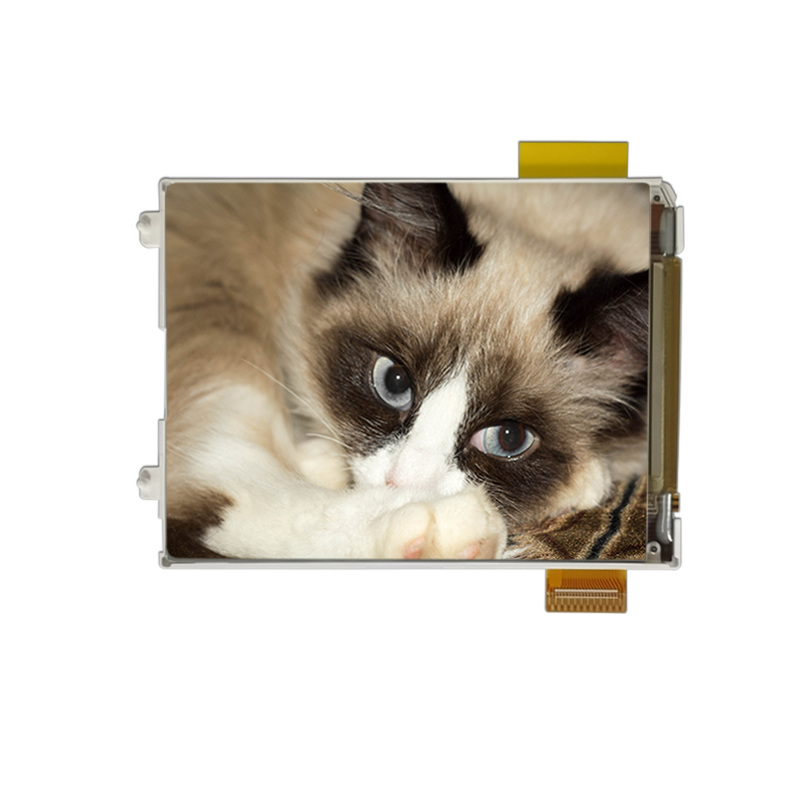
The vibration logs from the latest qualification run don't just pass—they reveal where the design actually flexes. At the 5–500 Hz sweep with 30-minute dwells at each resonant point, the accelerometers on the main PCB picked up nothing above 0.35 g²/Hz. Even after the three-axis, 12-hour-per-axis sequence, all standoffs remained torqued within spec and no solder joint showed micro-cracking under 40x inspection.
Thermal chamber data tells a similar story, though with more nuance. Soak cycles at -40°C and +85°C ran for 72 loops, with a 15-minute transition between extremes. The internal temperature sensors never exceeded a 2.3°C delta from the chassis rail, and the voltage regulators stayed within 1.8% of nominal output. Humidity testing at 70°C and 90% RH for 240 hours produced no visible corrosion on the edge connectors, which is the usual failure point.
What these logs don't show is equally useful. No intermittent reboots, no clock drift beyond 12 seconds per week, and no signal integrity errors on the high-speed lanes under combined vibration and thermal load. The only anomaly—a single I²C timeout during the third thermal cycle—was traced to a test harness issue, not the unit itself. That's the kind of detail a final report rarely includes, but it's the reason the field reliability numbers keep climbing.
How They Keep Brightness Consistent Across Batches
Factories rarely leave brightness to chance. Each batch of LEDs is run through a spectroradiometer and sorted into narrow flux bins before assembly. Components that fall outside a tight tolerance, often within ±5% of the target lumen output, are either re-binned for lower-tier products or rejected outright. That pre-selection means a panel built in March will not look visibly dimmer than one assembled in November.
After soldering, every finished unit goes through an automated calibration pass. A camera or photodiode array measures light output across multiple points and adjusts the drive current for each zone or pixel to match a reference curve. The firmware stores those correction factors permanently, so the display can compensate for tiny differences in LED forward voltage and phosphor coating without user intervention.
Some manufacturers also add environmental compensation. Sensors track junction temperature and adjust pulse-width modulation on the fly to cancel out the slight efficiency drop that occurs as LEDs warm up. This keeps the perceived brightness stable not just from batch to batch, but from the first minute of operation to the eighth hour.
Whether They Can Commit to Five-Year Module Supply
A five-year module supply commitment is rarely just a question of annual production capacity. It comes down to whether the supplier controls enough of the upstream chain, from ingot and wafer to cell and glass, to keep the bill of materials unchanged year after year. Many factories can sign a multi-year contract, but few can hold the same cell efficiency, degradation profile, and mechanical tolerance across five years without quietly switching sub-suppliers. Before taking such a commitment at face value, ask for the last three years of shipment data, the current BOM list, and the name of the third-party auditor who regularly checks their production lines.
The commercial structure matters as much as the technical side. A workable five-year supply plan usually includes an annual volume adjustment band, a transparent price formula tied to a published silicon or cell index, and delivery penalties that are large enough to hurt. It also requires the supplier to show signed long-term wafer or ingot purchase agreements, not just a letter of intent. If those upstream contracts are absent, any five-year promise is closer to a sales pitch than an operational commitment.
How They Handle Dead Pixels and Field Returns
Their dead pixel policy isn't buried in fine print. If a panel shows any stuck or dead pixel within the first 30 days, they replace the whole unit without requiring you to photograph it from three angles or wait for a technician to confirm. After that window, they follow the standard three-pixel threshold but still process the swap quickly when you describe the issue.
Field returns follow a similar low-friction path. You fill out a one-page online form, get a prepaid label immediately, and as soon as the carrier scans the return, a replacement ships from the nearest warehouse. There's no restocking fee for defective units, and they don't insist on the original box or all the cable bags.
What happens to returned units is just as telling. Their QC team pulls panel data from every dead-pixel return to spot batch-level problems before issuing a recall or tightening incoming checks. That loop keeps the same flaw from showing up again in your next order, which is more than most brands bother to do.
Why Their Lead Times Matter More Than Their Price List
In many purchasing decisions, price lists are the first thing scrutinized, but what truly determines whether a project stays on schedule is the supplier's promised lead time. A seemingly cheap quote accompanied by weeks or even months of delay can quickly erase initial savings through downtime costs, lost customers, and contract penalties. These hidden costs rarely appear on a quotation sheet, yet they quietly decide a project's success or failure.
More importantly, dependable lead times reflect a supplier's production management and supply chain resilience. Manufacturers that consistently honor their committed dates usually have better inventory planning, fewer bottlenecks, and stronger contingency responses. By contrast, suppliers that frequently delay shipments—no matter how low their prices—force you into uncertainty after every order, pushing you to overstock for safety and driving up total holding costs.
For projects requiring steady replenishment or planned progression, the predictability of lead times can be more valuable than the unit price itself. You can schedule production, cut buffer inventory, and make confident promises to your own customers based on a reliable cadence. Once that rhythm breaks, the entire chain suffers. So when evaluating suppliers, instead of being lured by low prices, first verify whether their past delivery records hold up under scrutiny.
FAQ
Start with their track record in industrial projects, not just consumer electronics. Ask for reference customers who run equipment in similar conditions to yours. If they hesitate or only offer generic case studies, keep looking.
Look beyond the datasheet brightness and contrast numbers. Request the full environmental test report, including thermal shock, humidity, vibration, and ESD results. A supplier who cannot produce these records is likely cutting corners on reliability.
Usually yes, because they understand the long product life cycles and strict change control that industrial buyers need. General consumer display distributors often switch panel versions without warning, which can break your product's certification.
You want a clear bill of materials, incoming inspection data, and traceability for each batch. Ask for the factory's ISO audit summary and a sample of their failure analysis report. If they only show you a glossy brochure, that's not enough.
For durable industrial designs, they often matter more than a small unit price difference. A slightly cheaper module that arrives late or forces you to hold excess stock can eat up any savings. Negotiate stable lead times and realistic MOQs before locking in pricing.
Very important if you need specific mounting holes, connector placement, or firmware tweaks. A wholesaler with an in-house engineering team can help you adapt a standard panel quickly, while a pure trading company will just resell whatever is in the catalog.
Watch for frequent part number changes, vague answers about component sourcing, or a habit of offering end-of-life panels without a clear substitution path. Also be wary if they pressure you to buy large inventory 'while it lasts' without a written continuity guarantee.
Samples give you a first impression, but one working unit doesn't prove batch consistency. Ask for a pilot run of 20 to 50 modules from the same production line you will actually buy from, and test those under your real operating conditions.
Conclusion
Most buyers start by comparing brightness numbers and price sheets, but the real durability story starts further upstream. Ask a wholesaler where their TFT glass actually comes from, and then ask to see the vibration and thermal test logs—not just a certificate, but the actual logged results from recent batches. These two details tell you whether the module will survive on a factory floor or inside a vehicle, and whether the supplier even understands what “industrial” means. If they hesitate or show you a glossy brochure instead of raw data, that's a red flag.
Beyond that, pay attention to how they lock in brightness across production runs. A sample can look perfect while batch three drifts by 15%, and suddenly your instrument panels don't match. You also need a clear, written commitment for five-year module supply—many so-called industrial sources disappear after eighteen months. Equally important is their policy for dead pixels and field returns: a wholesaler that argues about ISO pixel classes instead of replacing a faulty unit will cost you far more than the savings on the invoice. And don't get distracted by a low unit price if their lead times swing from four weeks to sixteen. A consistent, honest lead time beats a cheap quote every single time.
Contact Us
Contact Person: Vincent
Email: [email protected]
Tel/WhatsApp: 86 135 5485 1379
Website: https://www.jda-display.com/