

Switchgear Tulip Contact Exporter Guide for Global Sourcing
2026-11-02
Most switchgear failures trace back to a component that rarely appears on the first page of a spec sheet: the tulip contact. Global sourcing teams that treat it as a simple commodity often pay later in unexplained heat rise, damaged fingers, or late shipments. This guide helps you separate serious exporters from catalog-only vendors—covering silver plating thickness, contact resistance stability, spring force, and packaging that survives real transit. MOLDVOLT brings that same inspection-first perspective, making the brand a useful reference point as you build your supplier shortlist.
Tulip Contact Design Variations That Trip Up First-Time Buyers
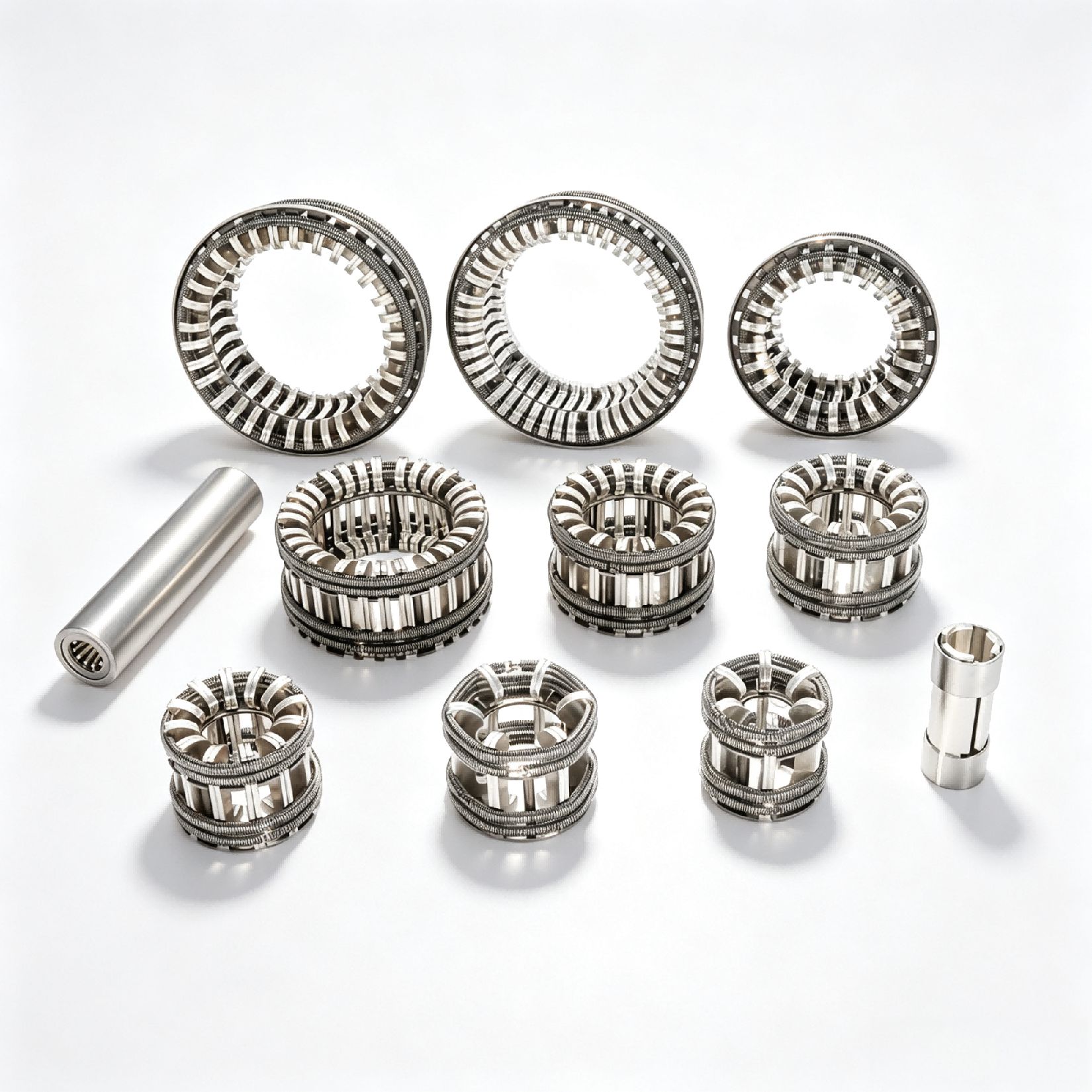
Many first-time buyers assume a tulip contact is a tulip contact, but the number of fingers and the shape of each finger changes how the connector handles thermal expansion and misalignment. A 12-finger design with a steep inward curve grips tightly but can be unforgiving if the mating blade sits slightly off-center. A 16-finger version spreads the load more evenly, though it may require a higher insertion force than the spec sheet suggests.
Spring arrangement matters just as much. Single circular garter springs are common and inexpensive, but they create a non-uniform pressure profile as the contact ages. Double springs, or individually sprung fingers, avoid the sudden drop in contact force after repeated cycling. If the assembly will see frequent connect/disconnect operations, individually sprung fingers are worth the added cost.
Material and plating choices are another source of confusion. Bare copper tulip contacts look fine on paper but quickly develop oxidation layers in humid environments. Silver-plated contacts resist that oxidation, but the plating thickness needs to match the expected current density; too thin and the silver wears through at the high points. Check whether the rated current assumes a specific plating thickness or a particular finger count before comparing two quotes.
Reading an Exporter’s Test Reports Without Getting Misled
Test reports from exporters often look impressive at first glance—neat tables, official logos, and a long list of passing marks. But a closer read can reveal gaps between what was actually tested and what the marketing brochure implies. One common issue is the mismatch between the sample described in the report and the product you would actually receive. Always verify the model number, batch, or specific variant mentioned in the header. If the report references a “representative sample” without defining how it was selected, ask for the sampling procedure. Exporters sometimes submit their best units for testing while the rest of the shipment may vary.
Another thing to watch is the scope of the test itself. A report may show excellent results for a narrow set of parameters—say, tensile strength or colorfastness—while completely omitting other critical properties like chemical safety, durability under real use, or compliance with your market’s mandatory standards. Don’t assume that a glowing report means full compliance. Cross-check the listed test methods and the standards they reference. If the report uses an outdated or less stringent standard than the one required in your country, the results are not directly applicable. Also note whether the testing was done by an accredited third-party lab or an in-house facility; self-generated reports are easier to produce and can be less reliable.
Finally, pay attention to the language and formatting. Phrases like “passed,” “meets requirements,” or “no abnormalities detected” can hide conditional results—for example, a pass only at a certain temperature or after a specific preconditioning. Look for footnotes, asterisks, and fine print that qualify the results. If a report is unusually short for the product’s complexity, or if critical sections like “test deviations” or “remarks” are empty, treat that as a red flag. When in doubt, request the full raw data or a retest from an independent lab before you place an order. Reading a report carefully is not about paranoia; it’s about making sure the paper reflects reality, not just the exporter’s hopes.
Material and Plating Choices That Decide Contact Endurance
Base metals set the stage, but plating writes the final act. A contact stamped from beryllium copper can flex for millions of cycles without losing its shape, yet its bare surface tarnishes in humid air and invites fretting corrosion. That’s why gold, despite its cost, remains the default for low-force signal contacts—its oxide-free surface keeps insertion losses stable even after years of idle storage. For power paths, silver and silver alloys carry current with minimal voltage drop, though tarnishing demands a wiping action on every mate. Nickel underplating often hides beneath both, a diffusion barrier that stops base metal from creeping into the precious layer and turning a 10-year contact into a 10-month one.
Selective plating changed the economics. Instead of coating an entire connector, manufacturers deposit gold only on the actual mating zone, leaving the tail and body in tin or bare alloy. This cuts material cost by over half while preserving the exact wear surface that matters. But the transition line between gold and tin becomes a new weak point—galvanic corrosion can eat at that boundary if moisture bridges the two metals. Designers handle this by moving the transition away from any potential moisture path, or by using a flash of palladium-nickel as a buffer that slows the electrochemical attack without adding meaningful thickness.
Wear resistance is where plating chemistry earns its keep. Pure gold is soft; a 0.8 µm layer disappears within a few hundred cycles under 100 grams of normal force. Cobalt-hardened gold, at the same thickness, survives five times longer because the hardened surface resists adhesive transfer and micro-welding. For connectors that must endure 10,000 cycles or more, palladium-nickel with a thin gold flash offers a better balance—the palladium layer provides the hardness and wear resistance, while the gold flash delivers low contact resistance and corrosion protection at the initial touch. The penalty is a slightly higher resistance than pure gold, so it never suits microvolt-level signals.
What Factory Audits Reveal That Paperwork Never Does
A supplier's self-reported quality metrics might look spotless on a spreadsheet, but walking the floor tells a different story. Audits expose the unspoken realities: equipment that's been "temporarily" bypassed, calibration stickers that expired months ago, and workers quietly improvising because the documented process simply doesn't match the actual workflow.
The most valuable findings often surface in the gaps between shifts or in the corners of the warehouse. While paperwork captures what was supposed to happen, an audit captures what actually happens when no one is preparing for a visitor. From inconsistent material handling to overlooked safety shortcuts, these observations reveal risks that no checklist can predict.
That's why experienced buyers treat audits as a live diagnostic rather than a compliance formality. The real signal isn't in the binder of certificates—it's in the rhythm of the line, the condition of the tooling, and the ease with which a floor supervisor can explain deviations. Those details, impossible to fully document, are what separate a factory that looks good on paper from one that actually performs under pressure.
Protecting Precision Surfaces Through Multimodal Shipping
Precision surfaces rarely fail from a single obvious impact. They degrade through the cumulative effect of micro-vibrations, humidity swings, and careless handling at transfer points. When a component moves by truck, rail, and vessel, each mode introduces its own set of stresses, and the packaging has to account for all of them at once. A thin corrosion-inhibiting film alone won't survive a container yard or a rough rail switch. Instead, the protection strategy must start with the assumption that the crate will be jostled, stacked, and exposed to temperature cycles that encourage condensation.
Effective multimodal protection usually combines several layers. Custom-machined cradles or soft slings keep ground or lapped faces isolated from the crate walls, while viscoelastic dampers absorb low-frequency vibration that can cause fretting. For parts with tight flatness or finish tolerances, vapor-phase corrosion inhibitors or desiccant packs are sealed inside a barrier film, and the internal atmosphere may be purged with nitrogen before final closure. At mode changes, the load should be inspected and re-tensioned, because tie-downs that were snug on a flatbed can shift after a container is lifted and placed on a ship.
Beyond the physical packaging, protecting precision surfaces through multimodal shipping demands a chain-of-custody mindset. Shock and tilt indicators on the exterior give handlers immediate feedback, while temperature and humidity loggers provide a record if a claim needs to be filed. The most successful programs also include short loading and unloading briefings for crews at each handoff, making it clear which faces are critical and where lifting is permitted. That kind of deliberate communication turns a routine freight move into a controlled transfer of a high-value surface.
Contract Clauses That Keep Global Sourcing Risks Manageable
Relying on a single supplier in a distant market can quietly erode your negotiating power. A well-drafted contract should include a clause that lets you shift part of the volume to a backup source without triggering penalties, as long as you give reasonable notice. This keeps your primary vendor attentive while giving you a practical hedge against sudden factory closures or shipping disruptions.
Too many sourcing agreements ignore the messy reality of customs holds, port congestion, and unpredictable tariff changes. Instead of vague language about “best efforts,” pin down who bears the cost and delay when goods are stuck at the border. A clause that ties delivery dates to actual customs clearance—rather than a simple ship date—forces both sides to plan for friction and reduces finger-pointing later.
Intellectual property and quality standards often degrade when oversight is loose. Add a clause that grants your team the right to conduct unannounced audits of the supplier’s facility, including subcontractors they use. Pair that with a remedy structure: if a defect rate exceeds a set threshold for two consecutive quarters, you can reduce order volume or exit the contract without exit fees. That gives the supplier a concrete reason to maintain standards instead of hoping you won’t notice.
FAQ
Check whether the exporter can provide dimensional drawings and material test reports for the exact tulip contact profile you need instead of relying on catalog photos. Ask for a sample batch from current production and have it measured against your existing contact fingers, because small deviations in spring retention or finger diameter often only show up after repeated mating cycles.
Tulip contacts carry current through multiple independently sprung fingers, which gives them a larger contact surface and better tolerance for misalignment than rigid butt contacts. In medium-voltage withdrawable breakers this design reduces hot spots during high-current interruptions and allows the contact set to survive frequent racking operations without losing clamping force.
Look beyond the base copper alloy. The silver plating thickness, plating adhesion method, and the heat treatment of the finger springs have a bigger impact on service life than the raw material grade alone. A well-made tulip contact will use a minimum of 8 to 10 microns of silver on the contact surfaces, with nickel underplating to stop copper migration.
A serious exporter should hold ISO 9001 for quality management and ideally IEC 62271-100 type test reports covering the contact assembly. However, certifications alone are not enough. Ask for evidence that the same production line that made the certified sample also makes the export order, because some suppliers shift to lower-cost processes after certification.
Never order large volumes based on a single image or a low price. Ask the exporter to send three pre-production samples from different production runs, then test them in a representative breaker or a test jig. Compare the contact resistance, insertion force, and finger spring pressure against your reference parts before committing to a bulk order.
At minimum, the exporter should offer a written warranty covering dimensional conformity and plating adhesion for a defined number of operating cycles. They should also provide replacement units for any batch that fails incoming inspection and be willing to share root-cause analysis if a defect appears after installation.
Retrofitting often involves matching new tulip contacts to existing breaker stems and bushing spouts that may already show wear. If the tulip contact outside diameter or finger opening is off by even a few tenths of a millimeter, the breaker may not rack smoothly or may overheat at the interface. Exact dimensional control also determines whether the contact can be swapped without modifying the surrounding insulation.
Provide a full dimensional drawing, the required contact force range, and the operating voltage and current ratings before asking for a quote. A good exporter will propose a joint review of the spring design and plating thickness rather than simply copying the dimensions. This collaborative step catches problems that a drawing alone cannot show, such as metal fatigue at the finger root.
Conclusion
Global sourcing for switchgear tulip contacts brings enough hidden traps that a buyer's first order often becomes an expensive lesson. The design variations alone are surprising: contacts that look identical in catalogs can differ in finger count, contact pressure, and radius, and those differences will trip up a first-time buyer who assumes a standard part will fit. Reading an exporter's test reports requires more than scanning for a pass mark; you need to know whether the tests were run at the same current and duty cycle as your application, and whether samples were picked randomly or hand-selected. Material and plating choices are where endurance is won or lost, yet many buyers don't ask about silver thickness, underplate, or whether the base copper alloy is oxygen-free.
A factory audit often reveals what paperwork never does: whether the line uses controlled torque, whether assembly rooms are clean enough to avoid particle contamination, and whether calibration records are actually current. Once the contacts leave the factory, protecting precision surfaces through multimodal shipping means specifying sealed packaging, desiccants, and vibration-resistant cradles, because a few scratches or corrosion spots can ruin contact resistance. Finally, contract clauses should not be an afterthought; clear terms on dimensional tolerances, inspection rights, rejection thresholds, and liability for transit damage keep global sourcing risks manageable. Skip any of these and you aren't buying a component, you're buying a problem.
Contact Us
Contact Person: Hellen
Email: [email protected]
Tel/WhatsApp: 86-13634205622
Website: https://www.voltcabinet.com