

Rigid Chain Lift System Factory Evaluation Checklist for Smart Buyers
2026-11-16
Smart buyers don't choose a rigid chain lift system factory by the size of its showroom or the speed of its sales reply. They choose by what happens on the production floor when nobody is watching. This evaluation checklist isn't another feel-good audit form—it's a field-tested filter for separating serious manufacturers from well-dressed middlemen. Homall Industry Limited has built this guide for procurement teams who want to verify weld quality, material traceability, and load-test consistency before a single purchase order is signed. Use it to ask sharper questions, spot red flags early, and avoid the costly habit of learning from a failed lift system instead of a clean factory visit.
Rigid Chain Lift Assembly: What to Inspect on the Factory Floor
During a factory floor inspection of a rigid chain lift assembly, the first thing I always do is run the lift through a slow full cycle without any load. That's when you catch the subtle stuff—slight hesitation in the chain engagement, a faint clicking from the sprocket area, or a chain that seems to ride up on the teeth instead of seating cleanly. I watch the chain as it feeds into the storage magazine, too. If it bunches or twists even a little, that's a red flag because once it's under load, that minor misalignment turns into a jam that's both costly and dangerous.
Next, I put a torque wrench on every critical bolt in the lift column and the base mounting plate. It's not enough to see that a bolt looks tight—rigid chain lifts generate a lot of cyclic vibration, and that backs off fasteners in ways you won't notice until a joint starts moving. I pay special attention to the bolts connecting the drive motor to the gearbox and the gearbox to the lift housing. A little wear or slack there changes the entire load path, and before you know it, you've got a chain that's no longer perpendicular to the platform.
Finally, I test the safety systems under simulated fault conditions. I manually trip the overtravel limit switch while the lift is moving, then cut power mid-cycle to see if the brake engages instantly without any coasting. On rigid chain systems, the brake has to act directly on the chain or the drive shaft—not through a gear reduction where backlash can allow a small drop. I also check the chain tensioner and lubrication points, but I try to avoid over-greasing. Excess grease collects debris and actually accelerates wear on the chain links, so a light, even film is better than a heavy coat.
Load Testing Protocols That Reveal True Rigid Chain Durability
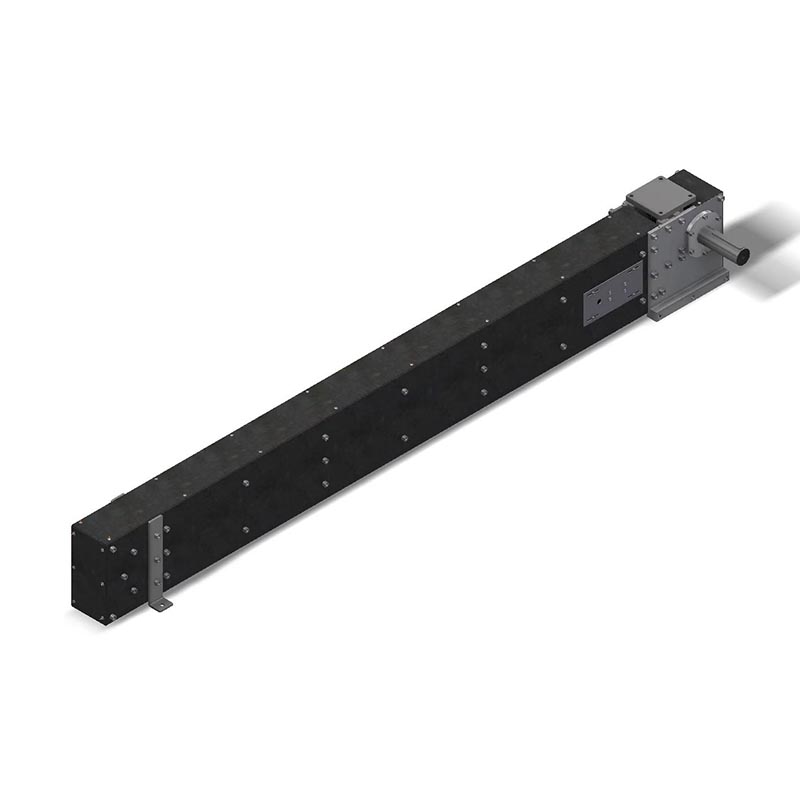
Most static pull tests give you a number that looks reassuring on paper, but they rarely predict how a rigid chain will behave after a few hundred thousand cycles under real-world tension spikes. That's why the only trustworthy protocols are the ones that simulate actual duty cycles—gradually ramping load, holding at peak, then releasing without letting the chain go slack. The moment a test allows slack, the data stops representing true durability and starts measuring something closer to impact survivability.
A better approach is to run the chain through staged load blocks: first at 60% of rated capacity for an extended break-in, then step up to 85% while monitoring elongation and link articulation. You're not just looking for failure—you're watching for the quiet signs of wear, like uneven pin rotation or micro-cracking at the plate edges. Those small aberrations, if left unchecked, are what eventually lead to a sudden, catastrophic failure in the field. By the time the protocol finishes with a high-load sprint and then a teardown inspection, you'll know whether the chain's claimed durability is backed by metallurgy or just by marketing.
Chain Link Materials and Heat Treatment: The Overlooked Longevity Factors
Most people assume a chain is just a chain—until it snaps under load. The alloy behind the link matters more than its diameter or working load limit. Standard carbon steel grades like 20Mn2 are common, but switching to boron-treated or nickel-chromium-molybdenum alloys can double fatigue resistance in the same cross-section. The real difference, though, hides in the grain structure. A poorly normalized link will carry micro-stresses from forging that shorten its life even if the surface looks flawless.
Heat treatment is where chain longevity is won or lost. Induction hardening on the wear surfaces creates a tough, hard outer skin while keeping the core ductile enough to absorb shock loads. Tempering temperature is critical: too low and the link becomes brittle, too high and you sacrifice surface hardness. Many cheaper chains skip deep tempering or use uncontrolled quenching, leaving behind uneven hardness that invites fatigue cracks at the weld zone. The weld itself—often the weakest point—also needs post-weld heat treatment, something that rushed production lines routinely overlook.
It’s not just about hardness numbers. Proper heat treatment realigns residual stresses from welding and forming, and it controls decarburization that would otherwise soften the load-bearing skin. If a chain shows early wear at the interlink contact points or breaks near the flash weld after moderate use, the material and its thermal history are usually the culprits, not the rated capacity. A few extra hours in a controlled furnace cost far less than a failed lift or a seized conveyor.
Custom Stroke Configurations: Does the Factory Actually Deliver?
Most brands talk a big game about letting you dial in your own stroke feel, but peel back the marketing and what you often get is a couple of preset tweaks with a fancy name. The factory might swap a spring, change a curve in the firmware, or offer three stiffness options and call it “custom.” That’s not bespoke tuning—it’s just a limited menu with extra steps.
The reality on the production line is that true customization fights against everything a factory is built to do. Standardized parts, batch processing, and tight tolerances keep costs down, so any meaningful variation in stroke response usually gets squeezed into a narrow band. You might see genuine flexibility only in high-end or small-run products, where the manufacturer can afford to hand-calibrate each unit rather than stamp out identical copies.
Before you pay extra for a “custom stroke configuration,” ask for concrete details: which parameters can actually be changed, what the measurable range is, and whether you can test a prototype first. If the answer is vague or limited to a few preset profiles, you’re likely getting the same default setup with better packaging.
Fail-Safe Design in Rigid Chain Systems: Questions Worth Asking
A rigid chain's fail-safe story begins before the first load cycle. Ask what happens to the chain if hydraulic pressure decays or a drive belt snaps mid-stroke. Does the load settle onto a mechanical stop, or does the chain backdrive silently? For vertical axes, the difference between a holding brake that engages on the motor shaft and a redundant pawl that bites the chain itself can be the difference between a controlled stop and a dropped tool. If the answer relies on a single sensor or a software flag, the design is already borrowing risk.
The next set of questions moves to wear and misuse. A chain that is rated for 100,000 cycles in clean conditions may behave very differently with fine dust, misalignment, or a loaded stop from full speed. What happens when one link binds and the drive keeps pushing? Is there a shear pin, a torque limiter, or a collapse of the column that tells the operator something is wrong before a structural failure? Fail-safe here is less about eliminating faults and more about making the first fault visible and non-catastrophic.
Finally, ask whether the safety function survives a power loss, a firmware update, or an emergency stop reset. If the chain must hold position for an hour without power, what is the drift limit and who measures it? Can a technician bypass the mechanical lock with a simple tool, or does the design force an intentional, documented override? The uncomfortable questions about inspection intervals, corrosion on the locking pawls, and fatigue in the chain pins are exactly what separates a fail-safe claim from a fail-safe design.
After-Sale Support: Wear Parts, Lead Times, and Realistic Response Windows
When a machine goes down, the conversation quickly shifts from specs to how fast you can get a replacement coupling or a set of hardened blades. We keep commonly requested wear parts on the shelf—not everything, because no one can stock every variation—but enough to cover the failure points that actually happen in the field. If it’s not in stock, we tell you the real lead time, not the optimistic one. That might be three days or three weeks depending on the part and where you are.
Response windows are another area where overpromising burns trust. A technician can’t always be onsite within 24 hours if the nearest one is 400 miles away and already booked. What we commit to is a clear first contact: you’ll hear from a support engineer within half a business day, with a diagnosis path and a realistic schedule. If it’s a wear item like a seal or filter, we may walk your team through replacement over a video call instead of waiting for a visit.
That honesty extends to lead times for non-standard parts. Instead of quoting “usually two weeks” and then pushing it to six, we ask which machine revision you have, check current production queues, and give a date range we can actually hold. It’s not glamorous, but knowing you can plan around a real number—even if it’s longer than you hoped—keeps a line running smoother than a surprise delay.
FAQ
Start with the chain production area, not the showroom. Check whether the chain links are machined or just stamped, look for signs of heat treatment, and ask to see the measurement records for link pitch tolerance. If the factory can't show you those on the spot, treat it as a warning.
Request a live test with a full rated load, not a video. Watch how the lift behaves during start-stop cycles and listen for chain chatter. Also ask for the test report format they keep for each unit; a good factory will have serial-number-linked test data, not a generic certificate.
Look for design calculations for buckling load and chain guide alignment, material certificates for the chain pins and links, and installation manuals that include maintenance intervals. If they only provide a parts list and a warranty card, they are likely buying the lift mechanism from someone else.
Ask how they control case depth on the chain link pins and whether they do shot peening or another surface treatment. Also find out if chain assembly is done in-house or outsourced. The answer often reveals whether you are dealing with a true manufacturer or a trading company with a factory address.
Pay attention to how parts are stored. Chain components left on the floor or exposed to moisture will cause premature wear. Check if the assembly stations have torque wrenches and if workers follow written work instructions. No torque control on critical bolts is a clear sign to walk away.
Absolutely. Ask how they handle field failures, what spare parts they recommend stocking, and whether they offer remote commissioning help. A factory that avoids discussing failure scenarios or cannot name the last three warranty claims is not one you want in your supply base.
It's central. Request to see traceability records from the steel mill to the chain link. The grade and cleanliness of the steel affect fatigue life. If the factory buys from multiple unknown suppliers and cannot show lot numbers, expect inconsistency between batches.
Both, but design capability matters more for custom lifting heights and speeds. Sit down with their engineering team and ask how they calculate chain deflection under maximum load. If no one can explain the design logic without flipping through a catalog, the factory likely lacks genuine engineering depth.
Conclusion
Smart buyers don't just read spec sheets—they watch how a rigid chain lift is put together on the factory floor. Check whether the assembly area has clean, repeatable stations, or if workers are improvising torque values and alignment on the fly. A proper factory audit should also push beyond static checks: insist on load testing that cycles the chain under realistic off-center loads and full extension, because that's where fatigue cracks hide. Pay close attention to the chain link material grade and the heat treatment process. If the factory cannot show you hardness curves or batch traceability for the links and pins, assume the published lifespan is marketing, not engineering.
Custom stroke configurations sound simple, but many factories quietly trim travel limits or reuse standard frames with adapter plates that compromise column stiffness. Ask for a detailed drawing review and, if possible, a mock-up of the exact stroke before signing off. Fail-safe design deserves more than a yes/no checkbox: quiz the engineers on what happens during power loss, drive nut wear, or a jammed chain—backdriving, load holding, and manual override should have clear, tested answers. Finally, map out after-sale support in writing. Confirm which wear parts are stocked locally, what the real lead time is for a replacement chain or gearbox, and how fast a technician can actually reach your site, not just a call center promise.
Contact Us
Contact Person: Ryan
Email: [email protected]
Tel/WhatsApp: +85259582726
Website: https://www.robomast.com/