

PTFE Guidewire Factory: How Precision Manufacturing Produces Superior Medical Guidewires
2026-10-03
Walk through any modern cath lab and you’ll see PTFE guidewires performing feats that were unthinkable two decades ago. Yet few clinicians ever ask where that wire was made—or how. Behind every smooth glide and durable coating is a factory floor where micron-level tolerances decide success. At INT, that reality drives every step of PTFE guidewire production. This is the story of how precision manufacturing turns raw polymer into a tool you can trust inside the human body.
A Walk Through the PTFE Extrusion Line Where Guidewires Emerge
The first thing you notice on the floor is the quiet hum of the extruder, a steady rhythm that hardly changes as raw PTFE powder feeds into the hopper. It’s not dramatic—no sparks, no hissing steam—just a slow, deliberate push of material through a heated barrel. Operators here talk less about temperature settings and more about “feel,” the way the paste-like resin begins to shear and align under pressure. That alignment is the whole trick: it turns a soft, waxy lump into a tube with a grain, a direction of strength that will later matter when a cardiologist torques the finished guidewire inside a coronary artery.
Down the line, the tube passes through a series of dies, each one shaving the outer diameter by fractions of a millimeter. What looks like a simple sizing operation is actually where most of the scrap gets made. A tiny variation in pull speed or die temperature and the wall thickness drifts out of spec. The more experienced operators keep a thumb on the take-up reel, adjusting the tension manually while watching a laser micrometer’s readout flicker on a small screen. It’s hands-on, almost old-fashioned, but that’s why the best guidewire tubing comes from lines where people still stand close enough to hear the material stretching.
After the tube exits the final die, it enters a sintering oven that’s longer than a city bus. Inside, the PTFE fuses into a solid, slippery, chemically inert sheath—one that will later coat a stainless steel or nitinol core. The line doesn’t move fast; a good run might produce only a few hundred meters an hour. But speed was never the point. The point is consistency, the kind that lets a guidewire slide through a tortuous vessel without kinking or delaminating. By the time the spool is full, you’ve watched a raw powder become a life-saving component, one quiet meter at a time.
The 0.001-Inch Tolerance That Separates Acceptable from Superior
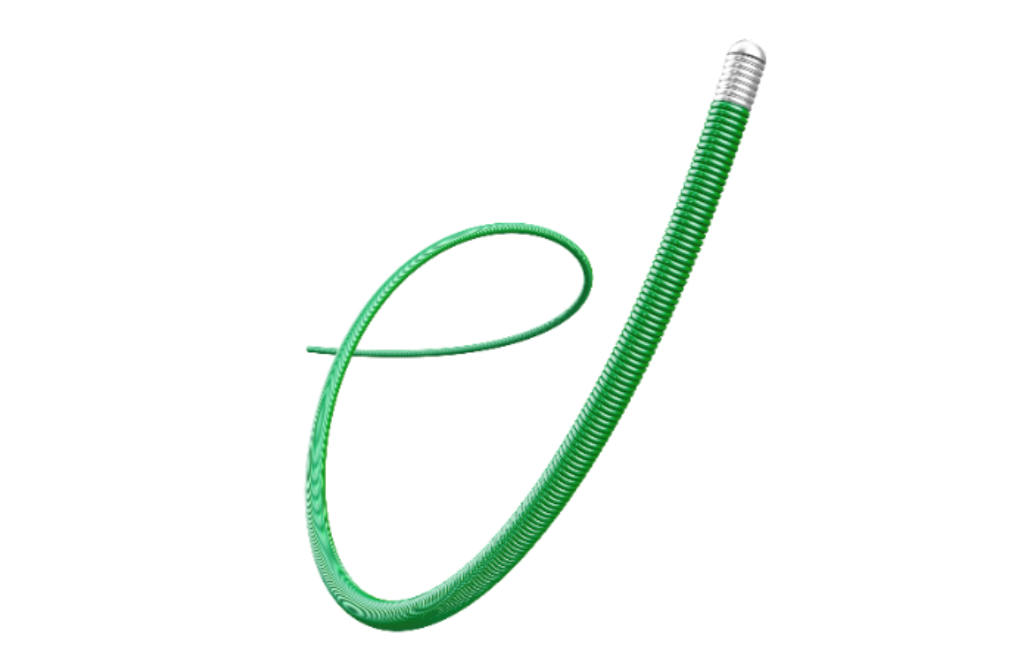
Most machine shops consider a tolerance of plus or minus five thousandths perfectly workable for general fabrication. But when you tighten that band to a single thousandth of an inch, the entire conversation changes. That 0.001-inch threshold is where press fits stop being guesswork, where bearing seats stop loosening over time, and where mating parts stop needing a rubber mallet to go together. It's a small number with outsized consequences, and it's the line that separates parts that merely assemble from parts that actually perform.
Holding that kind of tolerance isn't about buying a better machine. It's about controlling heat, managing tool wear, and measuring with instruments that themselves are calibrated to a fraction of the tolerance. A shop that works at this level will cut a feature, wait for the part to cool, measure it, adjust the offset, and cut again. That cycle adds time and cost, but it eliminates the need for shims, selective assembly, or post-machining hand fitting. The result is a component that drops into place and stays there under load, run after run.
In applications like automotive valve guides, hydraulic spools, or aerospace fastener holes, that one thousandth can be the difference between a 200,000-mile service life and a warranty claim at 40,000. Acceptable means the part passes inspection. Superior means it functions so well that nobody thinks about the fit at all. The 0.001-inch tolerance is where that transition happens, quietly and without fanfare.
Inside the Cleanroom Where a Single Particle Can Ruin a Guidewire
You don't just walk into the guidewire cleanroom. Entry means a slow air shower, sticky mats peeling debris from soles, and a full bunny suit that leaves only eyes exposed. The air itself is run through HEPA filters so many times per hour that a single stray particle bigger than half a micron sets off alarms. Here, a fingerprint, a flake of dead skin, or a fiber from a cotton swab isn't just dust. It's a defect waiting to happen.
Guidewires are built in layers—a metal core, a lubricious jacket, sometimes a hydrophilic coating that activates when wet. Any particle that lands on the surface during coating gets locked in, creating a microscopic bump or pinhole. Later, inside a patient's tortuous vessel, that tiny imperfection can scrape the arterial wall, trigger clotting, or cause the coating to peel. So the cleanroom isn't just about cleanliness; it's about making the guidewire surface biologically silent.
Workers move like they're underwater, no sudden gestures, no regular paper, no pencils because graphite dust is a contaminant. Tools are wiped with IPA and blown with ionized air to kill static charge that could attract particles. Every batch is scanned by automated optical inspection, and if a monitor logs a spike in particle count during production, the entire run gets pulled. In most factories, a speck of dust is swept away. In this room, it can end a product line.
Why PTFE Coating Thickness Varies by Microns—and Why It Matters
PTFE coatings rarely come in a single, universal thickness because the micron-level differences directly shape how the coating behaves under stress. A few microns can mean the difference between a slick, non-stick surface and one that wears through after limited use. Manufacturers adjust thickness based on the substrate material, the expected friction load, and whether the final part will face abrasive conditions or gentle contact. For example, a coating on a cookware pan might sit around 25 to 35 microns to balance release properties with durability, while industrial rollers often need twice that to survive continuous mechanical wear. These variations aren't arbitrary—they reflect a deliberate trade-off between flexibility, adhesion, and long-term performance.
Understanding why thickness matters goes beyond simply picking a number from a spec sheet. Thinner layers tend to flex better with the base material and resist cracking under thermal cycling, but they sacrifice some abrasion resistance. Thicker builds provide a tougher barrier against corrosion and chemical attack, yet can become brittle or prone to micro-delamination if the substrate expands and contracts. The micron scale becomes critical because even a small miscalculation shifts the coating from protective to problematic. Engineers test coated parts under real-world conditions—temperature swings, repeated friction, exposure to solvents—to find the thickness sweet spot where the PTFE layer stays intact and functional for the part's expected lifespan.
The Batch Testing Protocol That Rejects More Guidewires Than It Passes
Most manufacturers treat guidewire batch testing as a formality, pulling a few units and hoping the rest behave. This protocol does the opposite. Every lot is run through a gauntlet of mechanical checks—coating friction against a tortuous silicone track, tip load at multiple deflection angles, core wire tensile to fracture, and torque fidelity through a simulated stenosis. The acceptance windows are deliberately narrow, often half the width of industry norms. As a result, the number of guidewires that clear the bar is consistently smaller than the pile of rejects beside the test bench.
Failures are rarely dramatic. More often, it is a batch that exhibits a 3% increase in average push force at the last curve of the test track, or a micro-void cluster under 40x magnification in the hydrophilic layer, or a kink radius that falls 0.2 mm short on the reverse bend fixture. Because these wires are destined for neurovascular and coronary work, the protocol treats any deviation as non-negotiable. The rejection report does not include categories such as acceptable with concession or quarantine for further review. A wire either meets every parameter on the first pass, or it is scrapped.
Suppliers who feed into this protocol quickly learn that the only viable path is upstream control. That means tightening die concentricity during core grinding, adding inline laser micrometry after coating, and performing a 100% torque test before the lot is sealed. Even then, the first submission often becomes a learning batch rather than a shipping batch. The protocol is not designed to be easy; it is designed to make sure that the guidewire in the packaging is the one you would want in your own artery.
From Polymer Pellets to Navigable Pathways: The Extrusion Die Story
Raw polymer pellets enter the extruder as uniform, unremarkable granules. Heat and shear transform them into a viscous melt, but the real character of the final product is decided further downstream—at the die. Here, the melt is forced through a carefully shaped opening, and the geometry of that opening dictates whether the output becomes a flat sheet, a hollow tube, or a complex profile with internal channels. The die is not merely a passive gate; it reshapes flow, balances pressure, and compensates for material memory, turning an amorphous stream into a precise, continuous form.
For products that must guide fluid or light along defined routes—such as medical catheters, multi-lumen tubing, or structured panels—the die's internal architecture becomes a hidden map. Every land length, every transition angle, every local restriction is a deliberate decision. Melt tends to follow the path of least resistance, so a die designer must introduce subtle asymmetries or flow restrictors to ensure that all channels fill evenly. Temperature differences across the die face can cause warpage or dimensional drift, so heating zones are tuned not just for melting, but for shaping a stable, navigable pathway within the extrudate.
The story ends not when the melt exits the die, but when the cooled profile retains the intended internal geometry under real-world conditions. Slight die swell, drawdown, and cooling shrinkage are all anticipated and counteracted in the die's initial design. In this way, a seemingly simple piece of machined steel becomes a quiet author of function—translating bulk polymer into routes that carry saline, signal, or structural load with repeatable precision.
FAQ
PTFE creates an extremely low-friction surface that helps the wire glide through tortuous anatomy without sticking. Its chemical inertness also means it won’t react with blood or contrast agents, and it can withstand repeated sterilization cycles without cracking or peeling away from the core.
Most lines use centerless grinding combined with laser micrometers that sample the diameter every few milliseconds. Any drift beyond a few microns triggers an automatic adjustment or line stop, so the core stays consistent enough for predictable torque response.
The PTFE coating application, especially the curing temperature and draw speed, changes how the jacket bonds to the core. If the cure is rushed, the coating can delaminate; if it’s too slow, the surface can develop micro-roughness that reduces lubricity.
Besides dimensional inspection, every lot goes through friction testing against a simulated vessel wall, tip tensile testing to confirm the distal bond won’t fail, and visual inspection under magnification. Some facilities also run cyclic bend tests to mimic how the wire will be torqued during a procedure.
Medical guidewires need a much thinner and more flexible jacket, often only a few microns thick, while industrial PTFE coatings are usually thicker and less concerned with flex fatigue. The medical process relies on precision extrusion or dip-coating with tightly controlled withdrawal rates to avoid voids.
Smoother surfaces reduce platelet adhesion because there are fewer microscopic pockets where blood proteins can accumulate. Factories often measure the coating's average roughness and reject anything above a very low threshold, typically under a few tenths of a micron, to help keep the device less thrombogenic.
The entire lot is quarantined and an investigation traces back to the PTFE batch, curing oven profile, or even ambient humidity during coating. Failed wires are never reworked for human use; they are scrapped and the process corrected before new material enters production.
It comes down to the core material and distal grind profile rather than the coating itself. A factory may use a stainless steel or nitinol core with a long taper near the tip, then adjust the PTFE jacket thickness only enough to protect the surface without adding noticeable stiffness.
Conclusion
Walking the extrusion line where PTFE guidewires emerge, the whole operation hinges on a near-obsessive control of variables that most factories never measure. The polymer pellets are fed into a custom extrusion die that shapes the core, but the real story is in the 0.001-inch tolerance held along the entire length—a deviation smaller than a human hair that separates an acceptable guidewire from one surgeons trust. Inside the cleanroom, every move is choreographed to keep a single stray particle from ruining the coating, because even a speck can create friction or delamination later. PTFE coating thickness varies by microns, not by accident but by design: different anatomical pathways demand different lubricity and stiffness, and getting that layer wrong by 3 microns changes pushability in a tortuous vessel.
The batch testing protocol might look wasteful from the outside—it rejects more guidewires than it passes—but that's the point. Each lot goes through tensile, coating adhesion, tip flexibility, and simulated navigation tests, and any guidewire that drifts outside the micron-level spec is scrapped before it ever sees a patient. From raw polymer pellets to a navigable pathway, the extrusion die story isn't about making parts quickly; it's about making the same part perfectly thousands of times, then proving it under conditions harsher than the human body. That's what precision manufacturing actually means here: not hitting a target once, but making the target so narrow that only superior guidewires get through.
Contact Us
Contact Person: Jeffrey
Email: [email protected]
Tel/WhatsApp: 86-0633-2230056
Website: https://www.sd-intmedical.com