

Professional Power Resistors: Key Selection and Application Tips
2026-07-22
Selecting the right power resistor can make or break your design—especially when thermal stability and precision under load are non-negotiable. From high-current sensing to snubber circuits, every application demands a careful balance of resistance value, power rating, and parasitic inductance. At Milliohm, we understand that standard datasheets only tell part of the story. In this guide, we’ll walk through the critical parameters that truly matter, share practical tips for avoiding common pitfalls, and show you how to match resistor technology to real-world operating conditions. Whether you’re prototyping your first high-power circuit or refining an existing design, the insights ahead will help you make informed choices that improve reliability and performance.
Start with the Load: Matching Resistor to Application
Every resistor choice should begin with a thorough understanding of the load it serves. A heating element demands a power resistor that can dissipate consistent thermal energy without drifting out of tolerance, while a sensor circuit may need a precision thin-film component to preserve signal integrity. Starting from the load's electrical and environmental demands ensures the resistor's specs—power rating, tolerance, temperature coefficient—truly fit the task, rather than just meeting a generic bill of materials.
Consider what happens when temperature swings come into play. A resistor that works perfectly on a bench can stray off value in a hot enclosure, ruining a feedback loop or timing constant. By mapping the actual operating range of the load, you can choose a wirewound or metal film part that holds steady, or opt for a bulk metal foil resistor when extreme precision is non-negotiable. This load-first mindset also keeps you from over-engineering: no need for a costly, tight-tolerance component if the load's own variability masks any minor resistance shift.
Physical surroundings matter just as much. High-vibration machinery or corrosive atmospheres can turn a generic resistor into a failure point. That’s why load analysis should include mechanical stress, humidity, and possible chemical exposure. A pulse-rated thick-film chip might be perfect for a compact actuator, while a conformal-coated wirewound is the safer bet for an outdoor charging station. Matching the resistor to the application isn’t just about ohms and watts—it’s about tracing the path of current and letting the load dictate every subsequent choice.
Thermal Considerations: Keeping Cool Under Stress
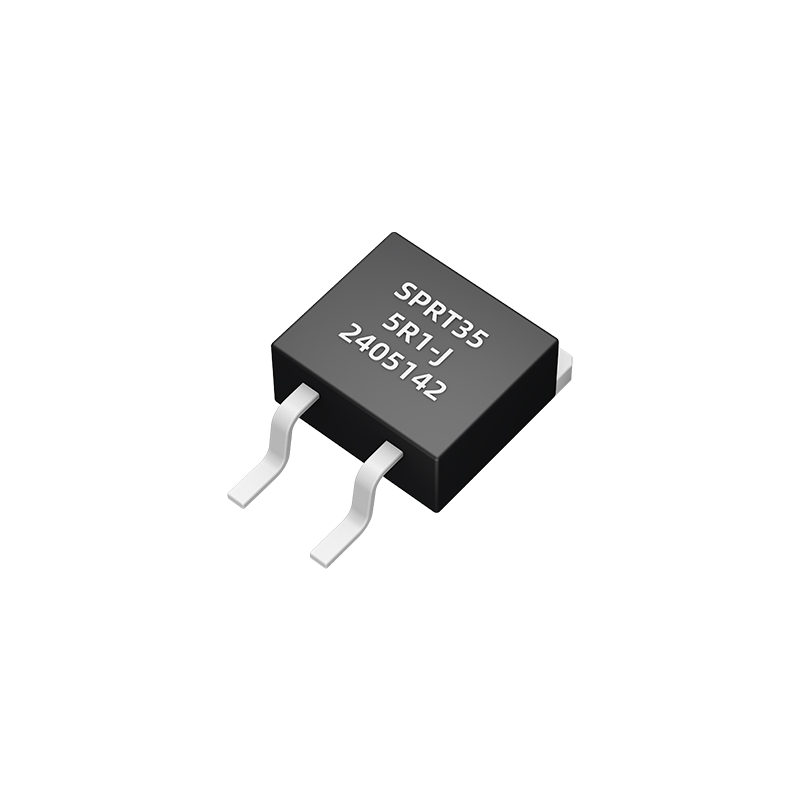
Heat is the silent enemy of any high-performance electronic system. When components are pushed to their limits, power dissipation spikes, and without proper thermal management, performance can throttle or, worse, components can fail. The challenge is not just about adding a fan or a heatsink—it’s about understanding the thermal paths and ensuring that heat is efficiently drawn away from critical junctions.
Effective cooling starts at the design stage. Component placement, PCB copper pours, and thermal vias all play a role in spreading heat evenly. Beyond the board, the choice of enclosure and ventilation strategy can make or break a product’s reliability. Sometimes passive cooling is enough; other times, forced air or even liquid cooling becomes necessary. The key is balancing thermal resistance with cost, noise, and space constraints.
Testing under real-world conditions is where theory meets reality. Simulating worst-case loads and ambient temperatures reveals whether your design can truly handle stress. It’s not just about hitting a target junction temperature on paper—it’s about ensuring longevity and stable operation over years of use. After all, a cool device is a happy device, and your users will never notice the thermal engineering that went into keeping it that way.
Precision Matters: Tolerance and Temperature Coefficients
When a circuit demands consistent performance, the tolerance of a component isn't just a number on a datasheet—it's a promise of reliability. Tight tolerances ensure that resistors, capacitors, or inductors stay within a narrow band of their nominal values, minimizing unexpected voltage drops or timing inaccuracies. In feedback networks or filter designs, even a 1% deviation can shift corner frequencies or alter gain, so engineers often opt for 0.1% or better in critical nodes.
But precision doesn't stop at the initial value. Temperature coefficient describes how much a component's value drifts as the ambient temperature changes. A resistor with a high positive temperature coefficient might read 1 kΩ on the bench but climb significantly inside a warm chassis, throwing off biasing or reference voltages. Low-drift parts, such as those with ±25 ppm/°C or less, are essential in precision analog front-ends, oscillators, and metrology gear where thermal stability directly affects accuracy.
The interplay between tolerance and temperature coefficient is what separates a robust design from a temperamental one. A part with superb initial accuracy but poor temperature stability can fail in the field, while a stable component with a loose tolerance might be trimmed to exactness. Real-world precision thus requires evaluating both parameters against the operating environment, ensuring that the system stays on spec from cold start to thermal equilibrium.
Pulse Handling: Surviving Power Surges
Electrical circuits live in a chaotic world where voltage transients strike without warning—like rogue waves hitting a seawall. Pulse handling is the art of designing components that don’t just tolerate these surges but ride them out without degradation. It’s not about static protection; it’s about dynamic survival, where a resistor or capacitor absorbs the energy spike, dissipates it as heat, and keeps the rest of the circuit blissfully unaware.
The secret lies in material science and geometry. Thick-film resistors, for instance, spread the surge energy through a resistive element with enough thermal mass to avoid hot spots. The pulse load rating isn’t a fixed number—it depends on duration, repetition, and ambient conditions. A well-designed pulse-withstanding component turns what could be a catastrophic failure into a non-event, all while staying within a benign temperature rise that never compromises its long-term stability.
Mounting and Layout: Optimizing for Real-World Performance
The way an antenna is mounted and positioned within its physical environment often determines whether a wireless link meets expectations or falls frustratingly short. Even a premium antenna design can be undermined by poor placement, where reflections, obstructions, and nearby conductive surfaces distort radiation patterns and sap signal strength. Simple steps—like elevating the antenna above surrounding clutter, maintaining a generous distance from large metal objects, and aligning it precisely with the intended coverage zone—can yield dramatic improvements without any hardware changes.
Real-world performance hinges on meticulous attention to the near-field zone. Objects within a wavelength or two of the antenna interact with its electromagnetic fields in ways that simulation software rarely captures fully. A metal shelf bracket, a bundle of cables running parallel to a monopole, or even a dense wall just behind a panel antenna can skew impedance, alter polarization, and create unexpected nulls. Testing different mounting angles and small positional shifts—sometimes just a few inches—often reveals sweet spots that deliver a more stable link and higher throughput.
Thermal and mechanical factors also play an underappreciated role. Antennas exposed to direct sun without adequate ventilation can suffer from component drift, while those with poorly secured mounts may gradually lose alignment due to wind vibration or building sway. Enclosures should balance protection from the elements with minimal RF interference, avoiding metallic paints or films. A layout that accounts for these mundane realities consistently outperforms one planned solely on paper, transforming a competent design into a robust, field-proven system.
Beyond the Datasheet: Practical Insights for Long-Term Reliability
Datasheets provide a controlled snapshot of component behavior, but real-world deployment introduces variables that no specification can fully capture. Temperature cycling, humidity, vibration, and voltage transients interact in ways that accelerated life testing only approximates. Engineers quickly learn that the gap between ideal conditions and field reality is where most failures originate.
One critical aspect often overlooked is the cumulative effect of minor stressors. A capacitor rated for 10,000 hours at 105°C may fail earlier if subjected to frequent thermal shocks, even when each shock stays within rated limits. Understanding the physics of degradation—such as electromigration in interconnects or dielectric wear-out—allows designers to interpret datasheet numbers with necessary skepticism and apply derating strategies that account for application-specific stress profiles.
Collaboration with manufacturers’ application engineers can reveal undocumented performance boundaries and failure signatures observed in field returns. Incorporating this tacit knowledge into design reviews, along with rigorous HALT (Highly Accelerated Life Testing) customized to your use case, bridges the gap between datasheet promises and long-term reliability. Documenting these insights creates institutional knowledge that protects future projects from repeat failures.
FAQ
Power resistors are built to dissipate significant amounts of heat while maintaining stable resistance. Unlike standard resistors, they use materials and construction techniques—like wirewound elements, ceramic cores, and metal heat sinks—that allow them to handle higher currents and voltages without failing.
Start by calculating the worst-case power dissipation using P = I²R or V²/R, then add a safety margin of at least 50%. Factor in ambient temperature and whether there's active cooling. In hot environments or poor airflow, you may need to derate the resistor further to avoid overheating.
Wirewound resistors excel in high-energy pulses, high temperatures, and situations requiring very low resistance values with good stability. Thick film resistors are better suited for compact designs, higher frequencies, and applications where cost is a major concern. Consider pulse handling and inductance before deciding.
The temperature coefficient tells you how much the resistance shifts as temperature changes. In precision circuits or wide-temperature environments, a low TCR is critical to maintain accuracy. A high TCR can cause significant drift, leading to circuit malfunction or measurement errors.
Use resistors with integrated metal tabs or planar packages that can be bolted to a heat sink or chassis. Place them away from heat-sensitive components and use thermal vias to spread heat into inner copper layers. Forced air or even small PCB-mounted heatsinks can make a big difference.
Always ensure the resistor's voltage rating isn't exceeded, even momentarily. High power resistors can reach surface temperatures above 200°C, so proper spacing from wires and flammable materials is essential. In fault conditions, they should fail open rather than short if possible, and protective features like thermal cutoffs may be needed.
Conclusion
Selecting the right professional power resistor isn't just about grabbing a part that meets the ohmic value and wattage on paper. It starts with a deep understanding of the load profile—steady-state, intermittent, or pulse duty—and how the resistor’s construction aligns with the demands. Wirewound parts excel in energy dissipation and pulse handling, while thick film chips might be perfect for compact surface-mount needs with moderate surges. Thermal management is the real differentiator; even an over-spec’d resistor will fail if heat can’t escape. That means factoring in derating curves, ambient temperatures, airflow, and the thermal resistance of the PCB or heatsink interface. Precision often gets overlooked in power applications, but tight tolerance and low temperature coefficient of resistance (TCR) are critical when small drift triggers big system errors—especially in current sensing or feedback loops.
Pulse handling capability is where many designs falter. A resistor that easily handles 5 W continuous may fracture under repetitive high-energy spikes if the pulse width and energy density exceed the element’s design limits. Here, bulk resistive elements like wirewound or metal foil have a clear edge over thin films. Mounting layout is equally pivotal: larger copper pads, thermal vias, and avoiding mechanical stress from thermal cycling preserve long-term stability. The datasheet tells only part of the story—field experience reveals that derating beyond the manufacturer’s suggestion, choosing non-inductive versions when switching noise matters, and verifying surge limits under real fault conditions separate robust designs from marginal ones. In the end, a reliable power resistor choice balances steady-state ratings with transient survival, thermal path planning, and an almost paranoid look at where the real-world stresses will push the component beyond its comfort zone.
Contact Us
Contact Person: Yuying Gao
Email: [email protected]
Tel/WhatsApp: +86 18926013721
Website: https://en.milliohm.net/