

Professional Household Air Purifier Solutions for Healthier Home Air Quality
2026-09-27
Your home should be a sanctuary, but if the air you breathe indoors is loaded with invisible irritants, it's anything but. Allergies flare, sleep suffers, and that 'clean' smell can hide a lot. In this post, we break down what actually matters in professional household air purification—and why LUFUTATECH approaches it differently, with solutions built for real homes, not lab conditions.
Why You Can't Smell the Worst Pollutants in Your Home
Your nose is tuned to detect things that once signaled immediate danger—rotting food, smoke, mildew. But many of the most harmful indoor contaminants give off no scent at all. Carbon monoxide, radon, and certain volatile organic compounds slip into living spaces without triggering a single olfactory warning. That silence makes them easy to ignore even when concentrations climb high enough to affect your health.
Part of the problem is chemistry. A molecule’s ability to reach your smell receptors depends on its size, shape, and how well it dissolves in the mucus lining your nose. Some gases, like carbon monoxide, simply don't bind to those receptors in a way your brain interprets as odor. Others, such as formaldehyde, can numb the very nerves meant to flag them after repeated exposure. The result is a false sense of safety: if a room doesn't smell bad, we assume it's clean, but that instinct fails precisely when we need it most.
The One Room Where Air Quality Drops While You Sleep
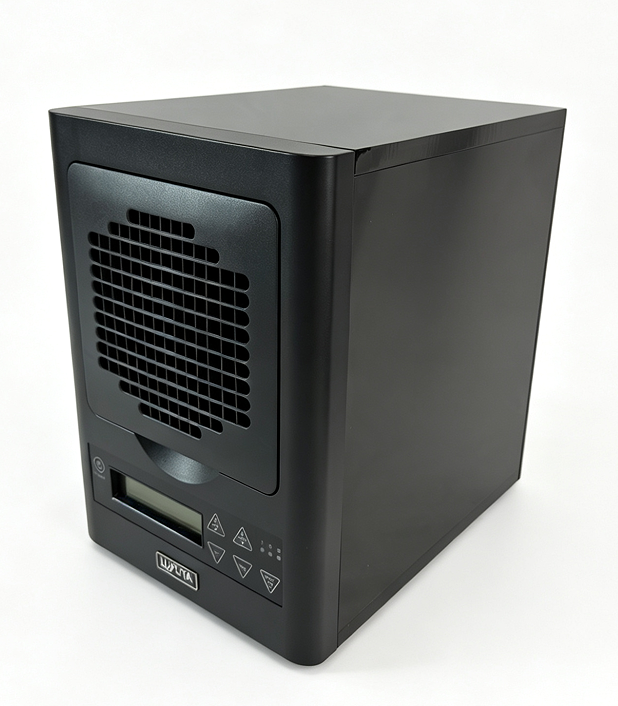
Your bedroom might feel like a sanctuary, but it often has the worst air in the house by morning. Throughout the night, you exhale carbon dioxide, shed skin cells, and release moisture from your breath and body. With the door closed and windows shut, these byproducts accumulate in a confined space, slowly turning the room into a stale microclimate. Even if you air it out before bed, the hours of occupancy can shift the balance faster than most people realize.
Add in bedding, pillows, and carpet that trap dust mites and other allergens, and the problem compounds. A mattress that's more than a few years old can harbor a disturbing amount of particulate matter that gets stirred up every time you shift position. If you have a partner or a pet sleeping in the same room, the biological load doubles. By the early morning hours, the air you're breathing may contain significantly more CO2 and microscopic debris than the rest of your home.
The fix isn't as simple as cracking a window, especially in cold or noisy neighborhoods. A small air purifier with a HEPA filter can work through the night without disrupting sleep, and washing bedding weekly in hot water reduces the allergen reservoir. But the most overlooked step is checking the room's ventilation path — a slightly open door paired with a bathroom exhaust fan elsewhere can create a gentle air exchange. Without that, you're essentially marinating in your own breath for eight hours, and no amount of scented candles will change that.
A Filter Change You'll Actually Remember to Do
Most of us don’t think about the filter until the air smells stale or the system starts wheezing. The trick isn’t willpower; it’s tying the swap to something you already do. Stick a reminder on the box of coffee filters or set a recurring phone alert for the same day you pay your electric bill. When the new filter lives next to the furnace, the whole job takes about ninety seconds.
Pick a date that already has a rhythm, like the first Saturday after daylight saving time or whenever you replace the batteries in the smoke detector. Some people write the next change date right on the filter frame with a permanent marker. That way the reminder travels with the old filter to the trash and the new one already has its deadline.
If your schedule is genuinely chaotic, swap the one-inch filters for a thicker media cabinet or a smart thermostat that tracks runtime and nudges you only when needed. It’s less about discipline and more about removing friction. Once the reminder becomes automatic, a fresh filter stops being a chore and starts being just another quick habit.
What Living With Allergies Teaches You About Airflow
Living with allergies turns you into an accidental student of how air moves. You start noticing which windows let in the most pollen at 7 a.m. and which corner of the bedroom traps dust like a tiny atmospheric dead zone. It stops being abstract—airflow becomes something you feel in your sinuses before you can see it on a weather app.
The same way a blocked nasal passage teaches you the value of a clear path, a stuffy room shows you that circulation isn’t just about temperature. Stagnant air lets allergens settle into carpets, bedding, and lungs. Once you learn to cross-ventilate or place a fan so it pulls rather than pushes, the air itself feels lighter. That lesson applies far beyond allergy season.
You also learn that filtration is only as good as the gaps around it. A high-end purifier won’t help if the door is open and the window is leaking unfiltered outdoor air. Allergies force you to map the invisible routes air takes through your home—and once you see those routes, you never unsee them.
The Surprising Link Between Cooking and Lingering Odors
Most people assume that once the frying pan cools and the exhaust fan switches off, cooking odors fade on their own. But a growing body of sensory research suggests otherwise. The smells we associate with a fresh meal often embed themselves in soft furnishings, clothing, and even painted walls, where they can persist for days or weeks. This happens because heated cooking oils don't simply vaporize—they split into microscopic droplets that drift beyond the stovetop, carrying odor-active compounds into every porous surface they meet.
The real surprise is which foods create the longest-lasting traces. It isn't always the strongest-smelling ingredients. Delicate aromatics like fish sauce, cumin, or browning onions release volatile molecules that bond tightly to synthetic fibers and latex paint. Once trapped, these compounds break down slowly, releasing a faint but recognizable stale note whenever humidity rises. In some cases, the odor isn't even from the food itself but from oil that has polymerized on surfaces, creating a resin-like film that continues off-gassing for weeks.
Understanding this link changes how cooks approach ventilation and cleaning. Rather than masking residual smells with sprays, the more effective strategy is to remove the source: wipe down nearby walls, launder curtains more frequently, and let sunlight hit fabric-covered chairs. Simple habits like simmering a pot of water with lemon peels after frying can neutralize airborne droplets before they settle. It turns out the kitchen is only half the story—the other half lingers in the air long after the plates are cleared.
How a Professional Purifier Handles a Home Full of Pets
Living with multiple pets means dealing with a constant drift of fur, dander, and that unmistakable "wet dog" smell that settles into upholstery. A standard air purifier might trap some larger hairs, but a professional-grade unit is built to tackle the invisible mess. It works by pulling air through a series of filters designed to capture particles at every size, from visible fluff to microscopic allergens that trigger sneezing and itchy eyes.
The first line of defense is usually a washable pre-filter that snags loose fur and larger debris before it can clog the finer layers. Behind that sits a true HEPA filter, which grabs 99.97% of particles down to 0.3 microns — including pet dander, dust mite waste, and even some bacteria that ride in on paws. For the odor problem, an activated carbon filter absorbs volatile organic compounds and the ammonia-like compounds in urine or litter box smells. Many professional purifiers also include a smart sensor that detects a spike in airborne particles (like when a dog shakes off after a walk) and automatically ramps up the fan speed, then quiets back down once the air clears.
What sets a professional purifier apart in a pet household isn't just raw filtration power — it's how it runs day and night without becoming a nuisance. These units are engineered with quiet motors and sleep modes that keep noise below a whisper, so anxious cats or light-sleeping dogs aren't startled. Filter replacement indicators take the guesswork out of maintenance, and some models even have pet-specific modes that alternate between high airflow during active hours and gentle circulation at night. Over time, the result is air that smells neutral, fewer allergy flare-ups, and furniture that doesn't collect a fresh layer of fur within hours.
FAQ
Prioritize actual clean air delivery rate for fine particles over marketing claims. A unit with a CADR around 300-400 CFM can usually handle 400-500 square feet with high ceilings if you run it on medium. Also check the fan type: a backward-curved motorized impeller tends to stay quieter under load than a standard axial fan. Replacements for the HEPA and carbon layers should be easy to source, and the pre-filter should be washable.
It depends on the layer. A washable pre-filter needs vacuuming or rinsing every two to four weeks. HEPA media usually lasts 6-12 months of continuous use, while an activated carbon or catalytic layer for odors often loses effectiveness after 3-6 months. Many professional models track runtime and airflow resistance, so follow that indicator rather than a strict calendar.
A single well-designed unit can handle both if it has a true HEPA filter for dander and a substantial carbon or zeolite bed for ammonia and other pet smells. Avoid thin carbon sheets—they saturate quickly. Look for at least a few pounds of activated carbon or a washable photocatalytic filter, and run the unit continuously, not just when guests arrive.
Place it no more than 6-8 feet from the bed, but don't point the outlet directly at your face. Keep at least 12 inches of clearance from walls, curtains, and furniture on all intake sides. If the model has a night mode, enable it so the fan ramps down and indicator lights dim; a low, steady airflow is better than blasting on high for an hour.
Most modern units are not. A DC motor on medium speed often draws 15-40 watts, which is comparable to an LED bulb or a laptop. Even on turbo, many stay under 80 watts. Check for Energy Star certification if you want a third-party efficiency benchmark, but avoid assuming higher wattage means better filtration—often it just means an older AC motor.
A basic HEPA cartridge only addresses particles. A professional solution adds sealing around the filter frame to prevent bypass, a pre-filter to extend HEPA life, an adequate carbon or catalytic stage for gases, and often a particle sensor that adjusts fan speed automatically. The enclosure design also matters: no gaps between filter and housing means the air you breathe actually passed through the media.
Use an independent laser particle counter, not just the built-in sensor, and measure PM2.5 before and after 30 minutes. In a closed room, a properly sized unit should drop readings by 50-80%. You can also watch the pre-filter go from white to grey within a few weeks, and note whether allergy symptoms ease over 7-14 days. If nothing changes, check room leakage or filter bypass.
In most homes, one unit cannot overcome walls, closed doors, and staircases. Air recirculates mainly within a single room. For whole-house coverage, you either need a ducted system installed at the HVAC, or place dedicated units in the bedroom, living area, and any basement or home office. A large portable can handle an open-plan main floor, but don't expect it to clean upstairs bedrooms.
Conclusion
Most people equate clean air with a fresh scent, yet the pollutants that matter most rarely announce themselves. Volatile organic compounds from furniture, paint, and cleaning supplies can accumulate without any noticeable smell, and that invisible load often concentrates exactly where you spend a third of your life: the bedroom. As you sleep, closed doors and limited circulation let carbon dioxide, dust, and allergens build up, which is why morning grogginess isn't always about poor sleep. A professional household air purifier tackles this by running quietly through the night and by tracking filter life in a way you'll actually notice. Instead of relying on a tiny blinking light you'll ignore, these systems can send a phone alert or visibly change airflow when the filter is due, so maintenance stops being a forgotten chore and starts being a background habit.
Living with allergies offers a crash course in how air moves through a home: you learn that airflow isn't just about temperature but about pressure, open windows, and the paths dust takes. A professional purifier respects that by pulling air from the floor where pet dander settles and by adjusting fan speed to the room's actual load, not a generic timer. That same principle applies to cooking smells, which linger not because your range hood is weak but because greasy particles and odor molecules circulate long after the meal. A high-capacity carbon layer absorbs those compounds rather than covering them with fragrance. For a home full of pets, the difference is even clearer: constant shedding, dander, and the occasional outdoor dust hitch a ride on fur and settle into carpets. A properly sized unit keeps the air moving enough to capture those particles before they become respiratory irritants, leaving behind what clean air should feel like—nothing at all.
Contact Us
Contact Person: Paul Luo
Email: [email protected]
Tel/WhatsApp: 0086-19966314501
Website: https://www.lufutatech.com