

Professional Bread Crumb Production Line: Streamlining Your Baking Operations
2026-05-31
Every baking operation thrives on efficiency, and the heart of that is a reliable bread crumb production line. If you're looking to take your production to the next level, MINGDE's professional solution might just be the game-changer you need. Designed to streamline processes from start to finish, it promises consistency, speed, and quality—all while cutting down on manual labor. Let's dive into what makes this line a smart investment for your bakery.
Why Smart Bakeries Are Automating Crumb Production
In the back of a busy bakery, the process of making crumbs has long been a dusty, labor-heavy chore. Bakers used to break apart leftover loaves by hand or run them through basic mills, often dealing with inconsistent texture and a lot of waste. Now, smart bakeries are turning to automated systems that can take whole loaves, grind them down, and sift the particles to precise sizes—all with the push of a button. The shift isn’t just about saving time; it’s about turning a messy afterthought into a controlled, profitable part of the production line.
Automation brings a consistency that’s nearly impossible to match manually. Whether crumbs are meant for coating chicken, topping a mac and cheese, or mixing into stuffing, the exact granule size matters for how they cook, absorb moisture, and feel on the palate. Smart machines use adjustable grinders and sieves to dial in everything from powder-fine dust to coarse panko-like shards, batch after batch. This uniformity means fewer complaints from chefs and more reliable recipes—a huge advantage for bakeries supplying restaurants or packaged food brands.
Beyond quality, there’s a clear economic draw. Automated crumb lines slash labor costs and let bakeries monetize what would otherwise be thrown away—day-old bread, misshapen loaves, or end pieces. Modern equipment also captures and recycles airborne dust, keeping the workspace cleaner and reducing safety hazards. For bakeries already dealing with thin margins, converting surplus into a steady stream of value-added crumbs turns a waste problem into a fresh revenue channel, often with demand far outstripping the supply of their own leftovers.
Precision Engineering for Consistent Crumb Quality
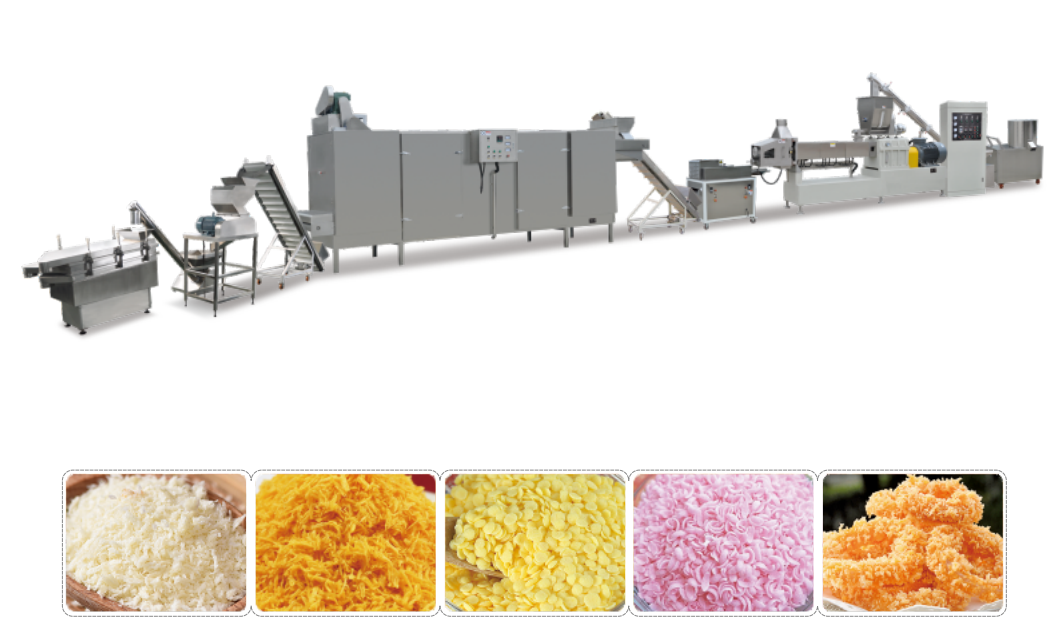
Achieving uniform crumb quality in baked goods hinges on meticulous precision engineering at every stage of production. From the exact calibration of mixing speeds and dough temperatures to the controlled hydration levels, each parameter is fine-tuned to create a consistent internal structure. This approach minimizes variations that lead to uneven air pockets or dense streaks, ensuring every slice exhibits the same tender, even texture consumers expect.
Advanced equipment design plays a critical role in maintaining this consistency. High-precision depositors and sheeters, for example, handle dough with minimal stress, preserving its integrity while forming uniform portions. Temperature-controlled proofing chambers and ovens with multi-zone heating profiles further eliminate hot spots or humidity fluctuations, allowing the crumb to develop steadily without collapsing or toughening. The result is a product that looks and feels the same batch after batch.
Beyond machinery, precision engineering extends to ingredient handling and process feedback loops. Automated systems adjust for flour protein variances or ambient conditions in real time, while inline sensors monitor dough rheology and gas cell distribution. This data-driven refinement eliminates guesswork, locking in the exact conditions needed for the ideal crumb—soft, resilient, and flawlessly even from edge to center.
Tailoring Your Line to Fit Unique Recipes and Outputs
Every production line has its own quirks, and forcing a one-size-fits-all approach rarely works when you're dealing with unconventional recipes or irregular outputs. Instead, the focus should be on adaptability—modifying mixer speeds, adjusting conveyor timing, or even rethinking ingredient sequencing to handle everything from high-viscosity pastes to delicate, crumbly mixes without constant stoppages. Small tweaks here and there can turn a rigid system into something that actually flexes with your product, rather than fighting against it.
The real trick is designing the line so it’s not just efficient on paper, but forgiving in practice. That might mean adding buffer zones where operators can fine-tune fill levels mid-run, or using modular tooling that swaps out in minutes when a new recipe calls for a completely different portion size. Too often, lines are built for speed alone, but when you’re juggling varied outputs, reliability and ease of changeover beat raw pace every time. It’s about making the machinery work for the food, not the other way around.
Reducing Downtime with Intuitive Maintenance Design
When maintenance is a puzzle, downtime stretches. Intuitive design strips away the guesswork. Think of a control panel where every switch is clearly labeled, not with cryptic abbreviations but plain language. A technician walks up, spots the issue in seconds, and takes action. That's the goal: turning complex machinery into something almost self-explanatory, so the clock stops ticking sooner.
It's not just about labels. Color-coding, logical groupings, and visual cues guide the eye. When a filter needs changing, a red indicator pops out. When a belt is misaligned, a simple diagram right on the housing shows the correct path. These small touches build a mental map that lets even a tired operator spot problems fast. The result? Fewer hours lost to confusion, and a maintenance log that reads like a quick checklist instead of a detective novel.
Beyond the immediate fix, intuitive design reshapes the whole maintenance culture. New hires get up to speed without drowning in manuals. Emergency repairs don't turn into panic drills. And when equipment speaks a language everyone understands, the pressure eases. Downtime drops, sure, but so does the stress that comes with it. That's the kind of quiet efficiency that keeps a plant humming.
The Hidden Cost Savings Behind a Unified Crumb System
Most kitchens treat crumb systems as an afterthought—a pan scraper here, a loose tray there—but unifying these tools into one cohesive setup quietly erases several layers of expense. When bakers and cooks no longer dig through drawers or improvise with makeshift scrapers, the immediate drop in wasted time becomes tangible. Fewer interruptions mean recipes move faster, and cleaning shifts from a five-minute hunt-and-gather routine into a single, seamless motion. That time, multiplied across dozens of service hours every week, translates directly into labor costs you stop paying.
Beyond the clock, material waste tends to shrink in surprising ways. A dedicated, well-designed crumb catch means fewer crumbs hit the floor, so brooms and mops last longer, and pest risk stays lower without extra chemical sprays. Surfaces stay cleaner between deep cleans, reducing the need for heavy-duty detergents or worn-out sponges. Even ingredient loss gets trimmed: it’s far easier to sweep stray flour or sugar back into use when the crumb path ends in a single vessel rather than scattered across the counter and into the bin.
The subtler payoff sits in equipment lifespan. Unchecked debris eats into the joints of mixers, blocks vent fans, and gradually erodes nonstick coatings. A unified system catches that grit before it migrates, meaning fewer repair calls and longer stretches between major replacements. What looks like a small bit of stainless steel or silicone becomes a quiet shield around some of the most expensive gear in the room, and the savings accumulate month by month without anyone adding a line item to the budget.
Future-Proofing Your Bakery with Scalable Crumb Technology
In the bakery world, standing still is the fastest way to fall behind. That's why we're rethinking the very foundation of what makes a great crumb—from ingredient sourcing to final texture—so your signature loaves and pastries remain exceptional no matter how demand fluctuates. Instead of relying on rigid recipes that crack under pressure, we’ve engineered a flexible approach that grows with your production volume, preserving that perfect, tender bite batch after batch.
Think of it as building a resilient backbone for your menu. By decoupling key processes and introducing modular techniques, you gain the freedom to tweak hydration, fermentation, and mixing on the fly—without losing the soul of your product. This isn’t about chasing trends; it’s about equipping your team with a system that turns today’s constraints into tomorrow’s opportunities, all while keeping the messy, tactile joy of baking firmly alive.
The real magic happens when scalability meets consistency. We’ve seen small family bakeries pivot to wholesale without missing a beat, and established brands experiment boldly, knowing their crumb foundation is solid. It’s a quiet revolution—one that lets you focus on crafting unforgettable flavors, secure in the knowledge that your process can handle whatever the future kneads into it.
FAQ
A complete setup usually covers a grinding system, drying unit, sifting station, and automated conveyors to move materials between stages without manual handling.
It uses adjustable grinding mechanisms and precise drying controls, so you get uniform particle size and moisture content batch after batch, unlike manual methods.
Yes, most lines allow quick setting changes to handle various bread types and even pastries, provided you adjust the grinding and drying parameters accordingly.
A standard mid-sized model often processes between 200 and 500 kilograms of bread per hour, depending on the crumb fineness and initial moisture level.
It centralizes crumb production, reduces reliance on external suppliers, and turns leftover or stale bread into a valuable ingredient right on site, cutting waste and cost.
Regular cleaning of grinding plates, checking belt tensions, and lubricating moving parts are the main tasks; most manufacturers recommend a quick daily wipe-down and a deeper inspection monthly.
Absolutely, by swapping out screens and adjusting mill speed, you can switch from fine breading crumbs to coarse stuffing crumbs in minutes.
They typically include emergency stop buttons, overload protection, enclosed grinding chambers to prevent dust, and sometimes automatic shutdown if sensors detect overheating or jams.
Conclusion
Modern bakeries are discovering that automating bread crumb production isn’t just about keeping pace with demand—it’s about redefining what’s possible in consistency and creativity. When a line is engineered with precision at every stage, from grinding to sieving, the result is a crumb that behaves exactly as bakers expect, batch after batch. This reliability frees up teams to experiment with unique recipes, knowing that the machinery can be tailored to different textures, moisture levels, and output volumes without sacrificing the core integrity of the product. Instead of wrestling with one-size-fits-all equipment, bakeries can fine-tune parameters that match their signature breads, whether they’re producing delicate panko for a gourmet coating or hearty crumbs for stuffing mixes. That kind of adaptability turns a production line into a creative partner rather than a fixed constraint.
What often goes unnoticed, however, is how thoughtful design affects the bottom line far beyond the initial purchase. An intuitive maintenance layout slashes downtime because routine checks and part swaps happen in minutes, not hours, and operators require minimal retraining. This seamlessness extends into hidden savings: a unified system eliminates the need for separate pre-processing and handling stages, reduces energy draw, and cuts waste by recycling off-spec material back into the line cleanly. As a bakery grows, scalable technology ensures that increased throughput doesn’t demand a complete overhaul—modules can be added or speeds adjusted without disrupting the entire workflow. The cumulative effect is a facility that not only meets today’s orders with ease but is primed for tomorrow’s opportunities, making the crumb line a quiet engine of long-term resilience.
Contact Us
Contact Person: LILY SUN
Email: [email protected]
Tel/WhatsApp: 0086-13969103791
Website: https://www.snackfoodmachinery.com/