

Optimize Production with Advanced Rubber Profiles Extrusion Line Factory Solutions
2026-11-16
Every rubber profile tells a story of precision—but only when the extrusion line behind it is engineered to eliminate guesswork. At SFC, we don't just build machinery; we craft production ecosystems that turn complex geometries into consistent, high-speed output. This blog peels back the curtain on advanced factory solutions that are redefining what's possible in rubber profile manufacturing—and why your next efficiency breakthrough might be closer than you think.
Streamlining Workflow with Smart Extrusion Integration
Bringing extrusion processes into a single, intelligent framework often starts with removing the friction between design and production. Instead of handing off static files and hoping the tooling team interprets everything correctly, smart integration places live, parameter-driven models at the center. Engineers can adjust wall thickness, die swell compensation, or material flow rates directly inside a unified environment, and those changes ripple through downstream setup sheets and machine programs without manual rework. The result feels less like a chain of disconnected steps and more like a continuous conversation where every decision stays traceable.
On the shop floor, the real difference shows up in how recipes are managed and adjusted. Rather than relying on operator notebooks or tribal knowledge about ideal barrel temperatures and screw speeds, connected systems pull real-time data from previous successful runs. When a new order comes in for a similar profile, the platform suggests a proven starting point and then self-corrects as sensors detect deviations. This kind of closed‑loop adjustment turns hours of trial into minutes of fine‑tuning, while also capturing the exact conditions that produced the best surface finish and dimensional accuracy. Suddenly, process stability isn’t dependent on who’s on shift.
Beyond the machine level, smart integration also reshapes how teams handle changeovers and capacity planning. Automated tool recognition and preset calibration routines slash the time between jobs, but the less obvious gain is in scheduling logic. Because the system understands the current state of each line—what’s running, what’s being purged, what maintenance is due—it can sequence orders to minimize material waste and energy spikes. Planners stop firefighting and start modeling what-if scenarios, confident that the digital thread from quote to shipment remains intact even when priorities shift mid-week.
Precision Engineering for Uniform Rubber Profiles
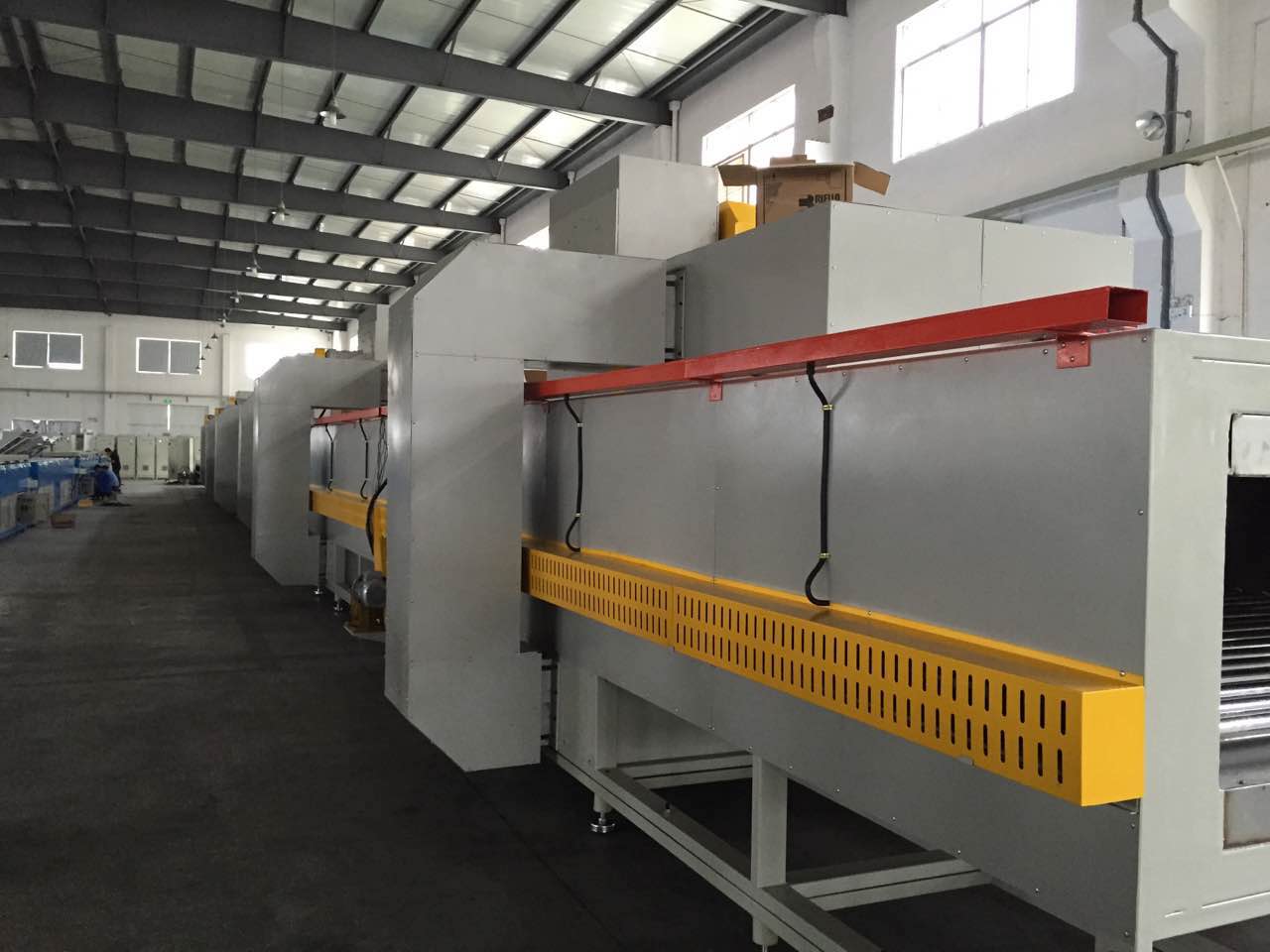
Achieving flawless consistency in rubber extrusions demands a level of control that goes far beyond conventional manufacturing. Every millimeter of a profile must hold its shape, density, and surface finish without deviation, which is why our process leans on closed‑loop feedback systems that adjust temperature and pressure in real time. The tooling itself is machined to tolerances normally reserved for aerospace components, ensuring that even the most intricate cross‑sections replicate exactly from batch to batch.
Raw material behavior is just as critical—slight variations in compound viscosity or cure rate can create subtle defects that only become visible under dynamic load. We pre‑condition each elastomer blend under simulated production conditions, mapping out its flow characteristics long before it enters the die. This predictive approach eliminates the trial‑and‑error often associated with custom profiles and allows us to lock in a repeatable rheological signature for every run.
The result is a rubber profile that performs identically whether it’s installed in a quiet HVAC seal or a high‑vibration automotive channel. Dimensional checks at multiple inspection gates catch drift early, and our traceability system links every meter back to its specific production window. It’s this layered combination of digital monitoring and analogue craftsmanship that turns out profiles which install without rework and maintain their engineered properties through years of service.
Cutting Downtime Through Predictive Line Maintenance
Factory floors used to run on a rhythm of breakdowns and rushed repairs, but that cycle is quietly being replaced by a far more intelligent approach. Instead of waiting for a motor to overheat or a bearing to seize, maintenance teams now lean on real-time sensor data that reveals the earliest whispers of trouble. A slight vibration shift, a fractional temperature rise, or a subtle change in power draw becomes the trigger for a targeted intervention, often scheduled during natural lulls in production. The result is a dramatic drop in unplanned stops, with repairs happening on the team's own terms rather than at the worst possible moment.
What makes this shift truly powerful is how it reshapes the entire operation, not just the maintenance calendar. When a packaging line can run for months without an abrupt halt, everything downstream stays balanced. Inventory stops piling up at buffer points, shipping schedules hold steady, and the constant pressure to “find extra capacity” by overstocking spare parts starts to fade. Teams spend less time firefighting and more time refining the process, spotting patterns that even seasoned operators might miss—like a recurring pressure drop on a specific shift that pointed to a simple air leak, fixed in minutes and saving hours of lost output every week.
The biggest surprise for many plants isn’t the technology itself; it’s how quickly the human side adapts. Operators who once noted hourly gauge readings by hand now see their own insights woven into a live digital picture. That shared awareness creates a culture where everyone owns a piece of reliability, and the line between “running the machine” and “keeping it healthy” simply disappears. Downtime becomes less of a threat and more of a solved problem—one that keeps shrinking as the system learns, all without adding headcount or overhauling the entire floor layout.
Achieving Material Consistency in High-Speed Output
Maintaining uniform material properties at elevated production speeds often hinges on controlling micro-variations before they propagate downstream. Small fluctuations in feedstock temperature or viscosity can magnify into visible defects when lines are running above 300 meters per minute. One practical countermeasure involves inline rheometry paired with a fast-acting thermal jacket that adjusts barrel zones within 0.2°C of the target setpoint. This tight loop keeps melt flow index nearly flat, even as screw rpm ramps up, so that every centimeter of extrudate matches the reference sample.
Blending and dispersion steps demand equal attention, especially with masterbatch-loaded formulations. High-shear mixing elements in the metering section can be rearranged to break up agglomerates without over-heating the polymer matrix. Operators report fewer color streaks and density pockets when they shift from a single long mixing zone to a split configuration—two short, intense kneading blocks followed by a decompression segment. This geometry evens out residence time distribution and preserves additive integrity, allowing the line to sustain 99.5% first-pass yield at full throttle.
Consistency also relies on upstream material handling. Raw resin pellets can develop erratic moisture profiles or fines separation during silo storage, which introduces surging as silo levels change. Installing a dedicated batch dryer just ahead of the throat, combined with a mass-flow hopper that limits re-circulation, stabilizes bulk density fluctuations before the plastication phase. Under these conditions, thickness gauges downstream record standard deviations below 0.8% of nominal, confirming that the sheet or profile leaving the die retains the same mechanical behavior across kilometers of continuous production.
Customizing Factory Layouts for Scalable Growth
A factory built to handle today’s output will choke on tomorrow’s orders unless the floor itself learns to adapt. We move beyond static blueprints by embedding flexibility directly into the physical space: modular workstations that can be reconfigured in hours, not weeks, and clear arteries for material flow that expand with demand. This isn’t about leaving empty room for growth—it’s about designing a layout that shifts its shape without pausing production.
Instead of bolting machines to concrete and hoping the future fits, we treat every square foot as reusable. Multi-purpose zones flanked by quick-change tooling allow a single area to pivot from prototyping in the morning to full-scale assembly by nightfall. Overhead utilities drop from movable grids, and movable walls replace permanent fixtures, letting the factory breathe with the business cycle. The result is a layout that scales sideways, not just forward.
The real secret lies in how human movement dictates machine placement. Observing the informal shortcuts workers take reveals where bottlenecks are born, and those paths become the non-negotiable anchors around which everything else rotates. When a new line doubles capacity, we don’t redraw—we rearrange, using those living patterns as the master template. Growth stops being an event and becomes a continuous, quiet rhythm built into the floor itself.
Energy-Efficient Operations Without Compromising Quality
Modern production environments often face a false choice between reducing energy consumption and maintaining high output standards. The reality is far more nuanced. Through intelligent process redesign and adaptive control systems, facilities can trim idle times, optimize load distributions, and capture waste heat—all while keeping defect rates firmly in check. This isn’t about simply turning down the thermostat; it’s about rethinking how every kilowatt-hour contributes to the final product’s integrity.
Precision plays a quiet but pivotal role. When machinery runs exactly as needed—no faster, no hotter, no longer than necessary—the quality of output often improves rather than suffers. Vibration dampening, predictive maintenance schedules, and real-time monitoring help engineers spot inefficiencies that drain both power and consistency. The result is a lean operation where excellence and restraint reinforce one another, rather than pulling in opposite directions.
Shifting workforce mindsets completes the picture. Skilled teams trained to view energy as a resource equal to raw materials make better micro-decisions on the floor. They notice when a conveyor runs empty, or a batch cycle could be shortened without affecting specifications. Combined with tools like variable-frequency drives and demand-controlled ventilation, these human-centric adjustments create a culture where sustainability blends seamlessly into daily excellence—never bolted on as an afterthought.
FAQ
The systems incorporate real-time dimensional monitoring and rapid tooling changeovers, drastically cutting downtime between production runs. Their modular screw design handles a wider viscosity range without compromising output speed, something most standard lines struggle with.
They use a closed-loop thermal control with pre-heat stations that bring the compound to optimal plasticity before it reaches the die. That means you get good profiles almost immediately after startup, not hundreds of meters of scrap.
Absolutely. A multi-zone infrared vulcanization tunnel, paired with a precision vacuum sizing bath, ensures every intricate cavity holds its shape uniformly. The synchronized belt haul-off adds gentle, even tension that prevents distortion on thin walls.
Very much so. The quick-clamp die heads and masterbatch feeding unit allow operators to switch compounds and profiles in under fifteen minutes. This makes runs of just a few hundred meters economically viable, which is a game changer for specialized industrial seals.
The entire line is designed with a narrow footprint and vertical curing sections, freeing up floor area. All control cabinets are integrated into the machine frames, so you don't need a separate control room or complex cabling trenches.
We use a pressure-compensated extruder head with dynamic melt temperature feedback. It actively stabilizes the pressure at the die entry, so density doesn't fluctuate even as barrel temperature dynamics shift during acceleration.
Every machine comes with a digital twin training module and a predictive maintenance system. Sensors on gearboxes and heaters flag potential failures weeks in advance, and operators get step-by-step AR-guided repair instructions on the spot.
Yes, the core extruder can be retrofitted with a cold-feed pin conversion kit and a silicone pumping section. This means you can later process silicone and fluorosilicone profiles on the same base machinery without a complete capital replacement.
Conclusion
Every production floor chasing higher throughput and tighter tolerances eventually faces the same bottleneck: how to push out consistent rubber profiles without watching scrap pile up or machines drift out of spec. The real shift comes when the extrusion line stops being a collection of standalone machines and starts operating as a single, conversant system. By embedding smart extrusion integration into the workflow, material feed, temperature control, and line speed synchronize on the fly, pulling real-time data from each zone and adjusting before deviations turn into rejects. This isn’t automation for its own sake—it’s an operational rethink where precision engineering meets adaptive controls, making uniform profiles the baseline, not the exception. Combined with predictive maintenance that reads vibration patterns and thermal signatures instead of relying on a calendar, the line self-monitors, flags wear early, and schedules service during planned pauses, effectively slashing unplanned downtime.
Where this approach gets particularly powerful is in its refusal to force manufacturers into rigid molds. Factory layouts can be shaped around scalable growth rather than one-size-fits-all blueprints, so adding capacity or introducing new formulations doesn’t mean gutting the floor. Material consistency at high speed relies on closed-loop mixing and direct feedback from the die head, keeping compound viscosity stable even when throughput climbs. The energy profile shifts too—heat recovery loops, variable-speed drives, and zoned curing sections cut consumption without ever compromising output quality. The result is a line that doesn’t just make more profiles in less time; it makes them predictably, repeatably, and with fewer resources, turning today’s production ceiling into tomorrow’s floor.
Contact Us
Contact Person: Chen Zhengwei
Email: [email protected]
Tel/WhatsApp: +86-13963975727
Website: https://www.sfcrubbermachine.com