

OEM Shock Absorber Jounce Bumper Function and Replacement Tips
2026-11-16
That clunk you hear when the suspension fully compresses? It’s not the shock failing—it’s usually the OEM jounce bumper telling you it’s done. This dense little stop does the unglamorous work of absorbing bottom-out impacts and protecting the shock from internal damage. But once it cracks or crumbles, your ride turns harsh and repair bills climb. Below, we’ll walk through how the jounce bumper functions, what a worn one looks and feels like, and the replacement tips that keep you from doing the job twice. And if you’d rather skip the trial-and-error, a direct-fit part from XIAYI takes the guesswork out of the fix.
Why That Little Rubber Cone Under Your Dust Boot Matters More Than You Think
That small rubber cone tucked beneath the dust boot rarely gets a second glance, yet it quietly does the ugly work of cushioning every hard hit your suspension takes. When the control arm swings through its full arc, this cone is the first soft point of contact—not the metal collar, not the subframe. It squashes progressively, turning what would be a jarring, metallic clank into a muted thud that keeps you from flinching on rough roads.
Ignore it and the damage starts small: tiny cracks at the base, a hardened surface, maybe a chunk missing after years of road grime and ozone exposure. With the cone compromised, the dust boot loses its firm seat, letting moisture and grit creep past the seal. Then the ball joint or strut bearing starts grinding itself to death, introducing a wandering steering feel and a clunk over bumps that no amount of alignment will fix—all because a ten-dollar rubber part was left to rot.
Next time you have the wheel off, reach up and give that cone a squeeze. If it feels brick-hard, deformed, or half-gone, the fix is cheap and quick. Swapping in a fresh one of the correct durometer restores proper suspension travel and keeps the expensive bits sealed away from the elements. A minute of inspection now beats a four-figure repair later, and that tiny rubber cone is the overlooked hero standing between a smooth ride and a wallet-draining thunk.
The Real Job of a Jounce Bumper (It’s Not Just a Bump Stop)
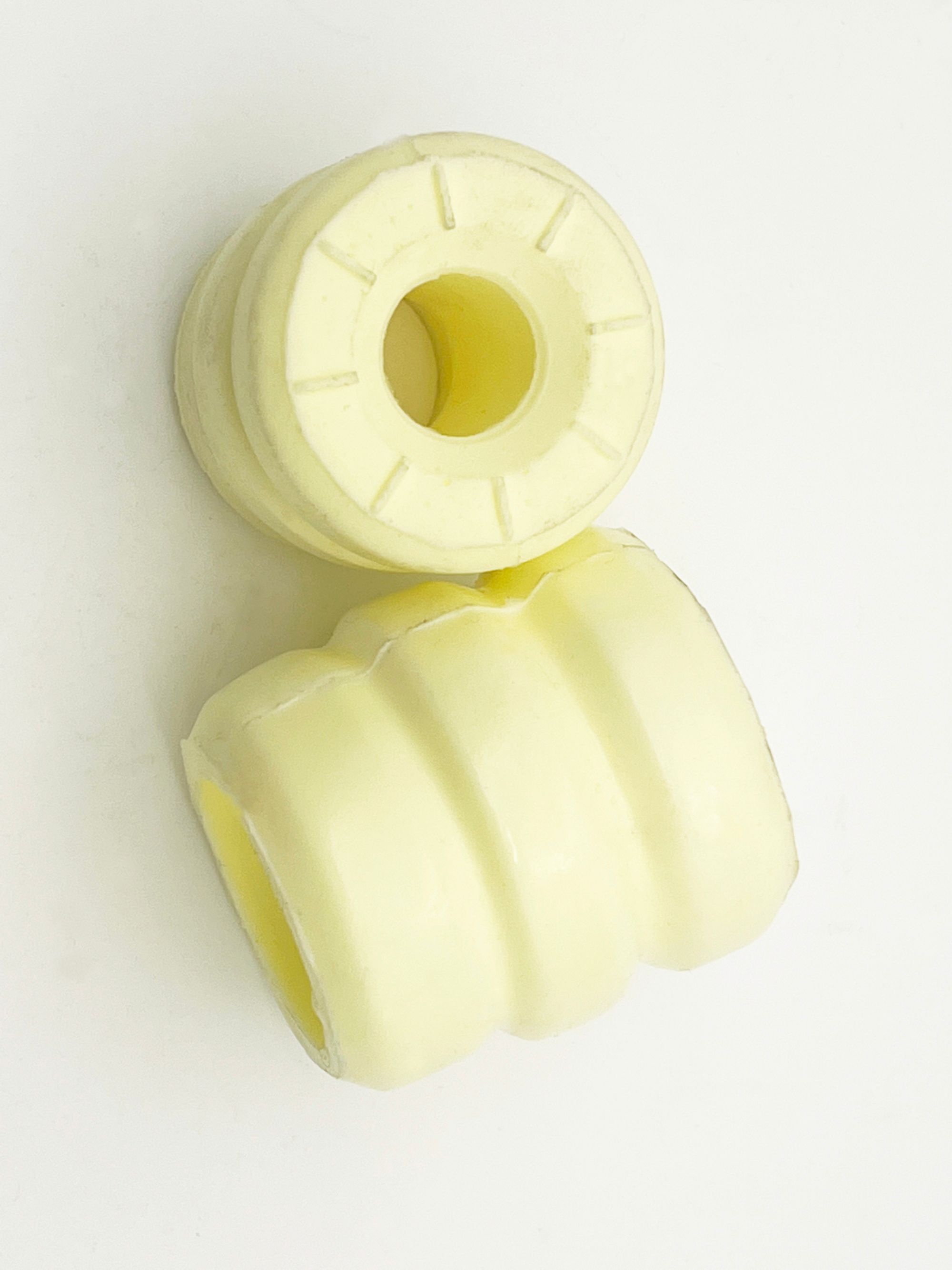
Most people think a jounce bumper is just a last-ditch cushion when the suspension bottoms out. But that undersells it badly. In a modern coil-over or strut setup, the jounce bumper actually works as a secondary spring. Once the suspension compresses past a certain point, the foam or rubber piece begins to engage, adding progressive rate that keeps the main spring from coil-binding and prevents harsh metal-to-metal contact. On rough pavement or aggressive cornering, it can be the difference between a controlled transition and a sudden spike in load that upsets the chassis.
What makes it tricky is that the bumper's behavior changes with temperature, age, and even how it was installed. A worn or disintegrated jounce bumper won't just reduce protection at full compression; it alters the effective spring rate in the last third of suspension travel. That means the car may feel softer or less predictable right when you're leaning on it hardest. Some drivers cut or modify the bumpers to fine-tune ride height or bottoming resistance, but doing so without understanding the progressive curve often leads to worse handling than stock.
So the next time you're rebuilding a suspension, don't treat the jounce bumper as an afterthought. Check its length, density, and condition. If you've changed springs, dampers, or ride height, the original bumper may no longer engage at the right point. A properly matched jounce bumper can improve both comfort and limit handling, while the wrong one can make a well-tuned setup feel broken long before you reach the bump stop.
Signs Your Jounce Bumper Has Checked Out Early
A dead giveaway is a hollow clunk or metallic slap when the suspension compresses sharply. That little polyurethane cone is supposed to absorb the hit, but once it splits or crumbles, the control arm or axle makes direct contact with the frame. You might hear it over speed bumps, potholes, or even when turning into a driveway with a bit too much enthusiasm. It often starts as an occasional knock and turns into a constant reminder that something isn't right.
Ride quality also takes a nosedive. If the front or rear end feels like it crashes over small imperfections rather than gliding, the jounce bumper may have lost its cushioning ability. Some drivers also notice the vehicle sitting slightly lower on one corner, especially after a night parked. That's because the bumper can act as a secondary spring in some designs, and when it disintegrates, there's less resistance to compression.
Visually, you can often catch the damage before it gets worse. Look behind the wheel and above the control arm or axle for cracked, flattened, or missing chunks of foam or rubber. If you see a clean, shiny spot where metal has been striking metal, that's a strong hint the bumper vanished entirely. Replacing it early prevents more expensive damage to shocks, strut mounts, and even the body structure.
OEM vs. Aftermarket: What Actually Changes With a Factory Bumper
The difference is rarely visible from ten feet away. A factory bumper is engineered alongside the rest of the vehicle—its plastic thickness, internal webbing, and even the specific grade of polypropylene are chosen to deform in a controlled way during low-speed impacts. Aftermarket bumpers often replicate the outer shape but use thinner material or fewer weld points behind the cover, which changes how energy moves through the bumper assembly.
Mounting points are where most frustration shows up. Original bumpers come with pre-aligned holes, clip retainers, and brackets molded specifically for parking sensors, fog lamp housings, and sometimes radar units. Aftermarket versions frequently have slightly off-center stud holes or missing provisions for wiring harnesses, forcing a shop to drill, zip-tie, or leave sensors unplugged. Even a quarter-inch mismatch at the mounting tabs can cause visible panel gaps or vibration at highway speed.
There is also the question of what happens later. If a replacement bumper lacks the same crush characteristics as the original, a minor parking lot bump can transfer more force into the radiator support or frame rail than it should. Some insurance adjusters and body shops will note non-OEM parts on an estimate, and a future buyer might question why the bumper fit is not quite right. None of this means aftermarket is always bad—plenty of people choose it for cost or custom styling—but the trade-offs extend well beyond the initial price tag.
Step-by-Step: Replacing a Worn Jounce Bumper Without Pulling the Whole Strut
Replacing a jounce bumper usually means pulling the strut assembly, compressing the spring on a bench, and hoping nothing slips. But if you have enough clearance in the wheel well, you can swap the bumper in place. Start by chocking the rear wheels, lifting the front, and supporting the car on stands. Remove the wheel on the side you're working on. Take a close look at the upper strut mount and the spring seat—if the old bumper is crumbling, you'll likely see pieces of foam or rubber stuck to the shaft or sitting in the lower spring perch.
The trick is using a pair of good-quality spring compressors that fit through the coils while the strut is still bolted to the knuckle. Hook the compressors onto the spring, alternating sides, and tighten them evenly until the spring is just loose enough to take pressure off the upper mount. Then remove the center nut on the strut rod (use a pass-through socket and an Allen key to keep the shaft from spinning). Lift off the upper mount and the dust boot, slide the old jounce bumper off the shaft, clean any rust or debris, and slip the new bumper into place. Make sure the tapered end faces up if your bumper is shaped that way.
Reassemble everything in reverse order, torque the center nut to the manufacturer's spec, and slowly back off the spring compressors. Check that the spring seats correctly in its perch and that the dust boot isn't pinched. Mount the wheel, lower the car, and give the suspension a few bounces. A quick test drive over some rough pavement will tell you if the new bumper is doing its job—if the harsh bottoming-out feel is gone, you've saved yourself a full strut removal.
Quick Tips to Extend the Life of Your New Jounce Bumper
Most jounce bumpers fail early because they are treated as an afterthought. Start by checking the mounting hardware every time you rotate your tires or inspect the suspension. A loose bolt or a cracked washer can let the bumper shift under load, turning a minor impact into a torn or deformed part. If you hear a dull thud on full compression, don’t ignore it — that’s often the bumper bottoming out against the control arm, which shortens its life far quicker than normal road use.
Keep the surrounding area clean. Road grit, salt, and brake dust collect around the bump stop and act like sandpaper every time the suspension cycles. A quick rinse with low-pressure water during your normal wash routine removes most of that abrasive layer. Avoid using harsh degreasers or solvent-based cleaners directly on the rubber or polyurethane, since they can dry out the material and lead to cracking. If the bumper looks glazed or hard, a light application of a rubber-safe protectant can restore some flexibility.
Finally, match your driving habits to the part’s purpose. Jounce bumpers are designed for occasional, progressive contact, not as a permanent load-bearing spacer. If you frequently carry heavy loads or drive on rough trails, consider upgrading to a firmer aftermarket bump stop or adding a spacer to reduce how often the bumper gets fully compressed. Replacing a worn bumper before it splits is far cheaper than repairing the shock mount or frame damage that follows a failed one.
FAQ
It acts as a cushion that prevents the suspension from bottoming out harshly. When the shock compresses fully, the bumper absorbs the impact, protects the mounting points, and keeps metal parts from slamming together.
Look for cracks, crumbling, or a flattened shape. If the ride feels harsh over bumps or you hear a clunk when the shock reaches full compression, the bumper is likely worn and no longer cushioning properly.
Yes, it is smart to do both at once. The bumper ages at a similar rate to the shock, and reusing a degraded one undermines the new shock's performance. Many replacement shocks do not include a new bumper, so order it separately.
In many vehicles, the bumper sits on the shock shaft and can be swapped separately if the shock is still healthy. However, you need to remove the shock to access it, so many people combine the job with shock replacement to save labor.
OEM bumpers are engineered to match the vehicle's specific suspension travel and damping characteristics, so they usually provide the most predictable ride. Aftermarket options can work, but quality varies, and a mismatched density or height can alter bottoming behavior.
The shock can bottom out without any cushion, transferring a sharp impact to the chassis and suspension mounts. Over time this can bend shock rods, crack mounting brackets, and lead to premature failure of other components.
Under normal driving they should not touch anything, so they do not affect ride height or comfort. They only engage during large suspension compressions, like hitting a deep pothole or carrying a heavy load.
Use a bit of rubber-friendly lubricant to slide it onto the shaft, make sure it seats fully against the shock body or upper mount, and double-check the orientation if the bumper has a tapered end. Avoid cutting or drilling it, as that weakens its impact absorption.
Conclusion
That small rubber cone tucked under your dust boot rarely gets attention until the suspension slams hard over a pothole. But a jounce bumper does far more than act as a last-resort bump stop. It works as a progressive spring, managing compression energy and protecting the strut mount and shock absorber from violent bottoming. On many modern vehicles, the bumper is a load-bearing part of the suspension design, not just a cushion. When it degrades—often cracking, crumbling, or turning to mush—you may notice a sharp clunk over bumps, a harsher ride, or uneven tire wear long before you see visible damage. Ignoring these signs can transfer stress to the upper mount and shorten the life of the shock itself.
Replacing a worn jounce bumper does not always mean pulling the whole strut assembly. With the right spring compressor, many cars allow you to remove the upper mount, swap the old bumper and dust boot, and reassemble without a full alignment. Sticking with an OEM bumper matters because aftermarket options often use different foam densities or lengths, which can alter suspension travel and ride feel. Once the new bumper is in, a few habits help it last: avoid letting the suspension sit fully compressed for long periods, keep the dust boot sealed against grit, and inspect the bumper whenever shocks are serviced. If the old one shows deep cracks or feels spongy, replace it right away—your strut mounts will thank you.
Contact Us
Contact Person: Leela
Email: [email protected]
Tel/WhatsApp: 8613586885132
Website: https://www.xiayishockparts.com