

OEM Expansion Valve Performance Factors Worth Understanding
2026-11-20
An OEM expansion valve can look right on paper and still perform differently in the field. That gap usually comes down to factors that don't always make the spec sheet: valve sizing, internal sealing, refrigerant compatibility, and response under partial load. Each one quietly shapes capacity, superheat control, and long-term reliability. At HONGSEN, these performance variables are refined in real HVAC systems, not just laboratory setups. This guide covers the OEM expansion valve performance factors worth understanding before you specify, replace, or troubleshoot a unit.
Tolerance Stacking Starts at the OEM Level
Tolerance stacking rarely begins on the factory floor or with a tier supplier missing a print. It starts when an OEM freezes mounting interfaces, datum schemes, and nominal gaps without testing how those choices accumulate under production variation. A bracket that locates cleanly on a CAD model can fight the sheet metal, harness clips, and seal compression once real parts meet real assembly torque.
The earliest design reviews are where stack-ups get locked in. If the OEM does not define which features control location and which ones float, later adjustments force suppliers into tighter tolerances than the process can hold. That cost shows up as reworked fixtures, selective assembly, or customer complaints about uneven gaps long after the program is locked.
Treating stack-up as a manufacturing problem misses the leverage available at OEM level. A modest change to a locator strategy or a slightly wider nominal clearance can absorb the same variation that would otherwise require expensive part precision. Getting that right before sourcing gives suppliers a buildable target instead of an impossible one.
Superheat Stability Depends on Load, Not Just Settings
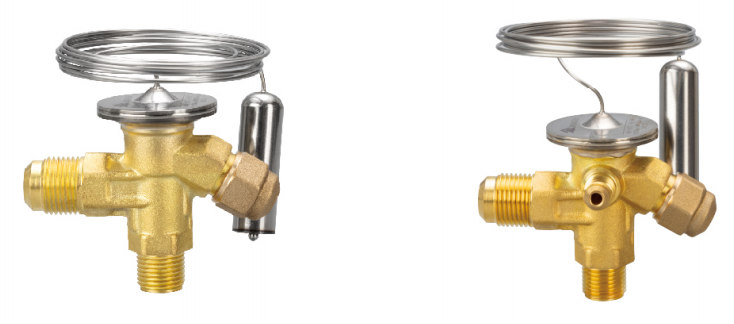
A common mistake in the field is treating superheat as something you can lock in at the expansion valve and forget. The setting matters, but it is only part of the picture. When the evaporator load shifts, the rate of liquid boil-off changes, and the sensing bulb sees a different balance between liquid and vapor. The same valve position that produced a steady reading at full load can become jumpy when airflow drops or coil temperature falls.
Low-load operation tends to produce the most misleading signals. The refrigerant spends more time lingering in the evaporator, so the measured superheat can swing even without any adjustment at the valve. Chasing those swings by changing the setpoint usually makes the system hunt. It is more useful to watch how superheat responds across the actual load range before assuming the setting is wrong.
High load brings its own challenge. The valve must feed enough refrigerant quickly, and a fixed superheat target may briefly starve the coil or overfeed it. Stability in that situation is less about the static setpoint and more about how well the valve and sensor respond to a moving load. Once load is treated as the main variable, superheat behavior becomes much easier to read.
Internal Materials Set the Failure Timeline
Material inhomogeneities do more than create weak points; they roughly script the sequence of damage long before visible cracking begins. Subsurface porosity, inclusion clusters, banded segregation, and uneven residual stress all steer where fatigue initiates and how quickly small cracks coalesce. Two identical housings may share the same drawing, but their internal structures can push one toward early failure while the other survives for years.
Internal features also govern the pace of degradation. In aluminum alloys, coarse intermetallic particles and oxide films often act as crack starters; in hardened steels, hydrogen traps and patches of untempered martensite can shorten the path to delayed fracture. Temperature and load merely supply the external energy. The microstructure decides whether that energy accumulates slowly as dispersed microcracks or rushes through a brittle network in a matter of hours.
For that reason, a credible failure timeline is usually reconstructed backward from the material itself. Fatigue striation spacing indicates local crack growth rate, corrosion product layers correlate with environmental exposure, and grain boundary precipitation points to time spent at elevated temperature. When those internal markers are read together, the failure becomes less like a sudden event and more like a series of material decisions that were made long before the final fracture.
Refrigerant Matching Goes Beyond the Label
A refrigerant label tells you the family name, but it rarely tells you how a particular batch behaves after a few hundred heat cycles. Two cylinders can both say R-134a and still differ in moisture content, non-condensable gases, or the additive package the supplier used. Those details show up only when the system runs hot and the expansion valve starts making decisions based on actual pressure and temperature, not on what the sticker promised.
The real matching work happens once the refrigerant meets the compressor oil, the desiccant, and every O-ring in the loop. Some replacements are chemically close enough on paper but slowly soften hoses or reduce oil return to the compressor. Others hold pressure fine at idle and then drift out of range at highway load because their temperature glide does not line up with the original condenser and evaporator sizing. That kind of mismatch never appears on the front of a can.
A better check starts with the label and then moves to the margins: how the refrigerant behaves at the system's highest and lowest expected pressures, whether it stays miscible with the existing oil under cold start conditions, and how much moisture it carries into the drier. If those measurements are not part of the selection process, the label is doing more marketing than matching.
Real Pressure Drop Is a Moving Target
A pressure drop value printed on a cut sheet rarely survives contact with the actual system. Flow rates drift, fluid temperature swings, viscosity shifts, and internal surfaces begin to collect deposits almost immediately. Even two identical installations can show noticeably different readings within weeks because small differences in piping layout, valve position, or batch chemistry push the resistance in opposite directions.
Filters and strainers make the moving-target problem especially visible. A clean element starts with one restriction, then gradually climbs as particles pack into the media. The climb is not always smooth; a sudden change in upstream solids loading or a shift in particle size can change the slope overnight. If a bypass valve cracks open at a set differential, the apparent pressure drop can flatten or dip, masking the real condition of the element until flow demand changes again.
Treating pressure drop as a single pass-or-fail number misses most of the useful information. It works better as a trend signal: the current reading matters less than the shape of the curve over hours, days, and seasons. Comparing the live value against a baseline captured under similar flow and temperature gives a far earlier warning of fouling, wear, or flow restrictions than waiting for an alarm limit that was set against a static estimate.
Sizing Errors Stay Hidden Until Peak Conditions
Sizing errors rarely announce themselves when a system is running at half load. A pump that is slightly undersized, a heat exchanger with a modest shortfall, or a storage tank that drains a bit faster than expected can all hide comfortably in everyday conditions. Operators may notice small drops in efficiency or occasional alarms that clear on their own, but these signals are easy to dismiss. The real test arrives when demand spikes, ambient temperatures climb, or an upstream process pushes volumes to the edge of design limits. Only then does a seemingly minor mismatch turn into a bottleneck that forces manual intervention, emergency bypasses, or unexpected downtime.
Part of the challenge is that routine monitoring focuses on averages rather than extremes. A weekly report might show an equipment item running at seventy or eighty percent of rated capacity, which looks perfectly healthy. What that report misses is the fifteen-minute window on a hot afternoon when the same item hit one hundred and five percent and tripped a safety margin. By the time the data is reviewed, the peak has passed and the system has returned to normal. This pattern trains teams to trust the average and treat the spikes as anomalies, even when the spikes repeat with growing frequency.
Bridging this gap requires looking at performance through a worst-case lens. Instead of asking whether a component works under typical load, the more revealing question is whether it still works when every contributing load arrives at once. Field tests, seasonal audits, and short-duration stress trials can expose weaknesses that standard operating data keeps invisible. Teams that wait for a peak season to reveal the problem often end up paying for it with rushed retrofits, overtime labor, and lost production. A sizing error that stays hidden is not harmless; it is simply waiting for the worst possible moment to show up.
FAQ
Even matching part numbers can drift from spec if the sensing bulb is mounted with poor surface contact or located too close to a heat source. Small differences in bulb insulation, capillary routing, and spring fatigue shift the superheat set point enough to change evaporator feeding.
OEM units are usually calibrated around a specific evaporator volume, refrigerant path, and pressure drop profile. That calibration includes the charge in the bulb and the spring range, so the valve holds superheat steady during part-load conditions rather than overshooting or starving the coil.
Each refrigerant has its own pressure-temperature relationship, so a valve sized for R-134a will not produce the same opening force with R-1234yf or R-410A. The thermostatic charge must also match the refrigerant, otherwise the valve may hunt or lose control at low evaporator temperatures.
A solid liquid seal at the valve inlet prevents flash gas from passing through the orifice and eroding control. If subcooling is lost, the valve sees a two-phase mixture, capacity drops, and the superheat reading becomes noisy because the evaporator is being fed unevenly.
If the valve is oversized, it tends to overfeed the evaporator and then slam shut, creating swings in suction pressure and possible liquid carryover. If undersized, it cannot feed enough refrigerant at peak load, so the evaporator starves and discharge temperatures climb.
Bulb charges like liquid, gas, or cross-charged fills behave differently as the bulb warms. A cross-charged bulb can flatten the opening force over part of the range, which helps prevent liquid floodback at high evaporator temperatures while keeping control tighter at low load.
That often comes from pressure drop right after the orifice causing local saturation temperature to fall below the pipe surface temperature. It is not always a fault; what matters is whether superheat at the evaporator outlet remains stable and within the expected range.
Yes, especially at low load, a partially blocked valve may still hold a decent superheat reading. The problem shows up at higher thermal load, when the restricted orifice cannot deliver the required mass flow and the evaporator pressure drops while superheat rises sharply.
Conclusion
A nominal rating for an expansion valve rarely survives contact with an installed system. At the OEM level, small differences in port geometry, spring rate, and sensing bulb charge stack up across a production run, so two valves with the same part number can perform differently once they are mounted and fed by real piping. That spread is often mistaken for a field adjustment issue, but it begins before the valve leaves the factory. Internal material choices set the failure timeline more than any external setting. Seals, diaphragms, and sliding surfaces that look acceptable in a catalog may harden, swell, or lose compliance after prolonged exposure to a specific refrigerant and lubricant combination, especially with newer low-GWP blends that do not behave like the single-component fluids they replace.
Superheat stability depends less on a fixed adjustment and more on how the valve tracks a moving load. A system that holds a steady reading under one condition can hunt or overfeed when airflow, condenser pressure, or evaporator load shifts, because the valve is responding to a changing balance rather than a static target. Real pressure drop is equally fluid: line length, distributor head losses, and coil saturation all move with operating conditions, quietly consuming capacity that was assumed during selection. Sizing errors stay hidden because mild conditions rarely expose them. The valve that works through moderate weather may starve or flood the coil at peak demand, when suction pressure, refrigerant density, and required mass flow no longer match the original design assumption.
Contact Us
Contact Person: KOPASS HO
Email: [email protected]
Tel/WhatsApp: 8613606566112
Website: https://www.hongsenref.com/