

Leading Explosion Proof Electric Heater Supplier for Safe Industrial Heating Solutions
2026-07-23
In industries where volatile environments demand utmost safety, the choice of heating equipment can make or break operations. Imagine an electric heater that not only delivers consistent warmth but also eliminates the risk of spark-induced disasters. As a leading explosion proof electric heater supplier, Shenzhou Chemical Industry has mastered this balance, offering solutions that redefine safety standards. This blog dives into how their innovative designs keep your facilities running without compromise—because in hazardous zones, reliability isn’t just a feature, it’s a necessity.
Engineered for Hazardous Areas: Beyond Basic Heating
Heating in hazardous environments isn’t just about raising the temperature—it’s a discipline that merges advanced safety engineering with precise thermal control. Every component, from the heating element to the enclosure, is designed to eliminate ignition risks in atmospheres laden with flammable gases, vapors, or combustible dust. This means employing flameproof enclosures, intrinsically safe circuits, and rigorous temperature limitation systems that prevent surface temperatures from reaching dangerous thresholds, all while delivering consistent, efficient heat where it’s needed most.
Certifications like ATEX, IECEx, and NEC/CEC compliance are not mere labels; they represent a fundamental departure from off-the-shelf heating equipment. Unlike generic heaters, these units undergo exhaustive testing to withstand internal explosions without propagating flames, manage thermal runaway through redundant safety cutoffs, and resist corrosion from aggressive chemicals. The result is a heating solution that integrates seamlessly into critical processes—whether freeze protection on a gas pipeline or viscosity control in a solvent storage tank—without ever compromising the integrity of the hazardous area.
What truly sets these systems apart is their adaptability to niche operational demands. Custom watt densities, exotic alloy sheaths for corrosive media, and modular designs that ease maintenance in restricted-access zones transform them from simple appliances into purpose-built assets. By working closely with process engineers to map out thermal profiles, ambient conditions, and regulatory boundaries, manufacturers deliver heating solutions that not only meet code but enhance overall plant safety and uptime, proving that in hazardous areas, exceptional heating is an engineered safeguard first and a source of warmth second.
How We Address the Real Risks of Industrial Heating
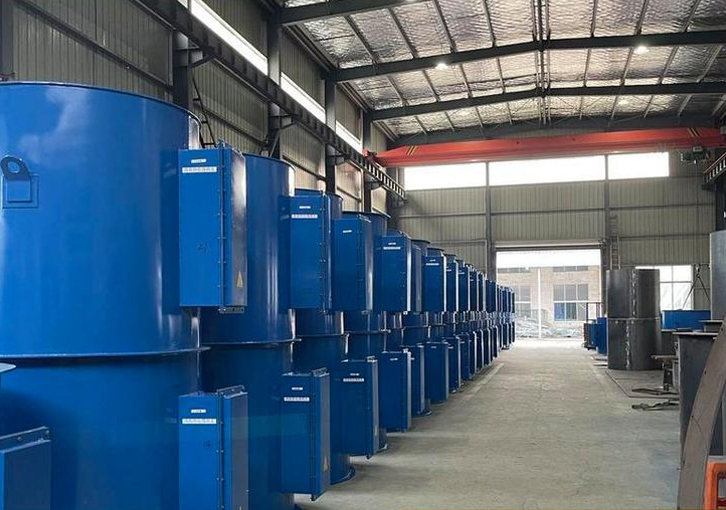
We start by acknowledging that industrial heating isn't just about reaching a temperature—it's a complex interplay of materials, pressure, and process control. Our approach begins with a thorough hazard analysis for every system, mapping out potential failure modes from thermal runaway to material fatigue. This isn't a one-size-fits-all checklist; it's a living assessment that evolves with your operations, ensuring that risks are identified before they become incidents.
Next, we layer in engineered safeguards that go beyond standard cutoffs. Think redundant sensor arrays that cross-validate readings in real time, insulating barriers designed to withstand prolonged exposure, and vent systems calculated to handle worst-case pressure spikes. Each element is selected and configured based on the specific chemistry and kinetics of your process, so protection isn't just bolted on—it's integrated into the heating system's DNA.
But hardware alone isn't enough. We embed continuous monitoring and adaptive diagnostics into our heating solutions, creating a feedback loop where operating data is constantly compared against baseline models. Sudden deviations trigger automatic tweaks or controlled shutdowns, while longer-term trends inform predictive maintenance. This proactive stance means we don't just react to risks; we help you stay ahead of them, keeping your people, assets, and production lines safer.
Advanced Materials and Design for Extreme Environments
Pushing the boundaries of engineering means confronting environments that seem almost designed to destroy—temperatures that vaporize common alloys, pressures that crumple hulls, radiation that scrambles circuitry, and corrosive chemistries that eat through protective layers in hours. Advanced materials are not just about surviving these conditions, but enabling entirely new capabilities: think of ceramic matrix composites that stay strong while glowing white‑hot in jet engine cores, or nickel‑based superalloys forged through single‑crystal growth to eliminate grain boundaries where cracks start. The key shift is from passive endurance to active functionality—materials that self‑report damage, heal micro‑cracks, or adapt their surface texture in real time.
Design for such extremes collapses the usual comfort margins between load and failure. Every gram saved on a re‑entry heat shield must be justified by a precise understanding of transient thermal gradients and ablation mechanics; every millimeter of insulation in a deep‑sea housing demands multiphysics simulation of creep under combined pressure and cold. It often means borrowing architectures from nature—like the layered, porous structures of deep‑sea sponge skeletons that manage pressure without brittle collapse—and integrating them with man‑made precision through additive manufacturing. This convergence of generative design, digital twins, and in‑situ process monitoring lets us build components that were simply unprintable a decade ago, with internal cooling channels and graded compositions that blunt the abrupt property shifts where failure loves to nucleate.
But pushing further still requires a pivot: instead of fighting extreme conditions, we begin to harness them. Materials that actually exploit oxidation to form protective skins, surfaces that use intense heat to trigger beneficial phase changes, and designs that channel corrosive flows into self‑regulating patterns—these are the frontier. Testing, too, moves beyond standardized coupon tests into mission‑mimicking chambers that recreate multi‑factor abuse: vibration baking a component while spraying it with salt and sulfur‑laden gas, for instance. The goal is not just a longer‑lasting part but a more predictable one, where every atom’s journey through a harsh lifetime is accounted for in the initial blueprint.
Tailored Configurations That Fit Your Unique Process
Every operation has its own rhythm, nuances, and bottlenecks. That’s why we’ve moved beyond one-size-fits-all templates. Our approach starts with a deep dive into how your team actually works — the handoffs, the exceptions, the tools you already rely on — and then crafts a configuration that mirrors that reality. Instead of forcing your process into rigid software, we adapt the system to feel like a natural extension of your workflow.
What does that look like in practice? It might mean custom statuses that reflect your internal language, automated triggers that fire only when specific conditions align, or dashboards that highlight the metrics you actually care about — not the ones some developer assumed were important. The result is an environment where your team spends less time navigating the tool and more time moving work forward, because every button, field, and notification has a purpose tied directly to your daily operations.
And because your process isn’t static, neither is the configuration. As your team evolves, scales, or pivots, the underlying setup can shift alongside you — without requiring a complete overhaul. It’s a living framework that respects the way you work today while staying flexible enough for tomorrow’s unknowns. That’s the difference between software you use and software that fits.
Global Safety Certifications: Our Blueprint for Compliance
Navigating the complex landscape of international safety standards requires more than just ticking boxes—it’s about building a foundation of trust. Our approach goes beyond mere adherence; we view each certification as a strategic commitment to quality and reliable performance in every market we serve. From the rigorous demands of CE marking in Europe to the comprehensive testing of UL and ETL in North America, we integrate these benchmarks directly into our design and production processes, making safety an inherent characteristic rather than an afterthought.
What sets our blueprint apart is the proactive integration of certification requirements early in the development cycle. Instead of retrofitting products to meet standards, our engineers collaborate with compliance specialists from day one. This synergy streamlines the path to market entry and uncovers potential risks before they escalate. Whether it's adhering to RoHS directives or achieving IP ratings for harsh environments, every step is meticulously orchestrated to ensure our products not only meet but often exceed the statutory obligations, giving our partners confidence that their operations are built on a secure and dependable base.
Beyond the seals and documents, our commitment to global safety certifications embodies a deeper promise—protecting end-users and upholding brand integrity without compromise. We regularly invest in third-party audits and in-house training programs that keep our team updated on evolving regulations. This continuous improvement loop means that when you choose a product backed by our blueprint, you’re not just getting a compliant device; you’re benefiting from a system designed to anticipate change and deliver unwavering safety, regardless of geographic or regulatory boundaries.
Proactive Maintenance and Rapid Response Support
Our approach to system upkeep goes beyond scheduled checkups. We embed intelligent monitoring that spots tiny anomalies before they snowball into real problems, often resolving issues silently in the background while your team stays focused. It’s maintenance that doesn’t feel like maintenance—just uninterrupted performance day after day.
When something does demand attention, our support team kicks into gear with a lean, no-red-tape process. You’re talking to someone who knows your setup intimately, not a tier-one script reader. The average response time isn’t a metric we brag about—it’s simply the moment a senior engineer starts diagnosing, often while you’re still drafting the ticket.
This dual‑focus model means you’re covered at both ends: the quiet, preventive work that keeps your infrastructure healthy, and the swift, competent reaction when the unexpected hits. For your users, it’s all invisible—just a service that works, reliably and fast.
FAQ
In industries where flammable gases, vapors, or dust are present, standard heaters can pose a serious ignition risk. Explosion proof electric heaters are built with robust enclosures and specialized components to contain any sparks or high temperatures, ensuring safe operation without compromising on efficient heating.
Every unit we supply undergoes extensive testing and is certified to comply with international standards like ATEX, IECEx, and National Electric Code requirements. We collaborate directly with manufacturers to guarantee that the materials, sealing methods, and thermal controls are all designed to prevent explosions even in the most challenging conditions.
You'll find our heaters in oil and gas facilities, chemical processing plants, pharmaceutical cleanrooms, mining operations, and grain handling silos. Any setting where volatile substances are processed or stored can rely on this equipment to maintain consistent temperatures without compromising workplace safety.
Absolutely. We work closely with engineering teams to tailor heater dimensions, watt densities, mounting options, and control systems to specific project needs. Whether it's a freeze protection scenario on a remote pipeline or a process heating system in a paint booth, we can configure the right solution.
Routine visual inspections for corrosion or seal damage are important, along with verifying that electrical connections remain tight. We recommend following the manufacturer's service schedule, which usually involves checking thermal cutoffs and ensuring the earth continuity is intact. Minimal professional maintenance can keep these units reliable for years.
From the moment you reach out, our technical specialists evaluate your heating needs, ambient conditions, and hazard zone classification. We then propose certified equipment and can provide on-site guidance during installation, helping your team integrate the heaters safely into existing infrastructure without unnecessary downtime.
Conclusion
Ensuring reliable and safe heating in volatile industrial environments demands specialized solutions that go far beyond standard off-the-shelf equipment. Our approach centers on engineering electric heaters specifically for hazardous areas, where every component and connection is designed to eliminate ignition risks and withstand extreme conditions. We don’t simply modify commercial heaters; we build from the ground up, integrating advanced materials such as corrosion-resistant alloys and robust insulation that maintain performance even under intense thermal cycling. This means real protection against the threats of explosive gases, combustible dusts, and corrosive chemicals—threats that conventional heating systems cannot reliably address. By embedding safety into the core design, we remove the burden of constant worry, allowing operators to focus on productivity.
Beyond the hardware, true assurance comes from a holistic support system that respects the unique demands of each facility. We configure heating solutions tailored precisely to your process parameters—whether that involves custom watt densities, bespoke flange dimensions, or specialized temperature control interfaces—ensuring seamless integration into existing infrastructure. Our blueprint for compliance is underpinned by rigorous global safety certifications, which are not mere paper credentials but a testament to thorough third-party testing and traceable quality management. With proactive maintenance protocols and responsive engineering support on standby, potential issues are identified and resolved before disrupting operations. This blend of precision engineering, certified safety, and attentive service delivers uninterrupted heating that protects both people and processes, establishing us as a trusted partner for safe industrial heating solutions worldwide.
Contact Us
Contact Person: Mr. Wang
Email: [email protected]
Tel/WhatsApp: 8613705299955
Website: https://vip.e-baixing.com/szhgyw