

High-Power Generator Set Manufacturing: Tackling Key Concerns for Superior Performance
2026-07-28
Behind every smooth-running hospital, data center, or remote industrial facility lies a question few ask until the lights flicker: what happens when the grid fails? The answer often hums quietly in a backup generator set, waiting. But not all generator sets are created equal. For those who refuse to leave power to chance, Hichai Power tackles the hidden engineering headaches—from thermal stress and fuel inefficiency to vibration nightmares—head-on. This is the world of high-power generation, built for relentless reliability.
Precision Engineering Meets Durability Demands
Every component in high-stakes machinery tells a story of materials pushed to their limits. When we talk about precision engineering that meets durability demands, we're looking at tolerances tighter than a human hair and alloys that refuse to crack under cyclic loads. It’s not about overbuilding until a part becomes unbreakable—that’s a brute-force approach that adds weight and cost. Instead, it’s the strategic removal of minute imperfections, the laser-focused analysis of grain structures, and the subtle geometry tweaks that spread stress like water flowing around a stone. A crankshaft that survives a million revolutions, a turbine blade that shrugs off years of thermal fatigue—these aren’t accidents. They’re the result of iterative simulations and metrology that feels almost obsessive.
The secret often lies in the silent partnership between surface treatments and core integrity. Take a bearing race, for instance. Its outer shell might be hardened through a nitride bath, creating a ceramic-like armor while the inner steel stays tough enough to absorb impact without shattering. That’s the kind of layered thinking that turns a short-lived part into a decade-long performer. And it’s not just about the factory floor—modern engineering borrows from fields like biomimicry. The way a tree branch flexes in a storm without snapping teaches us how to design aircraft landing gear that can endure jarring touchdowns while maintaining exact alignment. These cross-discipline insights push durability beyond what traditional material charts suggest.
Of course, none of this matters if the design can’t be replicated. Repeatability is where precision engineering earns its keep. A process that yields one flawless prototype is a parlor trick; a process that spits out ten thousand identical units, each within two microns of the target, is what keeps cities powered and fleets moving. Smart factories now close the loop with real-time inspection systems that adjust tool paths mid-operation, compensating for tool wear before it manifests as a defect. It’s a quiet revolution—no dramatic breakthroughs, just the steady elimination of variance. And when a critical component finally reaches the end of its service life, it does so predictably, giving engineers the confidence to push boundaries without gambling on failure.
Silent Power: Addressing Noise Pollution in Heavy-Duty Generators
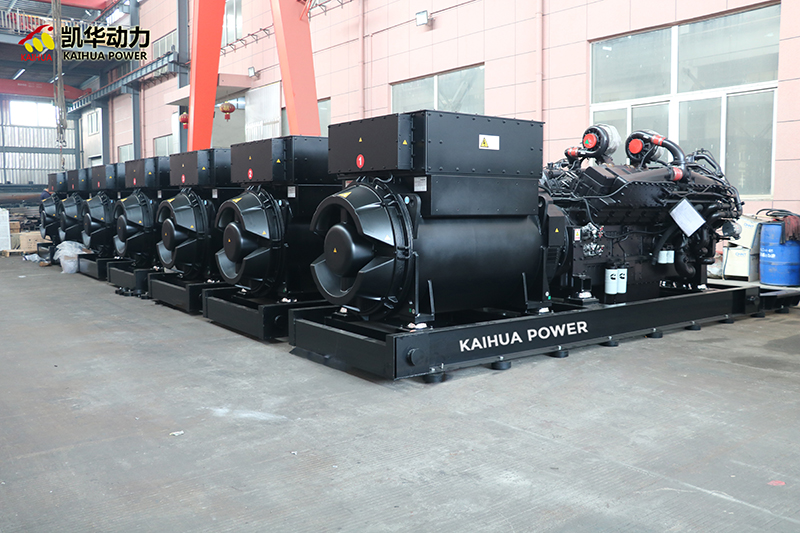
The persistent rumble of a heavy-duty generator has long been accepted as an unavoidable nuisance on construction sites and at outdoor events. Yet that low-frequency drone can easily exceed 100 decibels—roughly the equivalent of a chainsaw at close range—and it carries a hidden cost. Beyond the immediate annoyance, prolonged exposure isn’t just irritating; it chips away at concentration, disrupts sleep cycles, and can even contribute to long-term hearing damage for workers and passersby. The problem is more pervasive than most realize: a single poorly silenced unit can blanket an entire neighborhood in a wash of unwanted sound, sparking complaints and regulatory headaches.
Modern engineering has flipped the script, turning brute force into carefully managed acoustic power. Generators that once relied on little more than a bare engine and a steel frame now come encased in multi-layer sound-dampening enclosures designed to trap and absorb noise across a wide frequency spectrum. Strategic resizing of mufflers, refined exhaust routing, and low-resonance mounting systems all work in concert to knock down the decibel count without choking performance. The real breakthrough, though, lives in the digital realm: inverter-based models and adaptive speed controls let the engine ease back when full throttle isn’t needed, slashing both fuel use and noise output in one fell swoop. Suddenly, “quiet” isn’t a luxury—it’s built into the machine’s core logic.
The quietest setups take this philosophy even further by integrating smart load management and hybrid power reserves. Instead of leaving a generator to drone on endlessly at a fixed speed, battery banks and small solar arrays can handle light loads silently, only calling the engine to life when demand spikes or the batteries dip below a threshold. This slashes the overall runtime and transforms what was once a continuous roar into occasional, brief bursts of activity. For sites in dense urban areas, where a single noise complaint can derail a timeline, that peace of mind is priceless. The result is a breed of power solutions that don’t just meet noise regulations—they barely whisper, letting work carry on and life continue right next door without a second thought.
Smart Monitoring for Uninterrupted Performance
Behind every reliable system is a monitoring approach that spots issues long before they disrupt operations. Instead of reacting to failures, smart monitoring continuously tracks performance patterns, resource usage, and subtle anomalies. This proactive stance means potential bottlenecks are identified and resolved while everything still runs smoothly, keeping your services available without those dreaded 3 a.m. alerts.
What sets modern monitoring apart is its ability to learn what normal looks like. Algorithms establish baselines for your specific environment, so deviations—whether a gradual memory leak or an unusual spike in latency—trigger actionable insights rather than noise. Teams get context, not just raw metrics, enabling faster root-cause analysis and preventing the all-too-common cascade from minor glitch to full-blown outage.
The result is a quieter operational rhythm where uptime becomes an assumption, not a constant worry. Automated responses can handle common scenarios, while rich dashboards give you a real-time view of health across hybrid infrastructures. In the background, the system keeps watch, adapting as traffic patterns shift, so your users experience nothing but seamless performance.
Material Mastery: Balancing Strength and Weight
Getting strength and weight to shake hands isn't just a materials science puzzle—it's where the magic happens in everything from bike frames to aircraft wings. You can't simply strip away mass and hope for the best; that path leads to flimsy, unreliable parts. Instead, it's about understanding how a material's inner structure responds when you push it to its limits. Carbon fiber, for instance, packs immense tensile strength into strands thinner than a human hair, but only when those strands are aligned precisely along load paths. Get the orientation wrong, and you've got an expensive, brittle mess. The real skill is in decoding these subtle behaviors and turning them into an advantage.
Manufacturing plays an equal role in this balancing act. Processes like forging and additive manufacturing let engineers place material only where forces demand it, shaving ounces without sacrificing durability. Think of hollow-core ski cores or lattice structures inside metal parts—designs that would have been unthinkable a generation ago. Yet, the best solutions often come from rethinking the problem entirely: composite sandwiches with honeycomb cores, or alloys that gain strength during heat treatment. None of these are silver bullets, but when chosen with a clear-eyed view of the trade-offs, they can produce objects that feel almost impossibly light and tough at the same time.
Emissions Compliance Without Compromise
Meeting strict emissions standards often feels like a trade-off between performance and responsibility. But modern engineering proves you can have both. Advanced combustion techniques and real-time engine management let you dial in cleaner burns without sacrificing the torque curve or throttle response that drivers expect. It's not about detuning for compliance—it's about smarter control that unleashes efficiency without dulling the driving experience.
Aftertreatment systems have evolved from clunky add-ons to seamlessly integrated components. Selective catalytic reduction and particulate filters now work in thermal harmony with the engine, minimizing backpressure and regeneration interrupts. Materials science plays a quiet hero here, with lightweight alloys and durable ceramics that handle extreme temperatures while keeping system weight in check. The result is a powertrain that stays legally clean across its entire duty cycle, from cold starts to wide-open throttle, without the driver ever noticing the complexity at work.
Compliance doesn't mean compromising on vehicle packaging or daily usability either. Engineers are nesting aftertreatment modules into tighter spaces, often leveraging predictive algorithms to time regeneration during natural low-load events, like highway cruising or coasting. This proactive strategy eliminates distraction and preserves uptime. Meanwhile, fuel mapping adapts on the fly to real-world variables—ambient temperature, altitude, load—delivering consistent emissions performance globally. The bottom line: regulatory adherence becomes an invisible feature rather than a limiting factor, leaving the driver with the full character of the vehicle intact.
Rigorous Testing Protocols for Real-World Resilience
True resilience isn't born in a lab—it's forged through punishing simulations that mirror the chaos of actual field conditions. Take the thermal shock chambers we use: a component might jump from sub-zero cold to blistering heat in under thirty seconds, dozens of times a day. It's not about passing a single benchmark, but seeing what cracks, warps, or flakes after the hundredth cycle. Some materials look perfect on paper yet degrade in unpredictable ways once moisture, salt spray, and vibrational stress pile on simultaneously. That interplay is where most failures hide, and only layered, sequential testing can smoke them out.
We've learned that repeatability alone isn't enough; the tests have to tell a story about long-term use. For instance, we rig accelerometers to excavator arms and data log every shudder during 16-hour shifts in rocky terrain. That raw sensor data then feeds back into our hydraulic test rigs, so the exact pattern of jolts gets compressed into accelerated durability runs. It's a far cry from generic sinusoidal sweeps—it's the real rhythm of work, amplified. The units that survive those runs enter a final gauntlet of dust ingress, direct water jets, and electromagnetic interference, all while running critical functions. If it still communicates reliably afterward, we start to trust it.
What makes the difference is pushing beyond rated limits without destroying the design intent. A pressure sensor rated for 10,000 psi gets tested to 15,000, then slowly backed down while we watch for hysteresis. Industrial lighting gets strobed with voltage spikes meant to mimic failing generators. The goal isn't just durability; it's graceful degradation. When a product inevitably meets conditions it wasn't designed for, we want it to fail safe, not dead. That distinction matters more than any spec sheet bullet point.
FAQ
Achieving consistent power output and thermal management under extreme loads is tough. Manufacturers must carefully balance component selection, precision machining, and rigorous testing to prevent failures.
Each unit undergoes multi-stage inspections, from material sourcing to final load bank testing. Advanced monitoring systems check tolerances and performance metrics, ensuring every generator meets strict standards before shipment.
High-power generators produce immense heat; without efficient cooling, components degrade quickly. Optimized airflow and liquid cooling pathways are engineered to maintain safe operating temperatures, directly impacting longevity and reliability.
Fuel efficiency isn't just an operational benefit—it's baked into the design. By fine-tuning combustion chambers and injection timing, manufacturers can lower consumption rates without sacrificing output, which appeals to cost-conscious clients.
Through acoustic enclosures, anti-vibration mounts, and precision balancing of rotating parts. These measures not only comply with regulations but also reduce wear, extending the generator's service life.
Prototypes endure accelerated life tests, simulating years of operation in harsh conditions. Final products run at full load for extended periods, verifying that voltage and frequency remain stable under sudden demand spikes.
Yes, modular designs allow for tailoring voltage, phase, or enclosure type while retaining core reliability. Skilled engineers adapt standard platforms without deviating from proven manufacturing practices.
Lean manufacturing minimizes waste, and some use recyclable materials. Also, designing for easier overhaul and parts recovery reduces environmental impact over the product lifecycle.
Conclusion
Manufacturing high-power generator sets demands a rare blend of precision engineering and rugged durability. Every component, from the engine block to the alternator, must withstand extreme loads while maintaining tight tolerances—this is where advanced CNC machining and robotic assembly shine, eliminating human error and ensuring consistent quality. But durability isn’t just about robust construction; it’s about intelligent design. Smart monitoring systems now integrate seamlessly, using real-time sensors to track temperature, vibration, and load fluctuations. These self-diagnosing networks predict failures before they happen, enabling proactive maintenance that keeps generators running when they’re needed most. Underpinning this reliability is material mastery: engineers carefully select high-strength alloys and composites that reduce overall weight without sacrificing structural integrity. Such innovations allow for more portable yet powerful units, critical for applications where space and mobility are at a premium.
Performance, however, isn’t solely about raw output—it’s equally defined by responsible operation. Heavy-duty generators have long been associated with deafening noise, but modern acoustic engineering is rewriting that narrative. By incorporating multi-chamber mufflers, sound-dampening enclosures, and optimized airflow designs, manufacturers achieve silent power that meets stringent urban noise regulations without choking engine efficiency. Emissions compliance presents another frontier: through advanced catalytic converters, exhaust gas recirculation, and precise fuel injection mapping, today’s diesel and gas generators meet Tier 4 and Euro Stage V standards while preserving full-rated power. No amount of design finesse can replace real-world validation, which is why rigorous testing protocols are non-negotiable. Prototypes endure thousands of hours of cyclic loading, temperature extremes, and simulated grid failures to uncover weaknesses long before deployment. This relentless commitment to testing ensures that every generator set not only promises superior performance but delivers it under the toughest conditions.
Contact Us
Contact Person: Ms. Lu
Email: [email protected]
Tel/WhatsApp: 8618917899306
Website: https://www.hichaipower.com