

Flexo Printing Machine Export Guide for Smarter Global Expansion
2026-11-16
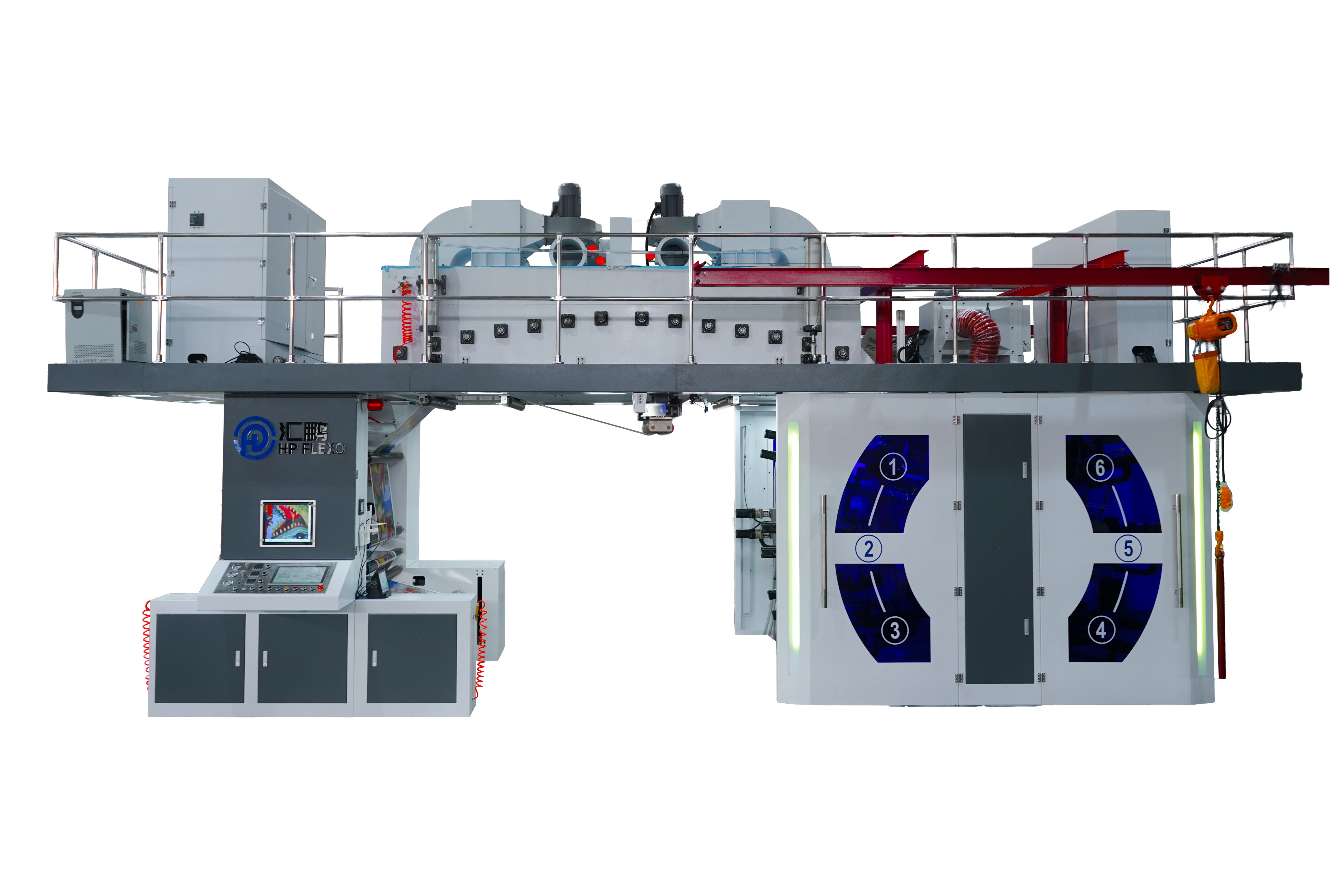
Why do two flexo printing machine exporters with similar specs end up with very different global footprints? The difference usually is not the machine. This guide maps the export decisions that actually shape expansion—and explains how HuiPeng approaches the process without the usual guesswork.
Where Flexo Machine Demand Is Quietly Picking Up
Across parts of Southeast Asia and Latin America, demand for flexo machines has been rising in a way that rarely shows up in headline sales figures. It is not the large, automated lines driving the change, but mid-format presses ordered by regional packaging converters that serve snack brands, household goods, and fresh produce exporters. These buyers tend to replace older letterpress or gravure units in stages, and their purchases often get booked without much fanfare.
Eastern Europe has also seen a slow but noticeable shift. Printers around Poland, the Czech Republic, and Romania are adding flexo capacity to handle shorter runs for private-label food and e-commerce packaging. The interest leans toward quicker changeover and lower ink waste, which fits the local labor market and pressure on margins. A few manufacturers have mentioned longer lead times for certain narrow-web models, a sign that orders are being placed earlier than usual.
Part of this quiet demand comes from label stock and flexible film lines that were postponed during the last investment freeze. Instead of returning as large capital projects, they are showing up as incremental upgrades and secondhand replacements. That makes the pickup easy to overlook if you are only watching big announcements.
The Paperwork That Keeps a Container From Stalling
Most people picture cranes and stacked steel when they think of global shipping, but a container rarely stops moving because of the physical cargo. It stalls because a signature is missing, a code does not match, or a certificate was issued under an outdated name. The bill of lading does the heaviest lifting: it acts as a receipt, a contract of carriage, and a document of title. Without a clean bill of lading, the box can sit at the terminal while demurrage charges quietly pile up.
Customs clearance adds another layer. A commercial invoice that lists the wrong harmonized system code, a packing list with mismatched weights, or a certificate of origin that fails to meet a trade agreement's rules can trigger inspection holds. In practice, a shipment from Hai Phong to Rotterdam may arrive on schedule, only to wait five extra days because one field in the customs declaration does not match the original bill of lading. The documents are not just administrative noise; they are the signal that lets customs, carriers, and port operators release goods without opening every box.
The shift toward electronic bills and digital filing has reduced courier-related delays, but it has not removed the human factor. A broker who notices that the invoice currency contradicts the purchase order can fix the issue before departure, saving a week at the destination. Paperwork is rarely exciting, yet it remains the quiet engine that keeps containers out of legal limbo and moving through ports.
What Buyers Compare Once the Specs Look Equal
Once the core specs line up, the comparison quietly moves to everything that is not listed on the product page. People start checking whether the hinges creak after six months, whether the battery drains oddly during standby, and whether the manufacturer actually honors its warranty without making customers fight through three layers of support. The weight of a trackpad click or the texture of a power button can end up mattering more than a 5 percent difference in clock speed.
Ownership costs and ecosystem fit usually break the tie. A cheaper device with identical memory and storage may require proprietary cables, locked-down software, or a separate account system that adds friction every day. Buyers also compare how long a brand keeps its products updated, how easy it is to get repairs locally, and whether the resale value holds up. Those practical details shape daily satisfaction far more than numbers on a spec sheet.
Then there is trust. When two options look equal on paper, many people lean toward the company with a clearer track record, even if it means spending slightly more. They recall how a previous product aged, how an update fixed or broke things, or how a support call was handled. In close comparisons, that accumulated confidence often becomes the deciding factor, because no one wants to gamble on a product that only looks good before the box is opened.
Adjusting Voltage, Plates, and Shift Rhythms to the Local Floor
Most riders never touch the voltage trim, but on this floor it's the difference between a clean transfer and a bounced landing. A slight drop from the factory setting softens the initial bite, letting the plate settle instead of snapping back. You'll feel it most in the ankles—too much juice and the board chatters underfoot; too little and the edge folds when you commit. The goal isn't raw power, it's a predictable arc that matches the floor's grain.
Plate choice follows the same logic. Thicker carbon holds a line but kills the micro-adjustments this surface demands. Thinner glass-composite lets the deck breathe, reading the ripples instead of fighting them. Pair that with a shift rhythm a half-beat slower than usual. Rushing the upshift here just spins the wheels; easing into second and third lets the plate load evenly across its width. The local floor rewards patience over aggression.
What works is a soft voltage curve, a plate with some torsional give, and shift points timed to the floor's low-frequency rumble—not the cadence you brought from the last venue. Change one variable and the other two go out of sync, so tune them together. After a few laps you'll stop thinking about the settings and just ride the line the floor wants.
Distribution Partners Who Already Have the Buyer's Ear
The real shortcut to a crowded market is not another cold list. It is working with distribution partners who already get invited to the buyer's planning meetings. These are the people who know which quarter the budget gets approved, which features the operations team complains about after hours, and which competitor currently has the account on edge. When you win their attention, your product stops being an unsolicited pitch and starts entering conversations that were already going to happen.
Finding them requires looking past the usual partner count. A partner worth keeping may have a small customer base but an unusually high callback rate. Ask the sales team whose name keeps appearing in lost-deal notes and whose recommendation the buyer quoted almost word for word. Those are the distributors with real influence, not just shelf space. Once identified, treat them less like a channel and more like a co-author of the local offer.
The practical part is giving them something worth repeating in their own voice. Generic brochures get ignored, but a narrow comparison sheet built for one industry vertical, or a short objection-handling note shaped around a recurring buyer complaint, tends to travel. It becomes their insight, shared with an account they have been cultivating for years. That borrowed trust moves faster than any direct campaign because the messenger was never the vendor.
Service Models That Make the Distance Feel Minor
Some service models quietly remove the friction of distance before a customer ever notices it. A repair team that pre-stages parts in a nearby hub, a support line that routes calls to someone who actually understands the local time zone, or a delivery window that fits around a rural commute rather than a city grid—these small choices change how far away a company feels. The distance does not shrink on a map, but it shrinks in the customer's mind because the service moves at the pace of their daily life.
Other models rely on a steady local presence that never announces itself. A technician who shows up for the third time already knows which gate sticks and which neighbor to ask for a key. A branch that keeps odd hours because the town's shift workers finish late. The service becomes part of the landscape, and the distance that once seemed like a barrier turns into a minor detail mentioned only in passing.
What makes these models work is not a grand logistical promise. It is the accumulation of unglamorous, location-aware decisions—stocking the right spare part in the right van, hiring someone who lives in the area, or choosing a phone number that does not force a caller through a generic queue. None of it looks impressive on a slide. But together it makes a customer in a small town or a far suburb feel as if the company is just down the road, even when it is not.
FAQ
Start with the real operating conditions at the destination: available power supply, floor space, substrate widths, and the operator's skill level. Quoting from a domestic spec sheet usually misses these details and leads to expensive retrofit work later.
Compare the machine's dismantled dimensions against standard container door openings and weight limits. Large central-impression presses often need flat-rack or open-top handling, but smaller stack presses can be shipped in high-cube containers if the inking units are removed and braced properly.
Port handling at the destination, inland trucking with crane support, customs inspection fees, and the cost of sending a technician for installation are commonly underestimated. Packaging that meets marine transit standards also costs more than domestic crating.
A flexo press is not a plug-and-play purchase. Buyers weigh downtime risk heavily because a stopped press delays their customer orders. A supplier with clear remote diagnostics, a nearby spare-parts buffer, and trained local technicians can often justify a higher machine price.
Design the control cabinet with a clearly marked multi-voltage input and use documented parameter labels rather than embedding text in the HMI. Offering a short set of translated maintenance videos and a visual troubleshooting chart is usually more practical than rewriting the entire software interface.
The core set includes a detailed packing list with each crate's weight and dimensions, a commercial invoice matching the declared value, a certificate of origin, and a technical brochure that clarifies the machine is not dual-use. Some destinations also require a pre-shipment inspection certificate or an import permit tied to the buyer's tax number.
Markets with growing packaged-food, beverage, and corrugated-box production tend to offer the most realistic demand. Parts of Southeast Asia, East Africa, and Central America are expanding their local converter base, but the most sustainable buyers are often mid-sized packaging firms rather than first-time print shop owners.
Set a clear factory-base price and let the agent add a visible local margin for sales, installation support, and spare-parts stocking. Avoid building hidden commissions into the machine price because it distorts customs valuation and makes future direct service requests harder to manage.
Conclusion
Flexo printing machine exports are moving into a phase where the old playbook of shipping a standard unit and waiting for inquiries no longer fits. Demand is picking up in markets that rarely make headline forecasts, often driven by packaging shifts in food, e-commerce, and household goods rather than large-scale industrial announcements. That quiet growth rewards exporters who get the paperwork right before the container reaches the port: a clean certificate of origin, accurate HS codes, and properly detailed packing lists often matter more than price at the clearance stage. Once the specs look similar across suppliers, buyers start comparing what actually reduces downtime on their floor. They ask about plate change speed, repeat job consistency, and whether the machine tolerates local substrates that do not behave like European or North American films.
The next layer of differentiation comes from adaptation and relationships. Smart exporters adjust voltage, safety markings, and even recommended shift patterns to match how a plant actually runs, not how it runs in the manufacturer's home market. Distribution partners who already sell consumables or ancillary equipment into packaging plants can open doors that cold outreach cannot, because they understand maintenance budgets and operator habits. Finally, service models decide whether the distance feels minor. Remote diagnostics, regional spare parts kits, and a technician who can guide a local crew through a midnight changeover turn a one-time export into a repeat account. That combination, rather than any single feature, is what makes global expansion durable.
Contact Us
Contact Person: Isaias
Email: [email protected]
Tel/WhatsApp: 86-13868693129
Website: https://www.hpflexo.com/