
Flap Gate Valve Factory: Precision Manufacturing for Reliable Flow Control
2026-07-15
In industrial flow systems, precision is everything—especially when it comes to controlling backflow and protecting equipment. Ever wondered what goes into making a valve that performs reliably under pressure? At THT's flap gate valve factory, engineering meets craftsmanship to produce components that don't just meet specs, but exceed expectations. From raw material to final testing, every step is optimized for durability and tight sealing. Dive in to discover how our manufacturing approach sets new standards in flow control.
Crafting Every Flap Gate Valve with Micron-Level Precision
Every flap gate valve that leaves our facility begins its journey in a climate-controlled machining cell where temperature shifts are measured in fractions of a degree. We use five-axis CNC systems paired with in-process laser metrology to hold flatness and perpendicularity within 2 microns across sealing faces. Raw castings are first stress-relieved and then rough-machined, but nothing moves to finishing until the grain structure has fully stabilized—a step most manufacturers skip to save time.
After final grinding, each valve body enters a dedicated cleanroom for assembly, not just inspection. Components are matched using air-gauge sorting, and stem-to-seat concentricity is verified under simulated line pressure. A proprietary lapping process takes the mating surfaces beyond surface roughness specs you’d find in aerospace hydraulics. Even the hinge pin bores are honed individually to eliminate any trace of ovality that could compromise zero-backflow performance a decade into service.
What drives this level of obsession isn’t a specification sheet—it’s the understanding that in critical isolation applications, a single micron of misalignment can turn into a leak path under thermal cycling or water hammer. By treating each valve as a precision instrument rather than a commodity, we consistently deliver bubble-tight shutoff and actuation torque that doesn’t drift over thousands of cycles. The result is hardware that maintenance crews forget about, which is exactly how it should be.
Material Integrity: The Foundation of Lasting Flow Control
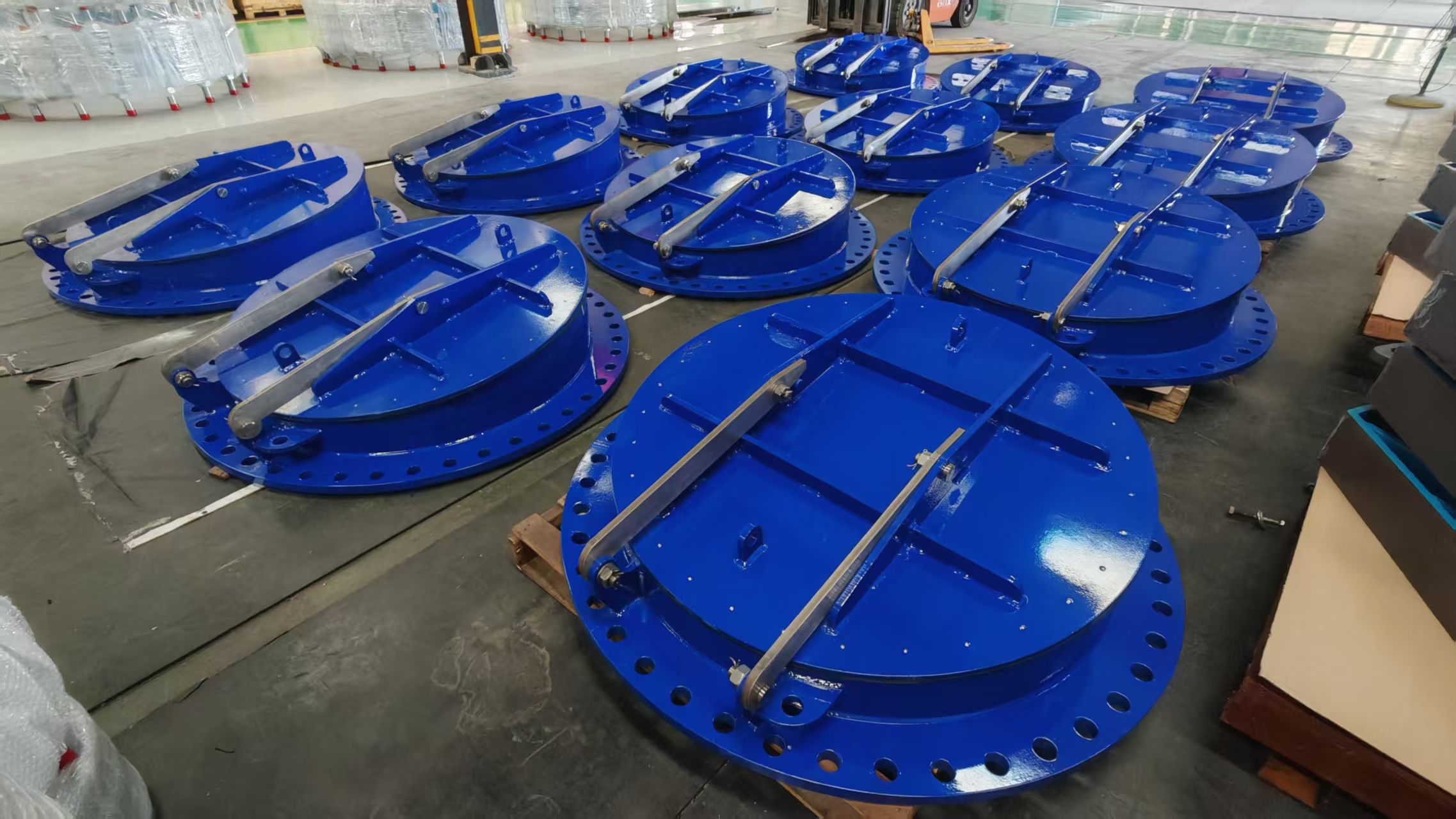
The reliability of any flow control system hinges on the integrity of its materials. Selecting the right material is not simply about resisting corrosion—it’s about understanding how the material will behave under specific pressure, temperature, and media conditions over time. A well-chosen material maintains its strength and surface finish, preventing leaks and ensuring consistent operation. When material integrity is compromised, even the most sophisticated valve design will fail, leading to downtime and safety risks.
Lasting flow control demands a deep focus on metallurgy and polymer science. For example, high-performance alloys such as duplex stainless steels offer superior resistance to chloride-induced stress corrosion cracking, a common failure mode in marine environments. Similarly, advanced PTFE formulations provide exceptional chemical resistance and low friction for valve seats and seals. The subtle differences in material composition can dramatically extend service life, making the upfront investment in better materials a cost-saving strategy in the long run.
Beyond chemical compatibility, mechanical properties like hardness and fatigue resistance are equally critical. In high-cycle applications, a material’s ability to withstand repeated stress without deforming ensures tight shut-off and precise control. Coatings and surface treatments further enhance performance by reducing galling and wear. Ultimately, material integrity is a proactive safeguard—systematically evaluated and optimized to keep flow control systems operating safely and efficiently for decades.
Beyond Standard: Custom Solutions for Unique Pipeline Demands
Every pipeline project carries its own set of challenges, from unusual terrain and extreme weather conditions to specific material requirements that off-the-shelf products simply cannot address. Standard components often force compromises, leading to inefficiencies or increased maintenance down the line. Recognizing this, we focus on designing solutions that align precisely with your operational parameters, ensuring that every element—from flange connections to valve configurations—is tailored to integrate seamlessly into your existing infrastructure while anticipating future scalability needs.
Our approach combines deep material science expertise with advanced manufacturing techniques to produce components that exceed typical performance benchmarks. For instance, we engineer specialized coatings to withstand aggressive chemical exposures or develop welded joints that maintain integrity under cyclic pressure loads far beyond common specifications. Rather than forcing your project to fit within predefined catalogs, we start by understanding the functional demands and then shape the solution around them, often leveraging in-house testing facilities to validate performance under simulated field conditions.
The result is a partnership that prioritizes operational longevity over short-term convenience. By moving beyond standardized offerings, we help operators avoid costly retrofits and unplanned downtime, delivering pipeline systems that perform reliably even in the most demanding environments. This tailored methodology ensures that every project receives not just a product, but a purpose-built answer to its unique demands, backed by a thorough understanding of the engineering realities at play.
Testing Protocols That Exceed Industry Benchmarks
We don’t just follow standard testing procedures—we push every component to its breaking point and beyond. While most industry benchmarks settle for controlled lab conditions, our protocols simulate years of intense real-world stress in a matter of weeks. From extreme temperature cycling to corrosive salt spray and relentless mechanical vibration, every test is dialed up 20% past the usual thresholds. This isn’t about bragging rights; it’s about the kind of reliability you can feel on the road, trail, or track, long after ordinary equipment would have failed.
The secret lies in our iterative failure analysis. When a part finally gives way, we don’t simply record the data and move on. We tear it down, scrutinize the fracture surfaces, and refine the alloy or heat treatment until that failure mode disappears entirely. That obsessive cycle has led to designs that routinely survive double the required fatigue life. It’s the reason our components earn a reputation for indestructibility among mechanics and veterans who’ve seen too many pretenders come apart under load.
But protocols on paper mean nothing without a culture of accountability. Every batch gets sampled for destructive testing before it ships, and our internal pass mark sits so far beyond the standard certification requirement that third-party auditors occasionally do a double-take. We’ve walked away from cheaper materials and faster turnaround times because they couldn’t meet these self-imposed hurdles. The result is a product line that doesn’t just surpass industry norms—it redefines what customers consider acceptable, and that’s a bar we’re proud to keep raising.
From Foundry to Final Assembly: A Seamless Production Journey
In modern manufacturing, the journey from raw metal to finished product is rarely a straight line—unless every stage is designed to flow into the next without friction. It starts in the foundry, where molten alloys are poured into meticulously engineered molds. Here, the grain structure begins its story, and even the smallest variation in cooling rates can ripple all the way to final performance. Rather than treating casting as a standalone step, seamless production integrates thermal analysis and real-time process adjustments so that each component leaves the foundry already meeting downstream expectations.
Once solidified, the cast parts move into machining and surface treatment without the usual delays of intermediate inspections or transport to separate facilities. Advanced robotic cells take over, performing milling, drilling, and finishing in a choreographed sequence that respects the metallurgical properties locked in during casting. Because the foundry data is shared across the line, tools and parameters adapt automatically—reducing setup time and eliminating the guesswork that often leads to scrap. The result is a rhythm where value is added continuously, not in disconnected batches.
By the time components reach final assembly, they carry a digital thread that traces every thermal cycle, every cut, and every quality check. This traceability means assembly teams can fit parts with confidence, knowing that tolerances are not just met but optimized for the specific module they will inhabit. The seamless journey doesn’t stop at the factory floor—it extends to the customer, who receives a product built with a coherence that fragmented processes can never replicate.
End-to-End Support: Partnering for Operational Reliability
End-to-end support bridges the gap between initial planning and long-term operational stability, moving beyond simple break-fix models to become a strategic partnership. By embedding technical expertise directly into day-to-day workflows, potential issues are identified before they escalate, and systems are continuously optimized to align with evolving business requirements. This integrated approach turns reactive maintenance into proactive collaboration, where every configuration, update, and recommendation is tailored to enhance real-world performance without disrupting core operations.
Operational reliability flourishes when support teams function as a natural extension of the client’s own capabilities, sharing responsibility for critical infrastructure. Regular health assessments, transparent communication, and adaptive response strategies build the trust needed to weather both planned changes and unexpected disruptions. Instead of isolated fixes, clients gain a steady-thinking partner dedicated to preserving throughput, data integrity, and user experience across every touchpoint—turning technical support into a reliable foundation for business continuity.
FAQ
Our factory integrates advanced CNC machining with rigorous inline inspections. We craft each valve using high-grade ductile iron or stainless steel, ensuring dimensional accuracy and long-term service. The focus isn't just on output—it's on repeatable precision that directly translates to dependable flow control in the field.
Every valve undergoes a series of pressure tests, seat leakage checks, and cycle endurance trials before leaving the floor. We also simulate real-world installation scenarios, checking for tight shut-off and smooth disc articulation so that on-site performance matches what we promise.
Absolutely. We routinely tailor valve dimensions, material grades, coating systems, and actuator mounting to align with project specifics. Whether it's abrasive slurry, high-temperature air, or corrosive water, our engineering team works from your specs—or helps define them—to deliver a valve that fits seamlessly.
We typically use ductile iron for general water and wastewater applications due to its strength and cost-efficiency. For more aggressive media, we select 316 stainless steel or duplex stainless, often with EPDM or PTFE seat inserts. Material choice always balances chemical compatibility, temperature range, and expected mechanical wear.
Quality is layered in, not just inspected at the end. Incoming raw materials are verified for traceability. Machining tolerances are monitored in-process with CMMs, and each valve sees a final assembly test that includes hydrostatic shell and seat tests per ANSI/AWWA standards. Documentation follows every unit.
Our valves are common in municipal water treatment plants, flood control systems, and stormwater management. They are also used in industrial cooling water loops, mining dewatering, and power plant intake structures. Essentially, any application requiring unidirectional flow isolation or backflow prevention may use them.
Lead times vary, but we keep a buffer stock of popular sizes and materials. Standard configurations often ship within 3–5 weeks. Custom engineered valves require additional coordination, but our integrated foundry and machine shop allow us to condense production schedules significantly compared to industry averages.
We supply complete installation manuals, dimensional drawings, and startup assistance if needed. Spare parts like seals, hinge pins, and bearings are kept available for years. Our service team can also perform site inspections or remote guidance to help resolve operational issues quickly.
Conclusion
Flap gate valve manufacturing at this facility begins with micron-level precision, ensuring every component meets exacting dimensional standards. Advanced CNC machining and rigorous inspection processes guarantee that each valve body, gate, and seat is crafted to deliver flawless sealing and smooth operation. Material integrity is fundamental; the foundry uses only certified alloys and conducts comprehensive spectrometry and mechanical testing to verify composition and strength. This focus on raw material quality extends the service life of valves even in corrosive or high-pressure environments.
Production flows seamlessly from casting to final assembly under one roof, eliminating quality gaps and reducing lead times. Custom engineering teams work closely with clients to develop tailored solutions for unique pipeline demands, whether modifying flange dimensions or integrating specialized coatings. Before shipment, every valve undergoes a battery of tests that surpass industry benchmarks—shell, seat, and performance checks under simulated field conditions. Ongoing technical support and lifecycle services reinforce operational reliability, making the factory a true partner in flow control, not just a supplier.
Contact Us
Contact Person: Su Zhang
Email: [email protected]
Tel/WhatsApp: +86-25219206
Website: https://www.tht-valve.com/