

Energy-Saving Air Compressor Strategies to Slash Operational Costs
2026-08-01
Slashing operational costs while maintaining peak efficiency isn't just a goal—it's a necessity in today's competitive landscape. Air compressors, often overlooked, account for a significant chunk of industrial energy bills. But what if you could turn them from silent energy hogs into powerful savings drivers? At Seize Air, we've seen firsthand how smart strategies can lead to dramatic cuts in power consumption without compromising performance. In this post, we'll unpack practical, field-tested tactics that go beyond the obvious, helping you unlock hidden savings and future-proof your operations. Ready to rethink what your compressor can do?
Decoding the True Cost of Compressed Air: Why Every Leak Matters
Most plants treat compressed air as free, until the utility bill arrives. Even a small leak in a pipe joint or hose connection can drain thousands of dollars a year. At 100 psi, a single 1/8-inch leak may waste over 20,000 kWh annually — enough to power two average homes. These invisible losses compound quickly across hundreds of fittings, couplings, and valves scattered throughout a facility.
Beyond the energy waste, leaks force compressors to overwork, accelerating wear and pushing maintenance schedules. You’re not just paying for the lost air; you’re footing a higher repair bill. System pressure drops as demand rises, causing production equipment to run slower or misfire — a hidden hit to throughput that rarely shows up in basic cost analysis.
The real pernicious nature of compressed air leaks is that they grow. A pinprick becomes a whisper, then a hiss, bleeding more money each month. Without a proactive detection program — ultrasonic testing, flow monitoring, regular audits — the cost curve bends sharply upward. Every leak matters because the true cost is never static; it expands silently until someone decides to listen.
Variable Speed Drives: The Game-Changer for Air Compressor Efficiency
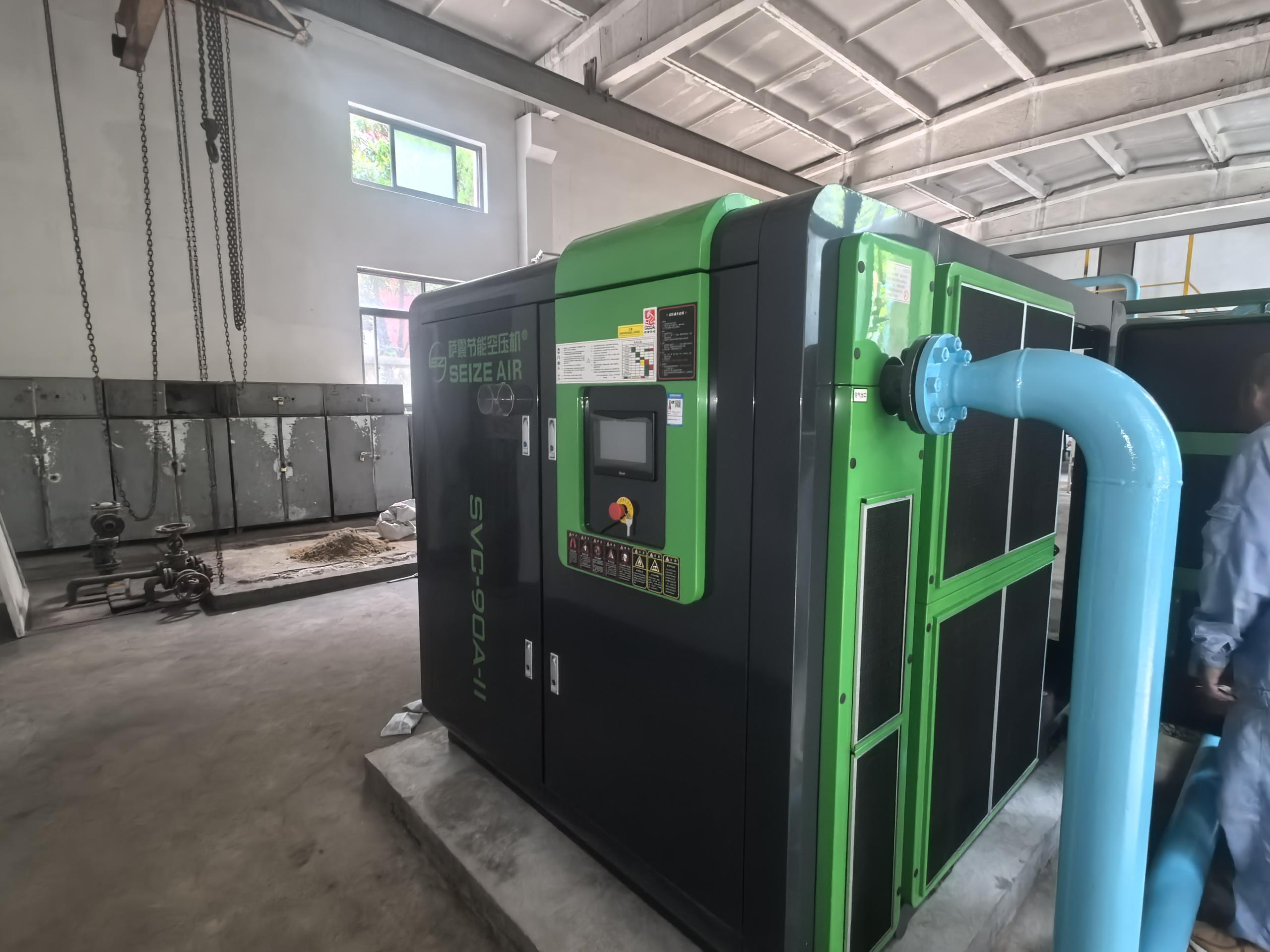
Fixed-speed compressors run at full tilt regardless of actual air demand, wasting enormous amounts of energy during partial loads. Variable speed drives flip this paradigm by adjusting motor speed to match real-time compressed air requirements. This isn't just a minor tweak—it can slash energy consumption by up to 35% or more, directly targeting the largest contributor to a compressor's total cost of ownership. Instead of cycling on and off or blowing off excess pressure, the VSD compressor simply slows down, delivering exactly what the system needs without the wasteful peaks and valleys.
Beyond the obvious energy savings, VSD technology significantly reduces mechanical stress. Soft starts and gradual acceleration eliminate the jarring inrush currents and torque spikes that wear out belts, bearings, and windings. This translates into longer maintenance intervals, fewer unexpected breakdowns, and a more stable operating pressure band. The result is a system that not only costs less to run but also delivers cleaner, more consistent air quality—a critical factor for sensitive applications like food processing or electronics manufacturing.
What often gets overlooked is how VSDs future-proof your air system. Fluctuating production schedules, seasonal demand shifts, or facility expansions rarely throw a VSD compressor into inefficiency. It naturally adapts, maintaining high performance across a wide operating range. Factoring in utility rebates that many regions offer for VSD installations, the business case becomes even more compelling. It's not just a smarter component; it's a strategic upgrade that aligns with contemporary goals around sustainability and operational resilience.
Waste Not, Want Not: Turning Compressor Heat into a Valuable Asset
In many industrial facilities, air compressors are workhorses that keep operations running—but they also generate enormous amounts of waste heat. For years, this heat was simply vented outside, a byproduct nobody thought twice about. The reality is that nearly all the electrical energy used by a compressor turns into heat, and capturing even a portion of it can transform a cost center into a genuine asset.
Recovered heat can be redirected to warm workspaces during cooler months, preheat boiler feedwater, or help maintain consistent temperatures in process lines. Some factories use it to dry products or supply hot water for cleaning stations. The approach isn’t complicated; it often involves a heat exchanger and some ducting, but the savings can appear on energy bills immediately.
Once a site starts rethinking compressor heat as a resource instead of waste, the operational mindset shifts. Maintenance teams track thermal output and factor it into facility planning. The payoff goes beyond reduced gas or electric consumption—it can extend compressor life by keeping the system at a stable thermal state. What used to disappear into the atmosphere now contributes directly to the bottom line.
Smart Controls and Sequencing: Orchestrating Your Compressor Fleet for Peak Performance
Modern compressed air systems thrive on dynamic decision-making. Rather than letting individual compressors operate in isolation, smart controls integrate pressure, flow, and energy data to coordinate the entire fleet. This allows the system to match real-time demand with the most efficient combination of machines, avoiding wasteful part-load operation and trimming energy costs by up to 30% compared to basic cascaded pressure switches.
Sequencing logic goes beyond simple lead-lag rotation. Advanced algorithms consider factors like compressor capacity curves, blowdown losses, and start-per-hour limits to determine the optimal unit to bring online or unload. For example, during a low-demand period, a smaller variable-speed compressor might carry the base load while larger fixed-speed units remain off, preventing costly idle hours. When a sudden surge hits, the controller can pre-emptively start a backup before pressure dips, ensuring stable plant pressure without oversizing the system.
The Hidden Culprit: How Pressure Drop Steals Your Savings
Imagine your compressed air system running full tilt, yet your tools feel sluggish and your energy bills keep climbing. The problem often isn't a major failure—it's a subtle thief called pressure drop. Every bend, filter, and extra foot of piping quietly eats away at the pressure you've paid to generate. What leaves the compressor at 100 psi might arrive at the point of use at 85 psi or lower, forcing you to crank up the system pressure to compensate. That bump in pressure isn't free; for every 2 psi increase, your energy costs jump by about 1 percent. Over a year, those pennies per hour silently bleed thousands from your bottom line.
The real kicker? Most pressure drop goes unnoticed because it doesn't trigger alarms. You'll rarely find it on a standard dashboard. It hides in plain sight—undersized piping, clogged filters nobody remembers to change, quick-connect fittings that look fine but choke flow, and moisture that builds up in low spots. The fix isn't glamorous, but it's straightforward: audit your system with a pressure gauge at multiple points, pinpoint the bottlenecks, and standardize on full-flow components. Sometimes, simply replacing a sharp elbow with a swept bend or upsizing a short section of pipe can recover several psi. Those small victories add up, and the compressor can finally take a breather.
Beyond the energy savings, tackling pressure drop transforms how your equipment performs. Tools spin at their designed speed, actuators move with crisp authority, and production hiccups fade. You stop overworking your compressor, which extends its life and reduces maintenance calls. The best part is you don't need a massive capital project—many improvements pay for themselves within months just through lower electricity costs. So next time you see an unexplained spike in your power usage, don't just blame the rates. Grab a pressure gauge and go hunting for the hidden culprit; it's probably been stealing from you for years.
A Stitch in Time: Proactive Maintenance Strategies That Pay Dividends
The old adage “a stitch in time saves nine” captures the essence of proactive maintenance. Waiting for equipment to fail before taking action often leads to costly repairs, prolonged downtime, and compromised safety. By addressing minor issues early, businesses can avoid the cascading effects of neglect, much like mending a small tear before it becomes a gaping hole.
Proactive strategies encompass a range of practices, from routine inspections and scheduled part replacements to advanced condition monitoring and predictive analytics. Rather than reacting to breakdowns, maintenance teams can analyze performance data to anticipate wear and tear, plan interventions during off-peak hours, and keep operations humming smoothly.
The dividends of this approach are tangible: extended asset lifespans, reduced emergency repair costs, and consistent product quality. Organizations that shift from a reactive to a preventive mindset discover that investments in maintenance software, training, and sensors pay for themselves many times over, creating a culture of reliability that permeates every level of the operation.
FAQ
Lower the pressure setpoint. Most systems run at a higher pressure than necessary, and for every 2 psi reduction, you can cut energy use by about 1%. Just be sure to check that your equipment still operates reliably at the new level.
Leaks can waste 20-30% of the compressor's output, silently draining your budget. Use an ultrasonic leak detector during a quiet shift to find and tag leaks, then prioritize fixing the largest ones first. A simple quarterly inspection routine can keep this under control.
Absolutely. If your demand fluctuates, a variable speed drive can match motor speed to air needs, avoiding the inefficient start-stop cycles of fixed-speed units. Payback is often within two years, especially in operations with varying shifts or production schedules.
Yes, and it's often overlooked. Up to 90% of the electrical energy input to a compressor becomes heat. With simple ductwork and controls, you can direct this warm air into your facility for space heating during colder months, or pre-heat boiler makeup water, drastically cutting your heating bill.
Clean, dry air reduces pressure drops and prevents equipment wear. But unnecessary over-drying wastes energy. Evaluate the actual dew point requirements of your processes; many plants can raise the dryer setting or switch from refrigerated to desiccant drying only on select lines, saving significant power.
Check every month, or more in dusty environments. A clogged filter increases pressure drop and forces the compressor to work harder, raising energy use by up to 5%. Keep a schedule and consider using a differential pressure gauge to know exactly when to swap filters rather than guessing by time alone.
Definitely. Avoid having several small compressors running at partial load; it's far more efficient to use a larger, base-load compressor and bring in smaller units only to trim peak demand. A central controller with sequencing logic can optimize this automatically, reducing energy waste from partial-load operation.
Check and recalibrate condensate drains. Timer-based drains that open at fixed intervals can waste massive amounts of compressed air if they stick open; switching to zero-loss electronic drains that purge only when moisture is detected can save thousands of dollars annually in compressed air costs.
Conclusion
Getting a grip on the real expense of compressed air opens your eyes to how much waste hides in plain sight. Leaks are the silent budget killers, often squandering up to 30% of generated air, yet a simple detection program can claw back huge savings. Pair that with an honest look at pressure drop across filters, dryers, and piping—it’s shocking how a few extra psi can throttle your energy bill without adding a shred of value. Tackling those losses is the foundation, but the next leap comes from technology that matches output to demand. Variable speed drives reshape compressor behavior, eliminating the rigid on-off cycles of fixed-speed units and trimming power use by as much as 35% during partial loads. The result is a system that breathes with your plant, not against it.
Beyond the machine itself, smarter orchestration of multiple compressors stops them from fighting each other and balances runtime to flatten wear and tear. Modern controls with sequencing logic can stagger starts, prioritize the most efficient unit, and even predict when to bring backup online. Meanwhile, don’t overlook the thermal side: heat recovery systems can repurpose up to 90% of the compressor’s input energy for space heating, boiler feed, or process warming, turning a cost center into a double-duty asset. Wrapping it all together is a proactive maintenance mindset—regular oil analysis, air-end inspections, and filter changes that catch degradation before it carves into performance. These strategies aren’t flashy, but they compound into sustained, kilowatt-hours-slashed profitability that goes straight to the bottom line.
Contact Us
Contact Person: Mia
Email: [email protected]
Tel/WhatsApp: +86 19821985894
Website: https://www.seize-air.com