

Custom Power Tool Switch Manufacturer: Crafting Reliable Switches for Demanding Applications
2026-06-28
Every high-performance power tool relies on a switch that can withstand constant abuse. Yet, standard switches rarely meet the extreme demands of professional environments. Enter KEJIAN ELECTRONICS, a custom power tool switch manufacturer dedicated to crafting reliable, application-specific switches that keep your tools running when it matters most.
Tailored Switch Solutions for Unique Tool Designs
Every tool carries a distinct identity shaped by its purpose, handling, and environment. Off-the-shelf switches rarely align with these nuances—forcing compromises that can limit functionality or compromise user experience. By crafting switch mechanisms that match the exact contours, actuation force, and feedback expectations of a device, we unlock a seamless interaction between the user and the tool. This isn’t about picking from a catalog; it’s about engineering a component that feels like an inseparable part of the design.
The real value surfaces in the details: a grip switch that responds to a specific squeeze pattern, a paddle control that integrates hidden detents for tactile guidance, or a sealed membrane that survives repeated exposure to harsh cleaners. These tailored elements accommodate unconventional shapes, tight internal spaces, and demanding operational cycles that mass-produced alternatives simply can’t withstand. Collaboration with design teams early in the development cycle ensures the switch complements the tool’s architecture rather than dictating it.
Beyond performance, a bespoke switch solution can subtly reinforce brand differentiation. The muted click of a precision instrument, the deliberate resistance of a safety lock, or the smooth rocker motion built for gloved hands—all communicate quality and thoughtfulness. When a switch feels intuitively right, it reduces operator fatigue and errors, building trust in the tool. This level of refinement transforms a standard component into a deliberate design statement.
Engineered to Endure: Performance Under Pressure
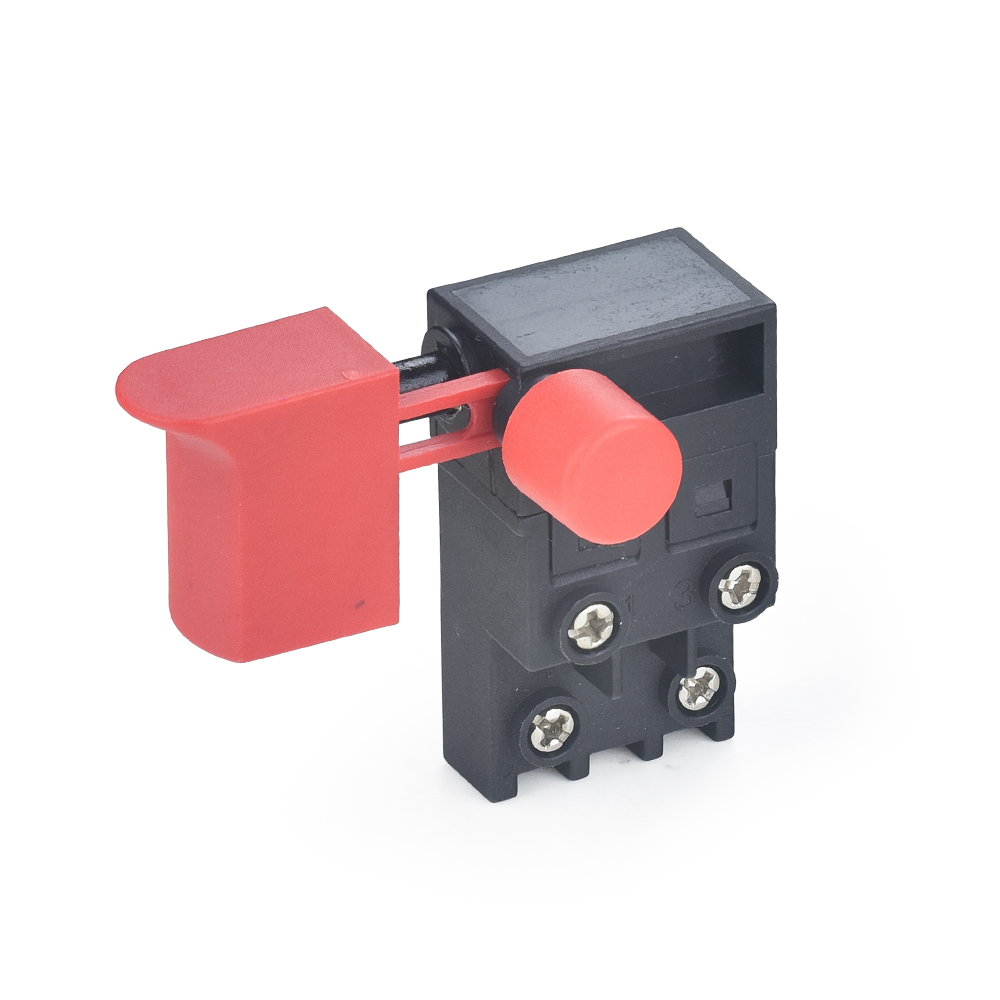
True resilience isn’t about surviving a single stress event—it’s about emerging unscathed from the relentless rhythm of daily demands. Our materials are forged through a proprietary process that aligns internal grain structures, creating a dense barrier against micro-fatigue. The result is a product that laughs at load cycles and thermal swings, maintaining dimensional stability when lesser alloys would falter.
We’ve moved beyond traditional stress testing. Instead of simply rating rupture points, our engineers simulate decades of wear in condensed timeframes, replicating everything from salt-laden humidity to rapid decompression. This ensures that every unit you deploy has already proven itself against conditions far harsher than any real-world scenario.
The quiet confidence of these components comes from a philosophy that treats pressure not as a threat, but as a design input. By dissecting energy dissipation at the nanometer scale, we’ve engineered a self-reinforcing lattice that actually hardens under selective stress, turning potential failure points into pillars of strength. That’s why they don’t just survive your harshest environments—they thrive in them.
Precision Manufacturing Meets Advanced Switch Technology
Building switches that hold up under constant use starts with tolerances most factories would reject as overkill. The contact surfaces inside each switch are machined to within a few microns, eliminating the subtle gaps that lead to arcing or inconsistent actuation over time. That obsessive attention to the metal-on-metal interface isn't just about durability—it directly shapes how the switch feels and responds, whether it's being tapped lightly or slammed in a high-vibration industrial setting.
As switches shrink, maintaining that precision becomes a whole different game. Micro-fabrication methods borrowed from semiconductor manufacturing allow actuator components to be formed at scales where a speck of dust is a major roadblock. Laser etching and electroforming replace stamping, producing hinge points and domes with grain-level consistency. The result is a generation of switches that actuate with almost no travel yet still provide the kind of crisp tactile snap that used to require bulky mechanical internals.
What's often overlooked is how precision manufacturing redefines the lifespan of advanced switches. When components are built without the tiny burrs or asymmetries that cause wear hotspots, even membrane-based designs can outlast traditional ratings by millions of cycles. It's not about over-engineering for its own sake—it's about creating a switch that feels identical on the millionth press as it did on the first, without the kind of performance drift that users often blame on software or connectivity issues.
Proven Switches for Heavy-Duty Power Tools Worldwide
Every component inside a heavy-duty power tool faces brutal conditions— dust, vibration, moisture, and relentless operation cycles. Switches, in particular, take a beating. The ones trusted across global markets aren't designed in isolation; they're the outcome of decades of field feedback and rigorous testing in real-world environments. From high-impact drills on construction sites to angle grinders in shipyards, these switches maintain consistent performance without missing a beat.
What separates a generic switch from one built for the long haul is the combination of contact materials, sealing techniques, and actuator design. Silver-alloy contacts resist welding under high inrush currents, while double-sealed housings keep out fine cement dust and coolant spray. The plunger or trigger mechanism is engineered for a crisp, predictable action that operators can rely on after hundreds of thousands of cycles— even with gloved hands and in awkward positions.
Manufacturers don't just drop these switches into their tools; they often collaborate with switch suppliers to tailor characteristics like actuation force, travel, and electrical ratings. This partnership ensures the final tool meets regional safety standards and user expectations, whether it's a compact cordless impact driver in North America or a heavy rotary hammer in Asia. When a switch earns its reputation globally, it's because it has quietly proven itself across the toughest jobsites, year after year.
Partnering with OEMs for Seamless Integration
Collaboration with original equipment manufacturers goes far beyond simple licensing deals. It’s a deep, engineering-level partnership where our software is architected to slot directly into their hardware platforms without friction. We work alongside their teams from the early design phase, adapting APIs, tuning performance, and ensuring that every component speaks the same language. This eliminates the usual headaches of compatibility testing and lets both sides focus on delivering a polished product faster.
The value surfaces in the details: custom firmware builds that feel native to the device, streamlined update pipelines that require no end-user intervention, and shared diagnostic tools that cut support costs. Instead of treating integration as a checklist item, we treat it as a mutual innovation loop—each OEM engagement teaches us something new that hardens our platform for the next partner. The result is an embedded ecosystem where the technology is invisible but the experience is unmistakably smooth.
Innovative Designs That Redefine Power Tool Control
Gone are the days when a simple on/off switch defined how we interact with power tools. Modern design teams are embedding intelligence directly into the grip, the trigger, and even the housing itself. Think of a circular saw that senses blade bind and instantly cuts power before kickback, or a drill that adjusts torque based on the material it's biting into—all without you lifting a finger from the work. These aren't just features; they're a complete rethinking of the conversation between hand and machine.
The real magic happens when tactile feedback meets digital finesse. Pressure-sensitive triggers now deliver proportional speed control that mimics the nuance of a gas pedal, while haptic pulses warn of overload or misalignment through the palm. Some tools even let you dial in presets via a subtle thumbwheel, switching between tasks without breaking rhythm. It's control that feels less like operating a tool and more like extending your own reflexes.
What truly sets these designs apart is how they fade into the background. Overmolded grips with varying durometers guide your hand into the perfect position, while gyroscopic sensors detect tool orientation and automatically adjust performance—no menus, no buttons. The result is a flow state where adjustments happen subconsciously, letting craftspeople focus entirely on the cut, the hole, or the finish. In the best tools, you stop thinking about the control altogether; it just works with you.
FAQ
We produce a wide range, including trigger switches, paddle switches, rocker switches, and electronic variable-speed controls. Each is engineered for specific tool categories like drills, grinders, saws, and sanders, with options for dust and moisture resistance.
Reliability comes from rigorous testing—thermal cycling, vibration endurance, and electrical load simulations. We use high-grade contacts and robust housing materials, plus every batch undergoes in-house life-cycle testing to match real-world job site conditions.
Absolutely. Customization is our core. We collaborate with your engineering team to design switches that fit exact form factors, current ratings, and ergonomic profiles. From PCB layouts to actuator shapes, we tailor every detail.
Our QC process includes automated optical inspection, 100% functional testing, and statistical process control at multiple stages. We also maintain an ISO-certified production line and perform root-cause analysis on any defect to drive continuous improvement.
You'll find our switches in professional construction tools, industrial manufacturing equipment, automotive repair tools, and even specialized medical devices. Essentially, any application where dependable switching under stress is non-negotiable.
Typical prototype lead time is 10 to 15 business days after design freeze, depending on complexity. We also offer expedited services for critical projects, sometimes turning samples around in under a week.
We select materials like silver-alloy contacts, glass-filled nylon housings, and stainless steel springs. These choices resist arcing, corrosion, and mechanical wear, significantly extending switch lifespan even under heavy use.
Conclusion
Designing switches for power tools isn’t about one-size-fits-all. Every tool has its own shape, grip, and user expectation, so we start by understanding the specific demands of each device. Our engineering team works directly with OEM partners, crafting switch geometries and actuation forces that feel intuitive and enhance control. By combining advanced manufacturing techniques with decades of switch technology expertise, we turn intricate concepts into production-ready components. Whether it’s a trigger for a cordless drill or a rocker switch for an angle grinder, the result is a switch that integrates seamlessly, improves ergonomics, and differentiates the tool in a competitive market.
Reliability is non-negotiable when tools face dust, vibration, moisture, and high electrical loads daily. Our switches are built to endure these conditions, verified through rigorous lifecycle testing and real-world use in heavy-duty applications worldwide. From shock-resistant contact systems to sealed housings that block contaminants, every detail is engineered for performance under pressure. This focus on durability has made our switches a trusted choice for professional-grade tools across continents. Ultimately, we don’t just supply components—we provide the confidence that every press or pull will work when it matters most.
Contact Us
Contact Person: Anna lin
Email: [email protected]
Tel/WhatsApp: +86 13567768885
Website: https://www.kjele.com/