

Custom DIP Switch Manufacturer: Crafting Precision Switches for Your Unique Applications
2026-06-03
In a world of off-the-shelf electronics, finding a custom DIP switch manufacturer that truly understands your unique requirements can be a challenge. At KEJIAN ELECTRONICS, we don’t just build switches—we craft precision components that seamlessly integrate into your most innovative applications. Whether you need unusual pin configurations, compact footprints, or robust environmental sealing, our team turns your concepts into reliable, high-performance solutions. Step into a partnership where your specs drive the design, and every switch reflects the quality your project demands.
Tailored Switch Solutions for Niche Applications
Off-the-shelf switches fall short when your project demands something unconventional. We specialize in crafting custom switch mechanisms that integrate seamlessly into specialized equipment—whether it’s a medical device with strict sterilization requirements, a rugged outdoor installation exposed to extreme weather, or a compact IoT sensor where every millimeter counts. Our engineers work directly with your team to map out the exact tactile feel, actuation force, and environmental resilience needed.
Beyond basic customization, we address challenges like low-volume production runs that large manufacturers ignore. From prototyping to full-scale delivery, we maintain the same attention to detail, ensuring each switch meets your precise specifications without compromising on durability or performance. Our agile manufacturing processes also mean shorter lead times, even for designs that stray far from the standard catalog.
Durability testing is baked into our workflow, simulating years of use in your intended environment so you can deploy with confidence. By combining material science insights with hands-on engineering, we deliver switches that not only fit your niche but elevate the entire user experience.
Precision Engineering in Every Contact Point
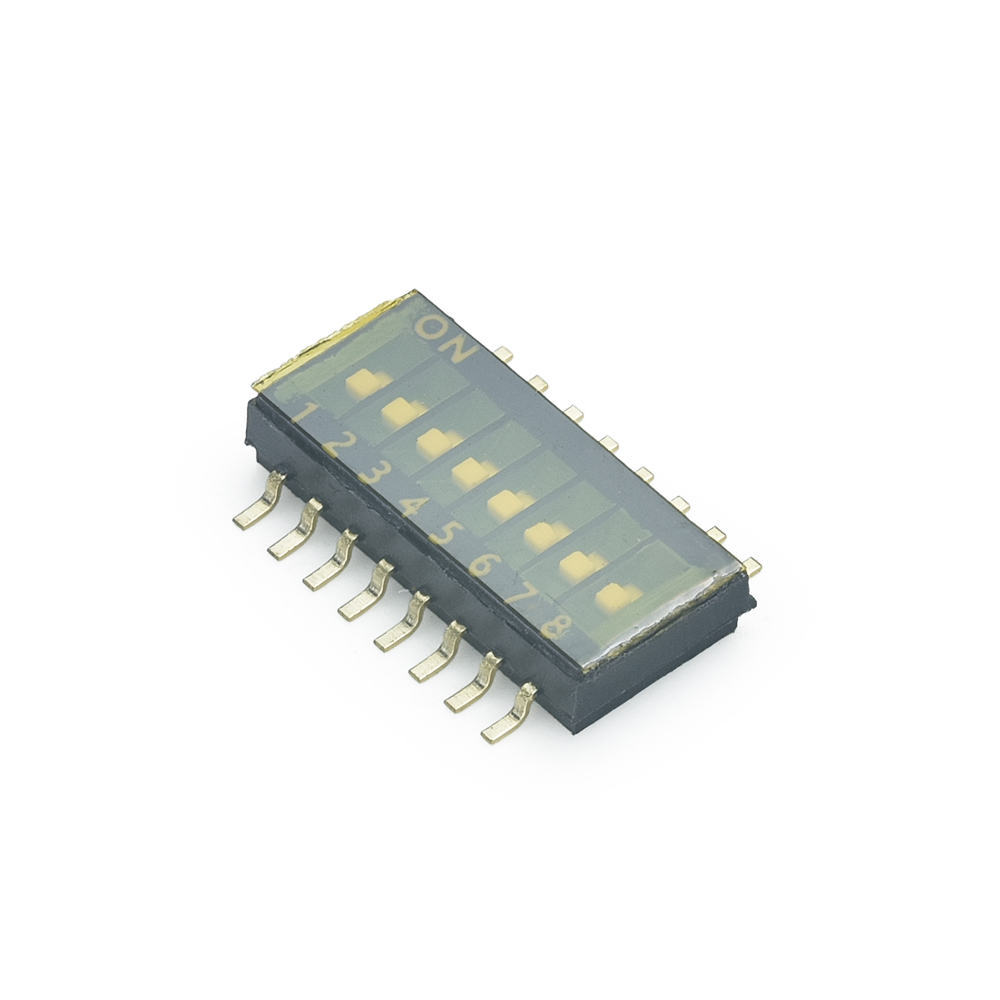
Every switch, connector, and spring inside our devices is designed with a singular obsession: the moment of contact. We study the microscopic topography of mating surfaces, understand the exact force curves that define a crisp actuation, and eliminate any micro-vibration that could degrade signal integrity over years of service. It’s a discipline that goes far beyond simply choosing gold-plated contacts, delving instead into the metallurgy of the substrate, the hermetic sealing of the contact zone, and the predictable, repeatable wear patterns that ensure a 50-million-cycle lifespan without a single missed beat.
Our approach treats each interface as a miniature electromechanical system. Here, the interplay of normal force, contact geometry, and environmental isolation is modeled before the first prototype is ever built. We craft leaf springs with a memory that resists relaxation, dial-in tactile ratios that communicate confidence to the user’s fingertip, and forge contact geometries that self-wipe with every operation—continuously renewing the conductive path. This isn’t just engineering; it’s a form of mechanical choreography where every component moves in silent, perfect synchronization.
What sets this apart is the refusal to accept off-the-shelf compromises. When a standard snap dome couldn’t deliver the crisp, silent reset our product demanded, we developed a laminated, low-hysteresis dome that feels invisible to the user yet logs an electrical bouncetime under 1 millisecond. When a connector’s micromotion threatened long-term reliability, we replaced the conventional pin-and-socket with a compliant-beam architecture, redistributing stress away from any single grain boundary. In the end, the device doesn’t just work—it communicates a sense of integrity through every button press, plug insertion, and latch engagement.
From Concept to Prototype: A Partnership Approach
Bringing an idea to life rarely follows a straight line, especially in the early stages. Our collaboration framework exists to handle the messiness of creation—where rough sketches, half-formed hunches, and shifting priorities meet. We embed ourselves alongside your team, not as a distant service provider, but as an extension of your own creative muscle. This means shared whiteboarding sessions that sometimes veer wildly off-script, on-the-fly critiques over coffee, and a willingness to scrap work that looks good on paper but fails to connect with real users. The goal isn't just to build something; it's to build the *right* something, and that requires trust thick enough to withstand honest disagreement.
Technical complexity meets market uncertainty at every turn, and that intersection is exactly where a joint approach thrives. Rather than handing you a spec doc and retreating, we work in iterative loops—weekly check-ins that feel more like garage-band rehearsals than boardroom reviews. A mechanical engineer might suggest a sensor placement that a designer later softens for ergonomics, while a usability tester catches friction points before they ossify into expensive problems. Those overlapping perspectives compress timelines that would otherwise stretch with rework, but more importantly, they prevent the quiet drift that happens when disciplines don't talk until it's far too late. The prototype that emerges from this pressure cooker carries the fingerprints of both sides, often surprising everyone with its coherence.
What sticks with our partners long after the prototype is in their hands is the learning that seeped into their own operations. True handoff is never just a file transfer; it's the transfer of insight. We document the dead ends we explored, the user feedback that reshaped assumptions, and the small material choices that had outsized effects on durability. That knowledge stays with your team, sharpening future decisions even if the project pivots entirely. This isn't a transaction—it's a temporary merger of curiosity, and the dividends pay out over years.
Materials and Manufacturing: The Foundation of Longevity
The choice of materials in any product directly dictates its ability to withstand the test of time and use. Premium alloys, high-density polymers, and reinforced composites aren't just buzzwords—they represent a fundamental commitment to durability. For instance, aerospace-grade aluminum offers an exceptional strength-to-weight ratio while resisting corrosion far better than standard steels. Similarly, advanced ceramics and tempered glasses provide scratch and impact resistance that keeps products looking and performing like new, even after years of handling. Selecting these materials isn't simply about cost; it's about engineering a legacy of reliability that customers can feel every time they interact with the item.
But even the finest raw materials can be compromised by subpar manufacturing processes. Precision machining, robotic welding, and cleanroom assembly environments ensure that every joint, seam, and surface meets tolerances measured in microns. Techniques like cold forging and heat treatment refine internal grain structures, dramatically boosting fatigue resistance. In electronics, conformal coating and vacuum-sealed enclosures shield sensitive components from moisture, dust, and temperature swings. When manufacturing is treated as a craft rather than a mere step, the resulting product exhibits a tightness and coherence that simply can't be achieved through rushed, cost-cutting methods. This meticulousness is what separates a throwaway gadget from an heirloom.
The intersection of innovative materials and refined manufacturing creates a synergy that defines long-lasting products. Consider how a well-designed frame, crafted from hydroformed tubing, distributes stress in a way that prevents cracks, while a meticulously anodized finish wards off decades of wear. Or how ultrasonically welded seams on a waterproof case eliminate weak points that traditional glues might leave. This holistic engineering approach means that longevity isn't an afterthought—it's baked into every layer, from the molecular structure of the alloy to the final quality inspection. Ultimately, products that stand the test of time don't happen by accident; they are born from the deliberate marriage of superior materials and uncompromising craftsmanship.
Adapting to Industry-Specific Challenges
Every sector comes with its own set of hurdles, and what works for a tech startup might fall flat in manufacturing. The key lies in pinpointing those subtle, field-specific nuances—regulatory frameworks, supply chain hiccups, or even customer expectations that shift from one market to the next. Without that granular understanding, strategies become blunt instruments, missing the mark more often than not.
Tailoring approaches often means getting hands dirty with the day-to-day realities of an industry. For instance, a software solution designed for healthcare must navigate strict privacy laws and clinician workflows, while retail demands real-time inventory agility. It’s not about reinventing the wheel each time, but rather reshaping it to fit the terrain—swapping out assumptions for on-the-ground insights.
The real magic happens when adaptability becomes second nature, not a one-off fix. Teams that embed industry-specific learning into their rhythm can pivot before problems escalate, turning constraints into creative springboards. Over time, this builds a kind of muscle memory, where the organization instinctively aligns with the pulse of the sectors it serves.
Behind the Scenes: Quality Control and Testing Protocols
Our quality checks are woven into every stage, not just a final hurdle. Technicians pull random samples from each batch for stress testing, simulating real-world usage that pushes materials to their limits without breaking typical operation conditions. It’s a bit of an art — knowing exactly how much force a seam should withstand, or how many cycles a moving part can endure before we see wear. Those numbers come from years of iteration, not just industry charts.
One thing that sets our approach apart is the feedback loop between the inspection bench and the design table. When inspectors flag a recurring flaw, it triggers a sit-down with the engineering team that same week. We’ve reinvented three core assembly steps because of this, shaving off failure points that no one noticed during initial prototyping. The result? Products that feel sturdy not by accident, but because each weak link was deliberately hunted down and reinforced.
FAQ
We produce a wide range of DIP switches including standard pitch, low-profile, and surface-mount designs, all tailored to your specifications.
Absolutely. Our engineering team works closely with you to design and manufacture switches that fit uncommon requirements, from medical devices to industrial controls.
We use advanced automated production lines and rigorous testing at each stage, ensuring every switch meets tight tolerances and performs reliably over its lifespan.
Our switches are used in telecommunications, automotive electronics, consumer appliances, and test equipment, often where off-the-shelf parts won't suffice.
You can customize actuator style, pin quantity, contact material, plating, and even enclosure color to match your product's needs and aesthetics.
It starts with a consultation to define your needs. Then we provide samples and prototypes before moving to full-scale production, keeping you updated at every step.
Conclusion
Every niche application carries its own set of demands, and we’ve built our approach around listening first. Whether it’s a medical device that must withstand repeated sterilization or an industrial control panel exposed to vibration and dust, our engineering team starts with your operating environment—not a catalog. We work through contact plating options, actuator styles, and termination methods in parallel with your team, turning rough concepts into precise, tested prototypes within weeks. That early collaboration catches form‑factor mismatches long before they become production headaches, and our in‑house tooling lets us adjust spring forces, travel, and sealing without the long lead times you’d expect from a custom house.
What makes a switch survive a million cycles isn’t just the design—it’s the repeatability of the manufacture. We source phosphor bronze and gold‑alloy contacts from mills we’ve audited personally, then run every batch through profilometry and adhesion tests before a single strip enters our stamping line. Assembly takes place in humidity‑controlled clean zones, with inline vision systems checking terminal coplanarity and contact wipe on every switch, not just a sample. When a customer in oil‑and‑gas needed a DIP switch that could function after corrosive gas exposure, our materials lab reformulated the housing resin and validated it through accelerated aging that mirrored real‑world field data. That same rigor extends to every industry we serve—electric vehicles, avionics, test instrumentation—because the common thread isn’t the application, it’s the refusal to settle for a near‑enough solution.
Contact Us
Contact Person: Anna lin
Email: [email protected]
Tel/WhatsApp: +86 13567768885
Website: https://www.kjele.com/