
China Warehouse Racking Systems: Your Guide to Smart Storage
2026-08-06
When space is tight and every square foot counts, the right racking system transforms a chaotic warehouse into a streamlined hub. At the heart of this efficiency is Lanyuda, a name that echoes through China’s smart storage revolution. Whether you’re scaling up or starting fresh, the choices you make today will shape your tomorrow’s logistics. Let’s unpack what truly matters in racking design—from heavy-duty pallet racks to agile shelving—and how the right partner turns steel into a strategy.
Why Floor Space Isn’t Your Only Storage Asset
When businesses assess their storage capacity, they often fixate on square footage. It’s an easy number to grasp, but it rarely tells the full story. A warehouse with abundant floor space can still feel cramped if it lacks efficient layout or vertical utilization, while a smaller footprint can hold far more with the right design. The real asset isn’t just the ground beneath your feet—it’s how intelligently you use every inch, from floor to ceiling.
Vertical space is the most obvious overlooked opportunity, but it’s just the start. Mezzanines, high-bay racking, and multi-tier shelving transform unused air into productive storage. Beyond that, dynamic solutions like mobile carriages, automated retrieval systems, and modular containers let you compress aisles and reclaim hidden corners. Even the way inventory is slotted—based on velocity, size, or picking patterns—can effectively expand capacity without adding a single pallet position.
Think of storage density as a carefully balanced ecosystem. Light-directed picking, voice-guided workflows, and real-time inventory tracking mean less buffer stock and fewer honeycomb vacancies. When everything is visible and accessible, you need less space to do more. The goal isn’t to pack every void until the building groans, but to build a responsive, living system where space, equipment, and information work together. Floor space is just the canvas; your true asset is the art of orchestration.
Matching Racking to Your Inventory’s Personality
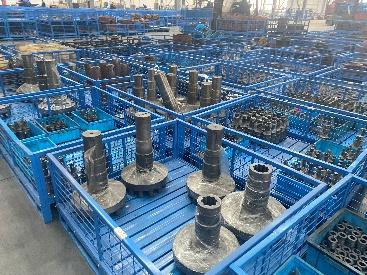
Every inventory has its own quirks, and the racking you choose should feel like a natural extension of how those items behave on the shelf. Pallet racks, for instance, aren’t just about vertical space—they’re for stock that likes to huddle together in uniform stacks, while cantilever arms welcome the long, awkward pieces that refuse to be boxed in. Treat your racking like a conversation with your products: what do they need to stay accessible without being shoved into a corner?
Smaller, fast-moving items thrive in flow racks that keep replenishment almost instinctive, as if the bins themselves know when to roll forward. But if your inventory tends to shift with the seasons, adjustable shelving becomes the quiet backbone that adapts without complaint. It’s less about brute strength and more about reading the subtle demands—like choosing a good pair of shoes for a day on your feet.
Bulk storage that sits idle for weeks deserves a different kind of architecture, maybe a drive-in system that tucks it away with purpose, rather than leaving it out in open bays to collect dust. The goal is a setup where retrieval feels effortless, not a puzzle to solve every time. When racking respects your inventory’s habits, the warehouse stops being a container and starts being a partner.
When Automation Meets the Aisle
Walking down a grocery aisle today can feel like stepping into a quiet, choreographed dance between humans and machines. Shelf-scanning robots glide past, their sensors blinking as they note inventory gaps or misplaced items, while overhead cameras track foot traffic patterns without ever needing a coffee break. It’s not about replacing the friendly stock clerk who remembers your usual brand of pasta—these tools handle the repetitive counting and monitoring so people can focus on customers. The result is an aisle that almost breathes, adjusting in near real-time to what shoppers actually want, not just what the planogram said last week.
For store managers, the daily ritual of walking the floor with a clipboard has shifted into a more nuanced game of exceptions. Automation surfaces the oddities: the cereal box pushed to the back, the sudden spike in dairy interest ahead of a snowstorm, the slow-moving specialty jam that deserves a better spot. Instead of staring at spreadsheets, teams can experiment with micro-adjustments, moving products based on actual behavior rather than intuition. It turns the aisle into a living lab, where small changes ripple through purchase data overnight, and the morning report becomes a thoughtful conversation rather than a list of problems.
Of course, the real magic happens when the technology fades into the background and simply feels like a well-run store. Shoppers rarely notice the quiet orchestration behind stocked shelves, clear pathways, and products that seem to anticipate a craving. The goal isn’t a sterile, futuristic environment but a space that feels surprisingly human—just with fewer out-of-stock tags and less cluttered corners. When done right, automation in the aisle doesn’t scream its presence; it hums along softly, leaving room for the accidental discoveries and small delights that make a trip to the store worthwhile.
Safety Standards That Go Beyond Compliance
Meeting a legal checklist is the bare minimum—real safety demands conviction, not just a certificate on the wall. Our approach was shaped by a simple question: what would we trust to protect our own families? That drives us to adopt measures that regulators haven't even required yet, from material traceability that stretches back to the source to redundancy systems tested under conditions far harsher than any standard calls for.
Every product cycle includes blind third-party audits, stress simulations that mirror real-world abuse, and a review board where engineers can veto a launch if they’re not fully satisfied. We’ve also built a culture where anyone in the chain—from assembly technicians to customer support—is empowered to halt a shipment over a safety concern, no questions asked. That instinct to pause, dig deep, and fix the root cause before moving forward is something no regulation can mandate.
The result is a track record that speaks through the dozens of safety innovations we open-sourced for the industry, not just the incidents we’ve avoided. When a customer buys from us, they’re getting a product that’s been through a gauntlet designed by people who lose sleep over every conceivable risk. That’s the only standard we care about.
The Real Cost of Cheap Shelving
At first glance, those budget shelving units seem like a steal. The price tag is undeniably tempting, promising an instant storage solution without breaking the bank. You imagine neatly organized books, tidy pantry shelves, or a clutter-free garage, all for the cost of a couple of pizzas. But what you don’t see upfront is the hidden price you’ll end up paying over time.
Within months, the sagging begins. The particleboard starts to bow under even modest weight, and the flimsy brackets that seemed adequate now groan in protest. Before long, you’re dealing with leaning towers of belongings, risking a noisy avalanche in the middle of the night. Replacing broken units, reinforcing shelves, or worse, cleaning up after a collapse, quickly adds up in both cash and frustration. The initial savings vanish the moment you realize these shelves simply can’t withstand daily use.
Then there’s the aesthetic penalty. Cheap shelving often looks exactly what it is: temporary and low-quality, with peeling veneer and wobbly frames that scream “dorm room” rather than “thoughtful home storage.” What you saved in money, you lose in pride and durability. Investing a bit more at the start buys you shelves that not only hold up physically but also age gracefully, sparing you the cycle of buy, break, and replace.
Tomorrow’s Warehouse Starts with Today’s Design
Designing a warehouse for tomorrow isn’t about predicting every future challenge—it’s about building flexibility into every square foot. Too many facilities lock themselves into rigid layouts that crumble the moment order profiles shift or automation enters the picture. Smart design choices now, like modular racking, scalable mezzanines, and future-proofed power and data infrastructure, mean you can adapt without costly retrofits. It’s the difference between a building that ages with your business and one that holds it back.
The flow of people, goods, and information should drive the blueprint, not the other way around. Start by mapping real workflows, not ideal ones, then challenge every assumption about aisle width, dock placement, and pick paths. Even small tweaks—angling receiving doors differently or grouping high-velocity SKUs near pack stations—can cut travel time by double digits. When you design for actual movement patterns instead of generic best practices, the space works harder and your team wastes fewer steps.
Don’t overlook the human layer. Lighting, ventilation, and break areas aren’t just amenities; they shape accuracy, morale, and safety. A well-designed warehouse makes it easy to do the right thing, from clear sightlines that reduce collisions to charging infrastructure that accommodates tomorrow’s electric fleet. Lay that foundation now, and you won’t just be ready for change—you’ll be ahead of it.
FAQ
Chinese factories offer a wide range, including selective pallet racking, drive-in racking, cantilever racking, push-back racking, and mezzanine floors. Each type serves different storage densities and retrieval methods, so it's important to match the system to your inventory profile.
Request material certificates and ask for third-party inspection reports. Many reputable manufacturers comply with international standards like ISO 9001 and produce racking that meets or exceeds RMI or FEM specifications. On-site audits or video walkthroughs of production lines also help.
Often yes, due to lower material and labor costs, but you need to account for shipping, duties, and potential longer lead times. Comparing total landed cost against local alternatives is essential. Many businesses find significant savings, especially on large projects.
Absolutely. Most manufacturers offer custom design services. You provide your warehouse dimensions, load requirements, and workflow, and they'll engineer a solution that maximizes your space, sometimes integrating automated or smart retrieval features.
Many suppliers now integrate IoT sensors, automated guided vehicles (AGVs), and warehouse management software. These turn traditional racking into dynamic systems that track inventory levels in real time and optimize picking routes.
Production typically takes 4 to 8 weeks depending on order size and complexity. Ocean freight adds another 2 to 6 weeks. Some suppliers keep standard components in stock, reducing lead times for popular configurations.
Support varies, but many established companies provide installation guides, remote assistance, and even on-site supervision. Clarify warranty terms and spare parts availability before purchasing. Some have regional partners for faster service.
Conclusion
In China’s fast-paced logistics landscape, smart storage is about more than just stacking goods higher. Floor space is only one dimension—vertical cube utilization, aisle width, and accessibility matter just as much. A well-designed racking system turns unused overhead volume into productive storage, but effectiveness hinges on tailoring the configuration to inventory characteristics: dense pallet racking for fast-moving consumer goods, cantilever racks for long building materials, and bin shelving for small, high-SKU items. Understanding how your products move through the warehouse is essential, and as automation continues to reshape the industry, semi-automated solutions like shuttle systems and AS/RS are becoming practical even for mid-sized operations, bridging the gap between manual picking and full robotics.
Safety is not just a compliance checkbox; it’s a design principle that prevents operational disruptions and protects workers. High-quality racking with proper load ratings, regular inspections, and integrated safeguards like column guards and end-of-aisle protection yield long-term reliability that far outweighs initial savings from cheap shelving. The hidden costs of substandard steel—frequent repairs, product damage, and downtime—quickly erode profit margins. As Chinese warehouses evolve to meet next-day delivery demands and omnichannel complexity, investing in scalable, modular racking from the start paves the way for future expansion and reconfiguration. A forward-thinking layout today lays the foundation for efficient, adaptive storage that grows with your business.
Contact Us
Contact Person: Johnny
Email: [email protected]
Tel/WhatsApp: +86 18151010686
Website: https://lydstorage.com