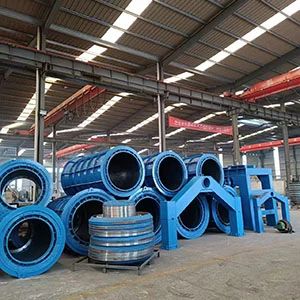

China Precast Concrete House Mold Company for Reliable Building Solutions
2026-11-02
When it comes to precast concrete house molds, the difference between a smooth build and a costly setback often comes down to one thing: reliability. China has long been a global hub for manufacturing these essential building components, but few companies truly deliver solutions that hold up under real-world pressure. That’s where Qianfeng Electromechanical Equipment stands apart. In this post, we’ll explore what makes their molds a trusted choice for builders who refuse to compromise on quality or precision — and why so many projects are now turning to this name for dependable results.
Molds That Keep Panel Edges Crisp and Dimensions Honest
The difference between a panel that looks hand-finished and one that looks rushed almost always comes down to edge definition. A well-built mold doesn't fight you during demolding—it lets the casting release cleanly without chipping the arris or rounding over a corner that should stay sharp. That means choosing a draft angle that's generous enough for the material you're casting but not so steep that the edge loses its visual snap. On vertical faces, even a half degree over a 2-inch depth can soften a line more than most people expect. We also keep rubber or polyurethane corner strips on hand for jobs that need a slightly eased edge, but only after testing them with the exact release agent and mix that will run in production. Small changes in viscosity or aggregate size will show up at the edge before anywhere else.
Dimensional honesty starts long before the first pour. With steel molds, we measure diagonals after every weld and again after stress relieving. A frame can be flat and square on the bench, then pull itself out of true once the side rails get bolted down or the floor plate is leveled with shims. We've learned to record ambient temperature when checking critical openings, because aluminum moves enough between a cold shop morning and a warm afternoon to throw a 10-foot panel length out by more than a sixteenth. Where the panel has returns or reveals, the mold doesn't just need to be right at the face—it needs to hold those interior dimensions all the way through the cast. We often add temporary cross-bracing during transport and setup, then remove it only after the mold is fully supported and anchored.
The molds that stay honest over time are the ones that get treated like precision tools, not just containers. We store tall side rails upright or on edge to prevent sag, and we touch up any nick in the parting line the same day it happens, because a small ding at the edge becomes a visible lip on every panel cast after it. Release agents are applied with a lint-free cloth and inspected under a low-angle light, since even a thin film of wax can build up in corners and make the edge look fuzzy. When a mold comes back from a job with a dimension that reads out of tolerance, we don't just hammer it back and run it again—we find out where the movement came from in the first place. That habit, more than any single material or coating, is what keeps every subsequent panel crisp and true.
From Studio Apartments to Multi-Story Cores, One Mold Partner
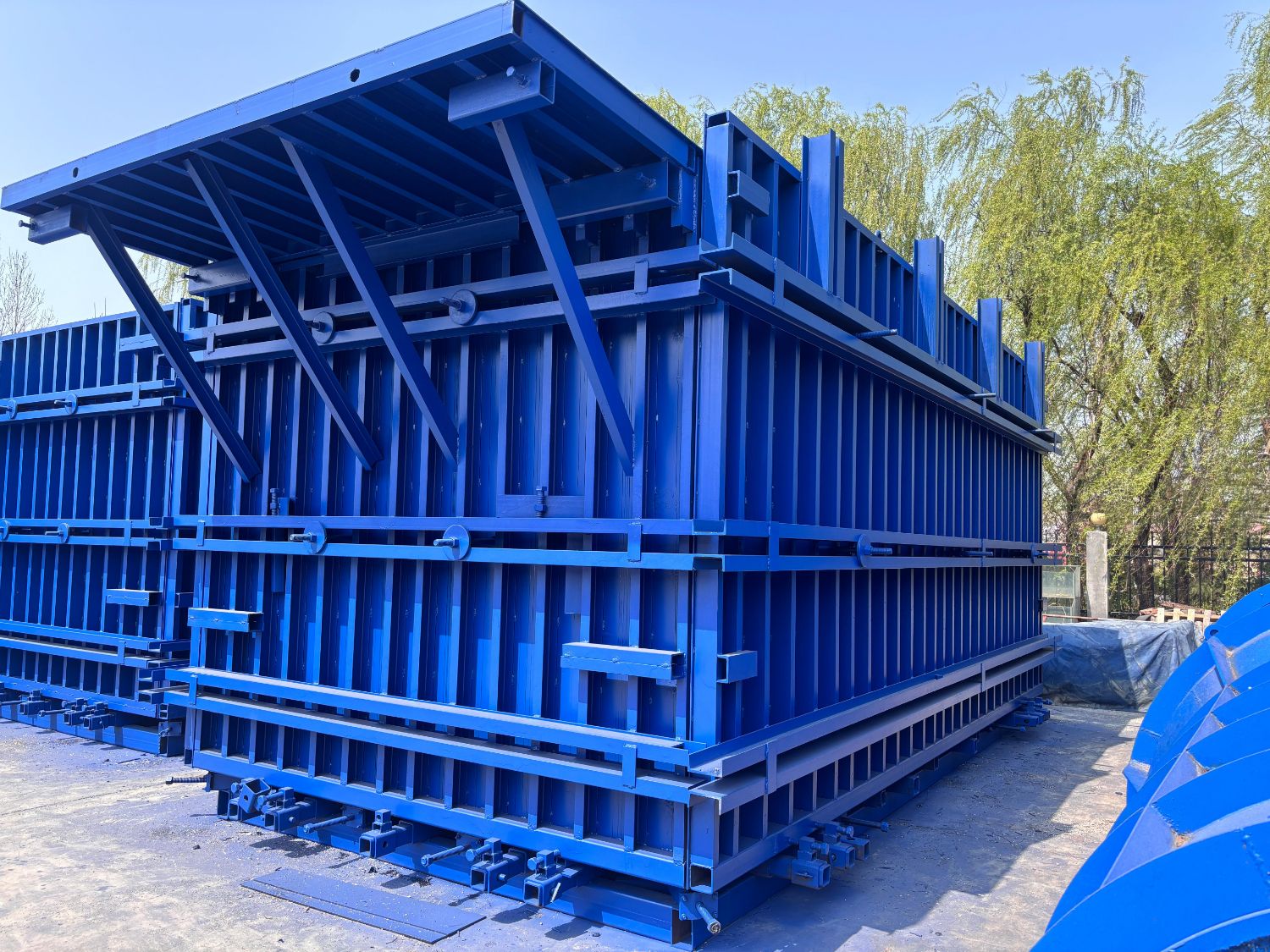
Scaling a precast operation usually means juggling separate suppliers for compact residential modules and heavy structural cores. That split creates friction: different tolerances, different delivery schedules, and a lot of back-and-forth when one piece doesn't line up. Working with a single mold partner removes that friction. The same engineering team that tunes a studio apartment mold for tight bathroom rough-ins is also calculating stripping angles on a multi-story shear wall core.
It's not about forcing a studio mold to do double duty. It's about having a partner who understands how small, repetitive units and large, load-bearing cores share the same DNA: insert placement, vibration behavior, and edge detailing. When those details are consistent across your mold fleet, crews move faster and quality stops being a per-project guessing game.
That consistency also shows up in the yard. A core mold can be reconfigured between pours without losing the reference points that keep floor-to-floor dimensions honest. And when a developer shifts from a six-story studio block to a twelve-story mixed-use tower, the mold inventory doesn't become obsolete—it adapts. One partner, one standard, from the first apartment module to the last core lift.
Steel Specs We Don’t Compromise, Even When Deadlines Do
When a project timeline tightens, the easiest place to cut corners is often material specs. We don’t do that. Every beam, plate, and structural section leaves our yard only if it meets the exact grade, thickness, and tolerance we quoted on day one. If a mill substitution shows up with a lower yield strength or a looser chemistry range, we send it back—even if it means burning an extra week.
That stubbornness isn’t about pride. It’s about knowing what happens downstream when a column flexes too early or a weld fails inspection. Deadlines shift. Load paths don’t. So we hold the line on Charpy ratings, elongation, and dimensional checks because your name is on the drawings and ours is on the certs.
Your Local Codes, Our Mold Adjustments, No Rework
Every region brings its own set of building codes, electrical standards, and installation quirks. We don’t wait for you to flag mismatches — our team pulls your local requirements early and bakes them straight into the mold design. Whether it’s a specific conduit entry point in Frankfurt or a mounting bracket tolerance in Ohio, those details are already in the tooling before the first shot is fired.
Instead of shipping a generic mold and hoping it fits, we run a pre-production alignment against your submitted local specs. Any gap — be it a flange angle, a knock-out position, or a wall thickness tied to regional load codes — gets corrected in the CAD model while the steel is still being cut. That means the mold arrives ready for your jurisdiction, not for a generic blueprint.
The result is a first-off part that passes inspection without a second tooling cycle. No sending molds back, no on-site filing, no last-minute adapter plates. Your installers get parts that drop into place the way your local inspector expects. That’s the whole point: you handle the codes, we handle the adjustments, and rework never enters the conversation.
Watch Your Mold Being Built on Our Factory Floor
Step onto our production floor and you'll see your mold take shape in real time. From the first steel block being loaded onto the CNC machine to the final polish, every stage happens right in front of you. No hidden subcontracting, no off-site surprises — just our own team, our own equipment, and your project moving forward day by day.
We've set up viewing areas and live camera feeds so you can check progress without interrupting the work. If you spot something that needs a tweak, say the word and we'll adjust on the spot. That kind of hands-on transparency is rare in this industry, and it's exactly how we like to operate.
What does this mean for you? Faster feedback loops, fewer misunderstandings, and a mold that matches your specs the first time. You're not just buying a finished tool — you're watching it get built, tested, and refined by people who care about the details.
Case Studies of Molds Cutting Construction Time by Double Digits
One striking example comes from a mid-sized concrete contractor who struggled with slab edge forming on a high-rise parking structure. Traditional wood forms required constant shimming and bracing, eating up nearly a week per floor. After switching to a reusable, adjustable aluminum mold system, the crew cut forming time by 28% and eliminated the need for back-up carpenters during pours. The key wasn't just the material—it was the mold's integrated alignment guides that let less experienced workers set lines accurately on the first try.
On the infrastructure side, a bridge pier project in the Pacific Northwest faced a tight window between lane closures. The original steel formwork plan called for a 14-day cycle per pier, mostly due to complex bolt patterns and crane re-positioning. The team redesigned the molds with quick-release clamps and a modular core that could be stripped in sections without moving the entire assembly. This single change compressed each pier's construction to 9 days—a 36% reduction—while actually improving surface finish consistency, which reduced later cosmetic patching.
A less obvious but equally powerful case involved precast stair and landing units for an apartment complex. The supplier initially used one-off timber molds, which warped after the third use, forcing frequent re-cuts and delaying erection. They invested in a machined, steel-faced mold with interchangeable tread inserts. Not only did the mold last for all 240 units without distortion, but the change cut overall stair production time by 22% and allowed the erectors to start a full month earlier than scheduled. The real lesson from these cases isn't about buying expensive molds—it's about analyzing where crews lose time to adjustments, rework, and waiting for forms to be ready, then designing the mold to remove those specific bottlenecks.
FAQ
The reliability comes from using CNC-machined steel plates with a tolerance of plus or minus 1 mm across the panel faces. Each mold is stress-relieved before welding, which prevents warping after repeated thermal cycling during curing. We also run a full dimensional inspection on the first casting and adjust the mold if any deviation shows up.
We start with the architect's PDF or CAD files and create a 3D model to identify undercuts, draft angles, and lifting point locations. After that, we propose adjustments to make demolding easier without changing the visible facade details. Clients can approve a rendered preview before fabrication begins.
Yes, the steel frame is designed for at least 500 casting cycles when used with proper release agents and cleaning. We use hardened wear strips on high-contact edges, and the side panels are bolted rather than permanently welded so individual sections can be replaced if they ever wear down.
The main face plates are typically Q345B or S355 structural steel, 6 to 10 mm thick depending on panel size. For areas that see heavy vibration, we add stiffening ribs and use 45 carbon steel for guide pins and clamping components to resist galling.
For a standard two-bedroom house mold set, fabrication usually takes 25 to 35 days after drawing approval. Larger or highly detailed sets with curved elements can take up to 50 days. We arrange ocean freight or rail transport depending on the destination, and the molds are shipped in reinforced steel frames to prevent movement during transit.
We provide a detailed assembly manual with step-by-step photos, and for the first project we can send an engineer for up to two weeks to supervise mold setup, first casting, and demolding. Remote video support is also available if travel is not practical.
On a project with more than 20 identical housing units, precast molds usually reduce formwork labor by about 60% and shorten the wall and slab cycle from several days per floor to under 24 hours. The initial mold investment is recovered quickly because the same set can be reused for hundreds of panels, and surface finishes require less patching afterward.
Yes, we adjust the vibration points and draft angles based on the mix design. Lightweight aggregate mixes need slightly higher sidewall rigidity to prevent bulging, while fiber-reinforced mixes benefit from wider discharge openings at the corners to avoid fiber clumping.
Conclusion
The real test of a precast concrete house mold isn't the first pour, but the hundredth. In a factory outside Shanghai, edge chamfers come off the steel with the same sharpness as the CAD file, and panel thickness stays within a millimeter because the mold was assembled on a leveled bed, not just welded to look straight. That consistency matters whether you're casting a 30-square-meter studio module or a shear core for a twelve-story residential block. One mold partner for both scales means the engineering team already knows how your joints align, where lifting anchors sit, and what your local inspector will check before you ask.
We don't swap Q345 plate for cheaper stock when a deadline slips, and that stubbornness pays off on site. If your municipality demands a different wall tie spacing or a recessed box, the mold is adjusted in our own shop while you watch via live camera, not after you've paid for rework. Recent jobs tell the story better than claims: a contractor in Jakarta cut panel erection time by 18 percent using our magnetic side rails; a developer in Nairobi moved from foundation to roof eleven days faster because the mold arrived pre-assembled and code-matched. When you can watch the mold being machined, welded, and checked on our factory floor, the promise of "reliable building solutions" stops being a slogan and becomes something you can measure.
Contact Us
Contact Person: Bill
Email: [email protected]
Tel/WhatsApp: 8615063653526
Website: https://www.qianfengjd.com