

China Pipeline Electric Heater: Essential Guide to Efficient Industrial Heating
2026-06-28
In the demanding world of industrial processing, precise temperature control isn't just a luxury—it's the backbone of efficiency and safety. Pipeline electric heaters have emerged as a silent workhorse, delivering targeted heat exactly where it's needed without the mess of traditional methods. But not all systems are created equal. From chemical plants to oil refineries, the right design can slash energy waste and downtime. That's where Shenzhou Chemical Industry steps in, redefining reliability with solutions engineered for the toughest environments. This guide cuts through the noise to show you what truly matters in selecting, installing, and maintaining these essential devices—so you can stop worrying about your process and start owning it.
How Pipeline Heaters Transform Raw Energy into Precise Heat
Pipeline heaters begin their work by drawing from an energy source—typically electricity or a heated fluid—and converting it into thermal output contained within a closed system. As raw power enters the unit, it immediately meets resistance elements or heat exchange surfaces that transform the input into a steady flow of warmth. The design ensures that energy doesn't scatter wastefully but instead concentrates along the pipe's interior, creating a consistent baseline that can later be finely tuned.
What sets these heaters apart is the control architecture layered on top of that initial conversion. Sensors placed at critical points along the pipeline continuously monitor fluid or gas temperatures, feeding data back to a controller that adjusts the heating intensity in real time. Rather than simply cycling between full-on and full-off states, modern units modulate power with remarkable subtlety—sometimes varying output in tiny increments multiple times per second. This feedback loop turns a brute-force energy dump into a precisely managed thermal profile that matches the target temperature curve with very little deviation.
In practice, this ability to deliver exact warmth translates into serious advantages for processes that can't tolerate fluctuation. Chemical reactions, viscous material transport, and freeze prevention all benefit from a heating approach that eliminates hotspots and cold pockets. The system's responsiveness also means it can adapt to changes in flow rate or inlet conditions without overshooting or lagging, maintaining the desired temperature band almost intuitively. The result is a tool that doesn't just generate heat—it applies it with the kind of accuracy that turns a raw resource into a refined, reliable asset.
Why Industrial Giants Are Switching to Electric Heating Systems
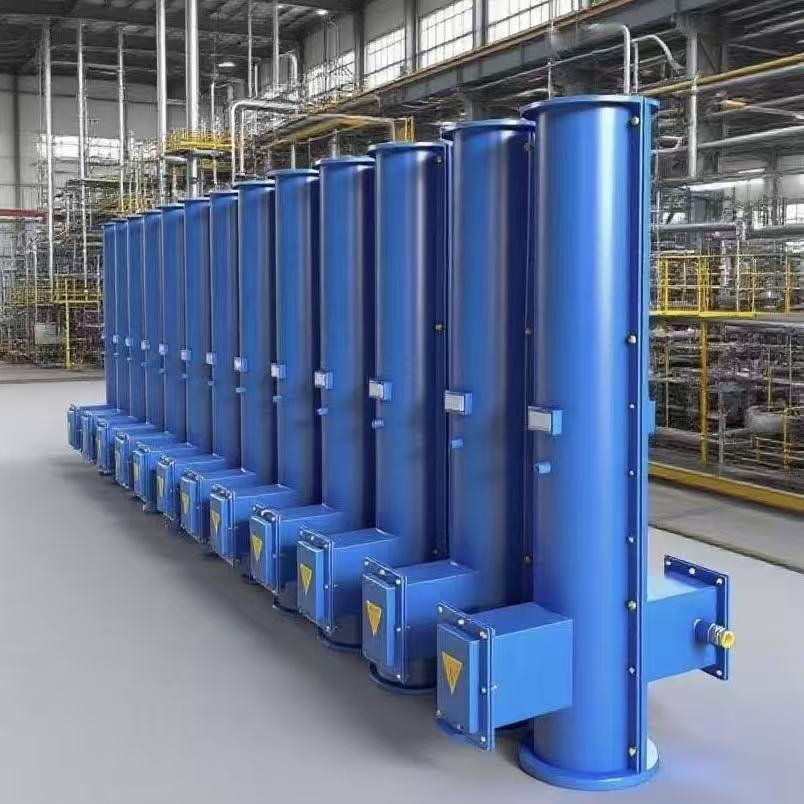
For decades, natural gas and coal-fired boilers were the default choice in heavy industry. They were cheap to install and familiar to maintenance teams. But that calculus has quietly flipped. Today, electric heating systems—particularly advanced induction, resistive, and heat pump technologies—are matching or exceeding the thermal performance of fossil-fuel systems while sidestepping their operational headaches. Factory managers are noticing that the true cost of combustion isn't just the fuel bill; it's the exhaust handling, the heat loss through flue gases, and the constant tuning required to keep burners efficient. Electric systems strip away those layers, delivering energy directly into the process with barely any intermediary steps.
The push toward electrification isn't purely about environmental targets, although that's playing a supporting role. It's becoming a hard-nosed business decision driven by three shifts. First, the levelized cost of renewable electricity has dropped so far that in some regions it's cheaper to run electric arc furnaces than blast furnaces. Second, modern production lines are tightening their tolerance for temperature swings—a variable that electric heating can control down to a fraction of a degree, something gas burners can't replicate without expensive cascade controls. Third, maintenance budgets are shrinking, and electric elements have no moving parts to foul, no condensate traps to drain, and no combustion safety interlocks to test. The result is fewer unplanned shutdowns and a cleaner factory floor.
There's also a subtler factor at play: supply chain predictability. Gas price volatility has made long-term cost forecasting messy for manufacturers accustomed to thin margins. Fixed-rate renewable power contracts, paired with on-site storage, let plants lock in their thermal costs for a decade. When a multinational food processor recently retrofitted six drying lines to electric infrared, the project was justified not by emissions savings but by a 14% improvement in product consistency and a 22% drop in energy-related downtime. It's the kind of dual benefit that's reshaping capital investment plans across sectors. The giants switching now are betting that the electrification wave will become the new operational baseline, and they'd rather ride it than be swamped by it.
The Hidden Engineering Behind Durable Heater Cores
Most people never think about their car's heater core until it fails, but the engineering that keeps it working reliably for years is surprisingly complex. It's a small radiator hidden behind the dashboard, constantly cycling hot engine coolant while enduring vibrations, temperature swings, and chemical corrosion. What makes a durable heater core isn't just thick metal—it's the careful choice of materials and the precision of how they're joined. Aluminum has become the dominant choice not only for its lightness but because it allows for a fully brazed core, where every fin and tube is fused into a single, rigid structure. This eliminates the tiny gaps and crevices where cracks and leaks typically start, giving the core a monolithic strength that resists stress far better than older brass-and-copper designs with mechanically bonded joints.
Beyond the metal itself, the coolants we use have evolved hand-in-hand with heater core design. The shift to organic acid technology (OAT) coolants, with their longer service life and gentler corrosion inhibitors, has dramatically reduced internal clogging and erosion. Engineers also fine-tune the coolant flow rate not just for heat output, but to prevent turbulence that can scrub away protective oxide layers inside the narrow tubes. Even the mounting system plays a role: flexible bushings and precisely calculated clearances allow the core to expand and contract without transmitting stress to the solder joints or connections. These details are invisible to the driver, but they're the reason a well-maintained heater core can outlast the vehicle itself.
A Practical Look at Sizing and Installation Challenges
Getting the sizing right from the start is often where projects stumble. It's easy to focus on performance specs and forget that the unit has to physically fit into a space that might have been an afterthought. We've seen units wedged into corners with zero clearance for service access or airflow, which turns routine maintenance into a nightmare. Real-world measurements rarely match the as-built drawings, so assuming a standard footprint will work without verifying doorways, ceiling heights, and existing obstructions leads to expensive rework.
Installation challenges show up once the equipment arrives on site. Even when the footprint is fine, connecting ductwork, piping, and electrical often exposes misalignments that weren't obvious during planning. A common headache is vibration—a unit that runs quietly in a test facility can rattle adjacent structures if mounting points aren't reinforced or if flexible connectors are skipped to save time. Field adjustments become the norm, eating into schedules and testing the patience of everyone involved.
The best approach we've found is treating sizing and installation as a continuous conversation rather than separate phases. Early walks with the install crew, not just the design engineers, flag issues that never appear on paper. Mock-ups or laser scanning can catch interferences before orders are placed. And when surprises still happen, having a skilled team who can fabricate brackets or modify supports on the spot keeps the project moving without compromising safety or performance.
What Sets Chinese Manufacturing Apart in Thermal Solutions
China's thermal solutions sector thrives on an unmatched vertical integration strategy. From raw material processing of aluminum and copper to precision CNC machining and final assembly, domestic supply chains minimize lead times and costs. This end-to-end control allows rapid iteration for custom heatsinks, vapor chambers, or liquid cooling plates—often delivering samples in days rather than weeks.
Beyond scale, Chinese manufacturers increasingly lead in adaptive engineering. They blend traditional cooling methods with smart IoT-enabled thermal management, leveraging local expertise in electronics and software. Partnerships with research institutes also push boundaries in phase-change materials and eco-friendly refrigerants, aligning with global sustainability trends while retaining cost competitiveness.
Maintaining Peak Efficiency Without Costly Downtime
Achieving consistent peak performance doesn't require accepting expensive outages as inevitable. Modern monitoring tools and predictive analytics let you spot warning signs long before they escalate into failures. By tracking vibration, heat patterns, and energy consumption in real time, maintenance teams can schedule interventions precisely when needed—not according to a rigid calendar, but based on actual equipment condition.
This shift from reactive fixes to proactive care keeps production lines humming without interruption. Small adjustments during planned pauses—like recalibrating sensors or swapping out worn belts—often prevent the domino effect of cascading breakdowns. The result is smoother operations where throughput stays steady, and emergency repair costs become a rarity rather than a budget line item.
Crucially, this approach extends asset life and trims energy waste. Equipment running within its optimal parameters draws less power and generates less heat, which in turn reduces strain on cooling systems. Over months, these marginal gains compound into substantial savings, all while avoiding the disruptive scramble of unscheduled stops. Efficiency, in this model, becomes self-reinforcing—a continuous loop where uptime and output reinforce each other.
FAQ
A pipeline electric heater is a device that directly warms liquids or gases as they flow through a pipe. It uses electric heating elements encased in a metal sheath, which transfer heat to the medium passing over them. In industrial settings, these heaters are integrated into existing piping to maintain or raise the temperature of process fluids, ensuring consistent flow and preventing freezing or viscosity issues. They're widely used in oil and gas, chemical processing, and water treatment because of their precise temperature control and compact design.
Chinese manufacturers have become major players due to their ability to combine cost-effectiveness with solid engineering. Many factories in China now adhere to international standards like ASME and CE, offering heaters with advanced features such as explosion-proof designs and smart temperature controllers. The supply chain maturity allows for quick customization and competitive pricing without sacrificing reliability, making them a go-to for projects from petrochemical plants in the Middle East to food processing units in Europe.
Electric heating offers unmatched simplicity and precision. You don't need a boiler, steam traps, or complex piping—just an electrical connection. Temperature control can be fine-tuned to within a degree, which is critical for sensitive processes. Maintenance is lower since there's no combustion byproducts or scaling issues. Plus, electric systems are cleaner and more energy-efficient at the point of use, especially when paired with proper insulation. In regions with stable electricity supply, they can significantly reduce operational headaches.
Start by defining your process parameters: fluid type, flow rate, required temperature rise, and operating pressure. The heater's watt density must match the fluid's properties to avoid overheating or coking. Material compatibility is crucial—stainless steel sheaths for corrosive fluids, for instance. Also consider certifications (explosion-proof if in hazardous areas), control options (thermostat vs. PLC integration), and physical space constraints. Reputable suppliers often provide thermal calculations to ensure the heater fits your exact needs rather than pushing a off-the-shelf model.
Regular inspection of heating elements for scale or fouling is vital—buildup can cause hot spots and premature failure. Check electrical connections for tightness and corrosion, and verify that thermocouples and controllers are calibrated. Flushing the system periodically removes sediment. If the heater is used in intermittent service, avoid thermal shocking the elements by ramping temperature gradually. Keeping a log of operating hours and performance metrics helps predict when maintenance is due before a breakdown occurs.
Absolutely, provided they are designed and certified for the specific classification. Explosion-proof pipeline heaters feature sealed enclosures that prevent any spark from escaping, and they use elements that stay below the ignition temperature of surrounding gases. Common certifications include ATEX for Europe and IECEx for international projects. When specifying, you must know the zone or division, gas group, and temperature class. Chinese manufacturers are increasingly offering certified units that meet these safety standards, but always verify documentation and third-party testing.
Insulation is often the unsung hero. Even a perfectly sized heater loses effectiveness if the pipe isn't properly insulated. Good insulation reduces heat loss to the environment, which means the heater cycles less frequently and consumes less energy. It also protects personnel from burns and stabilizes process temperatures along the entire length. Pairing a pipeline heater with appropriate insulation—like mineral wool or closed-cell foam—can cut energy waste by 20% or more, paying for itself quickly.
Conclusion
China's pipeline electric heaters have redefined the way industrial processes harness energy, converting raw electrical input into finely tuned thermal output with minimal waste. Unlike traditional fuel-based systems, these heaters use direct resistance heating, where current passing through high-grade elements generates heat that transfers directly to the fluid medium—whether gas, water, or viscous chemicals. The shift toward electric solutions isn't just about cleaner energy; it’s about precision. Major refineries and chemical plants now rebuild their heating infrastructure around these units because they can hold temperatures within a fraction of a degree, cutting scrap rates and enabling tighter process controls. Chinese manufacturers have doubled down on this trend, engineering heater bundles that withstand extreme thermal cycling while embedding advanced controls right into the system. The result is a package that simplifies installations, trims maintenance costs, and delivers consistent output year after year.
Behind the reliability lies a focus on core durability that often goes unnoticed. The heating elements themselves are crafted from alloys like Incoloy and stainless steel, formed into rigid bundles that resist corrosion even in aggressive media. Engineers pay careful attention to watt density and fluid velocity, designing for even heat distribution and avoiding hot spots that degrade components. Sizing these systems is a practical balancing act: too small leads to insufficient heat, too large drives up capital and operating expense. Installations bring their own hurdles—piping constraints, power supply upgrades, and safety clearances all demand careful planning. What sets Chinese suppliers apart is their willingness to customize everything from flange dimensions to control logic, often matching performance specs of European brands at more accessible price points. To keep efficiency high without expensive downtime, operators lean on predictive diagnostics built into modern models. Simple practices like monitoring amp draws, checking for scale buildup, and tightening electrical connections can catch small issues before they force a shutdown. This marriage of sturdy design, smart controls, and adaptable engineering is what makes pipeline electric heaters a cornerstone of modern industrial heating.
Contact Us
Contact Person: Mr. Wang
Email: [email protected]
Tel/WhatsApp: 8613705299955
Website: https://vip.e-baixing.com/szhgyw