

China Medium Voltage Switchgear: What Buyers Need to Know Before Sourcing
2026-08-28
If you're sourcing medium voltage switchgear in China, you've probably already noticed the price gap—and the ambiguity that comes with it. Some factories quote IEC standards they don't fully test against; others cut corners on busbar plating or vacuum interrupters. This guide gets into the details buyers actually need to verify before signing, with practical checks from Deepwill to keep your project safe and your budget sane.
Not Every 'IEC' Claim Holds Up in Practice
Walk through any trade show floor and you'll hear the letters 'IEC' tossed around like a badge of guaranteed performance. Yet the gap between what a spec sheet implies and what actually happens on a job site can be startling. A connector rated for 500 mating cycles under clean lab conditions might start showing intermittent signal loss after a few dozen insertions in a dusty industrial cabinet. The standard itself isn't the problem — it's the assumption that passing an IEC test once means the part will behave identically in every real-world scenario.
Consider vibration. An IEC test might hold a component steady at a fixed frequency for a set duration, but out in the field, vibration comes in random bursts, with thermal cycling layered on top. Solder joints that look flawless after the standardized procedure can develop micro-cracks within weeks when a machine runs 24/7 next to a stamping press. Even simple things like connector mating force vary widely: a tight fit that feels reassuring on the bench becomes a maintenance headache when technicians have to unplug cables while wearing gloves or working in cramped spaces. 'Passing IEC' doesn't automatically mean 'works in your application.'
That's why smart engineering teams treat IEC compliance as a starting point, not a finish line. They run their own accelerated life tests using actual harness routing, real cable weights, and the specific contaminants found in their environment — whether that's salt spray, cutting fluid, or fine silica dust. They measure voltage drop under load after repeated thermal shocks, not just once on a pristine sample. The honest takeaway: an IEC mark tells you the component met a consensus baseline under controlled conditions. It says nothing about your enclosure's heat buildup, your maintenance crew's yanking style, or the way your cable bundle sags against a sharp bracket. If you want claims that hold up, test the way you actually use it.
A Factory Audit Reveals More Than Any Spec Sheet
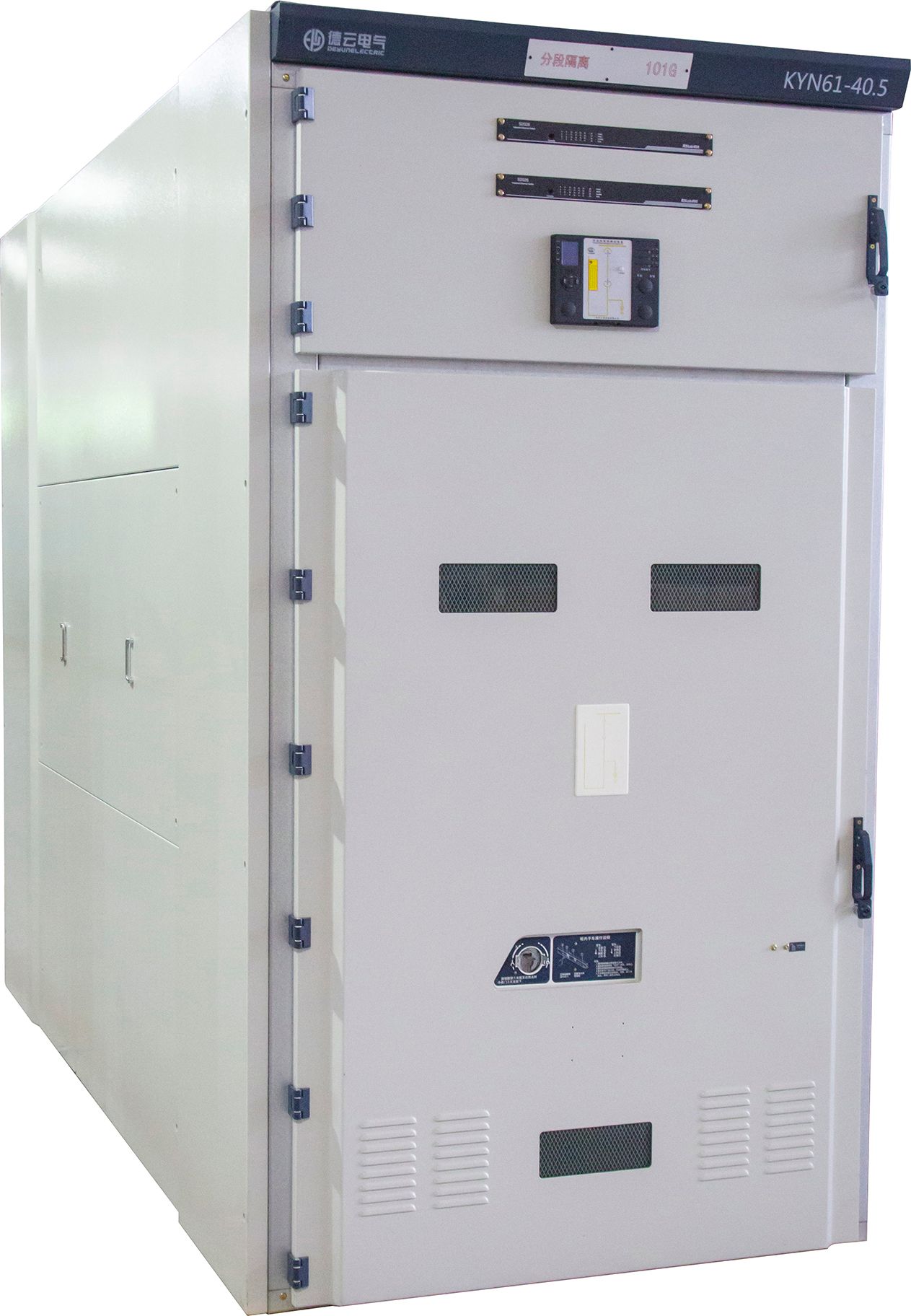
A spec sheet tells you what a factory claims to build, but walking the floor shows you how they actually operate. During an on-site audit, you see whether raw materials are stored properly, whether workers follow the stated quality checks, and whether the production line is organized or barely holding together. Those details never make it onto a polished PDF.
You also learn how the team reacts to problems. A factory that quietly reworks a defective batch before shipping is different from one that ships it and hopes you won't notice. In a single visit, you can spot whether managers train new hires or just throw them onto the line, and whether maintenance is scheduled or treated as an afterthought. These patterns predict your future order quality better than any tolerance listed on paper.
The real value of an audit is the chance to match the facility's story with its daily reality. You might discover that the impressive equipment in the brochure is idle, or that the small workshop next door handles overflow work without the same controls. A spec sheet freezes a moment in time; an audit reveals whether that moment ever existed.
Hidden Costs Live in the Bill of Materials
Many teams treat a BOM as a simple parts list, but it quietly carries expenses that never show up on a purchase order. Fasteners, adhesives, labels, and other low-cost items often get lumped into overhead or ignored until they trigger a line stoppage. Each of those line items has a procurement tail: minimum order quantities, supplier setup fees, and the time someone spends chasing a missing drawing revision. These small drains accumulate faster than most cost models admit.
The real trouble starts when the BOM grows without discipline. Every engineering change adds another part number, another approval cycle, and another chance for a mismatch between design and production. That mismatch leads to rework, excess inventory, or a last-minute spot buy at premium pricing. Teams that track only direct material spend miss the labor wrapped up in those corrections, which often lands in a different budget and stays invisible.
A lean BOM isn’t just about fewer rows; it’s about fewer hidden commitments. Consolidating part numbers, standardizing finishes, and questioning whether a custom spec actually earns its keep can reveal costs that never appeared in a spreadsheet. Those decisions happen early, but their financial weight shows up months later on the factory floor. That’s where the bill of materials stops being a reference document and becomes a cost driver in its own right.
Local Certifications Can Make or Break Your Project
Every region has its own set of certifications that signal compliance, safety, and quality. Overlooking these local requirements isn't just a paperwork delay—it can halt construction, invalidate insurance, or force costly retrofits after work is already done.
The challenge is that these certifications often aren't listed in generic project guidelines. They might come from municipal building authorities, utility providers, or industry-specific boards. A material or method that passes in one district may fail a hundred kilometers away because of different seismic, environmental, or energy codes.
Smart project teams treat local certification as a design constraint, not an afterthought. They map required approvals early, build in buffer time for inspections, and choose suppliers who already hold the necessary credentials. That upfront effort prevents the kind of mid-project discovery that turns a straightforward build into a regulatory quagmire.
Custom Designs Often Add Risk, Not Just Value
Custom builds tend to get romanticized during planning sessions. Stakeholders imagine a solution shaped precisely around their workflows, and the promise of that fit often overshadows the less glamorous parts: untested integrations, edge cases nobody mapped, and maintenance responsibilities that quietly shift to whoever agreed to the build. Once the initial excitement fades, teams discover that every custom choice creates a fresh surface for failure. The same logic that made the design feel necessary now demands someone own its quirks indefinitely.
That doesn't mean off-the-shelf is always safer. It means risk needs to be priced in from the start, not treated as a surprise that shows up later. A custom design can absolutely deliver value, but the value has to be large enough to justify the long tail of attention it will require. If the only argument is flexibility, you're probably not buying flexibility. You're buying a queue of future problems that arrive one at a time, usually at the worst possible moment.
After-Sales Support Is Where Deals Sink or Swim
Most vendors treat after-sales support as an expense to be minimized, but that mindset quietly bleeds accounts. Buyers rarely switch because the initial quote was a few points higher; they switch after sitting on hold for forty minutes, receiving a canned email that ignores the actual problem, or discovering that a warranty claim requires three layers of approval. The sales team can promise responsiveness during the demo, but the customer only believes it when a replacement part actually ships before the weekend.
There is also a strange asymmetry in how support failures travel. A perfectly handled return or a fast firmware fix rarely earns a public thank-you, but one botched installation or a dismissive ticket response gets shared with peers, procurement forums, and the next vendor down the hall. Your current customers are watching how you treat their colleagues, not just how you treat them. When support is staffed with people who can make decisions on the spot, it becomes a retention engine that no amount of pre-sale charm can match.
The economics are even clearer when you compare headcount in support to the cost of reacquiring a lost account. A few extra engineers or dispatchers cost far less than the discounts, freebies, and apology lunches required to win back trust after a visible failure. Understaffing after-sales work does not save money; it just moves the expense downstream to churn, contract renegotiations, and lost referrals. If your after-sales team is seen as a back-office drain, the deals are probably already sinking in slow motion.
FAQ
In China, medium voltage usually spans 3.3 kV to 40.5 kV, with 10 kV and 35 kV being the most common distribution levels. Buyers often assume their 11 kV or 33 kV system maps directly to a Chinese product, but insulation coordination, creepage distances, and even standard breaker ratings can differ. You need to give the manufacturer your nominal voltage, highest system voltage, and grounding method up front, otherwise you risk getting a design that passes Chinese tests but underperforms on your network.
The core standard is GB/T 3906 for AC metal-enclosed switchgear from 3.6 kV to 40.5 kV, supported by DL/T 404 for indoor installations and GB 1984 for circuit breakers. Many factories will claim IEC 62271-200 compliance, but the actual type tests may have been done only to GB versions. Ask for a clause-by-clause deviation list between the Chinese standard and the IEC standard you require, and check which body witnessed the tests.
Start by requesting type test reports from recognized labs such as KEMA, ASTA, or Xian High Voltage Apparatus Research Institute. Then commission a third-party inspection through firms like SGS, Bureau Veritas, or Intertek to witness routine tests and check raw material certificates. A video tour of the production line and a live stream of your own panel being assembled can reveal a lot about process control that glossy brochures hide.
The biggest omissions are short-time withstand current and duration, peak withstand current, internal arc classification, temperature rise limits, breaker mechanical endurance, auxiliary voltage, and ambient conditions like altitude or humidity. If you only specify rated current and voltage, factories will quote the cheapest configuration that barely meets those two numbers, and you will find out too late that the busbar cross-section or enclosure strength is inadequate for your fault level.
Aluminum busbars are common in cost-driven projects because they are lighter and cheaper, but they need a larger cross-section than copper for the same current rating and require careful plating and bolted joint preparation to avoid oxidation. Many Chinese manufacturers default to copper for export orders, yet under price pressure some may substitute aluminum. Always state the material, plating, and connection method explicitly in the technical specification, and ask for a temperature rise calculation rather than assuming the factory will make the right choice.
You can usually specify enclosure protection ratings like IP4X or IP42, anti-condensation heaters, top or bottom cable entry, bus tie breaker schemes with automatic transfer, specific protection relay brands, CT and VT accuracy classes, and interlocking arrangements for earthing switches. Panel dimensions, color, and bushing orientation are also flexible. Just keep in mind that every change from the standard design adds engineering time and may push delivery from eight weeks to twelve or more.
A proper package includes a routine test report covering power frequency withstand, lightning impulse, main circuit resistance, mechanical operation, and partial discharge. You should also receive as-built drawings, operation manuals, a certificate of conformity, a packing list, and test certificates for key components like circuit breakers and protective relays. If the factory offers only a one-page certificate of compliance, that is a red flag. For high-value orders, ask for third-party witness testing at the factory before dispatch.
Most Chinese manufacturers provide a standard 12-month warranty, free remote technical support, and replacement parts shipped by courier. For large projects, you can negotiate for an engineer to travel to your site for commissioning and training, but travel costs and daily allowances are often extra. The contract should state response times, which party covers freight for warranty parts, and whether the factory will supply English documentation and a local service agent.
Conclusion
Many buyers take an “IEC compliant” label at face value, but actual production runs often deviate from the certified sample—thermal rise, insulation clearances, or breaker type tests may not match what was originally approved. A factory audit is the only way to see how consistently the workshop follows drawings, how workers handle busbar bending and torque settings, and whether incoming copper and epoxy resin are really from the specified suppliers. The bill of materials can also hide significant cost differences: a switchgear panel that looks identical on the outside might contain thinner copper, lower-grade CTs, or a cheaper vacuum interrupter that shortens service life. Request a locked BOM before payment and verify the key component brands during inspection.
Local certification is another make-or-break point. A panel that passes IEC tests in a lab abroad may still fail the type test required by your national grid code or the specific short-circuit rating demanded by the local utility. Custom designs add another layer of risk—non-standard busbar arrangements or special enclosure sizes often lead to longer lead times, limited spare part availability, and more complicated field installation. After-sales support is where many sourcing deals collapse. If the supplier has no local service partner, a failed protection relay or loose contact can shut down a substation for weeks. Before signing, ask for the warranty terms, response time in your region, and a list of recent customers who actually called for after-sales help.
Contact Us
Contact Person: Julion
Email: [email protected]
Tel/WhatsApp: 8617351370631
Website: https://www.deyunelectric.com