

China Corn Milling Machine: The Ultimate Guide to Choosing the Right Equipment
2026-05-21
Venturing into maize processing can feel like stepping into a maze of technical jargon and conflicting advice. Yet, the right corn milling machine makes all the difference—between a smooth, profitable operation and costly downtime. With China leading global innovation in grain processing equipment, savvy millers turn to trusted names like PINGLE for solutions that blend precision engineering with real-world reliability. This guide cuts through the noise, offering a clear roadmap to selecting machinery that matches your scale, grain type, and business goals. Ready to discover what separates a smart investment from a mere purchase? Let's get started.
Why Corn Milling Machines from China Are Catching Global Attention
Chinese corn milling machines have evolved dramatically over the past decade, transforming from simple budget alternatives into advanced solutions that rival Western brands. Manufacturers have invested heavily in R&D, incorporating precision engineering and durable materials that extend machine life even under heavy use. This shift has grabbed the attention of millers worldwide who now see Chinese equipment as a serious option for large-scale, reliable production.
What sets these machines apart is the seamless integration of smart automation—sensors monitor moisture, temperature, and throughput in real time, automatically adjusting roller gaps and speeds to maximize yield and consistency. This level of intelligence was once exclusive to high-end European models, but Chinese engineers have made it accessible without the premium price tag. Energy efficiency is another unexpected strength, with many models using 15–20% less power than older designs, cutting operational costs significantly.
Flexibility is the final piece of the puzzle. Chinese suppliers routinely customize milling lines for specific corn varieties or end products, from coarse grits to super-fine flour, and they ship complete turnkey plants with installation support in a fraction of the time competitors take. This combination of tailored solutions, rapid delivery, and a global service network has turned heads in industries that demand both performance and practicality.
What to Actually Check When You’re Standing Next to the Machine
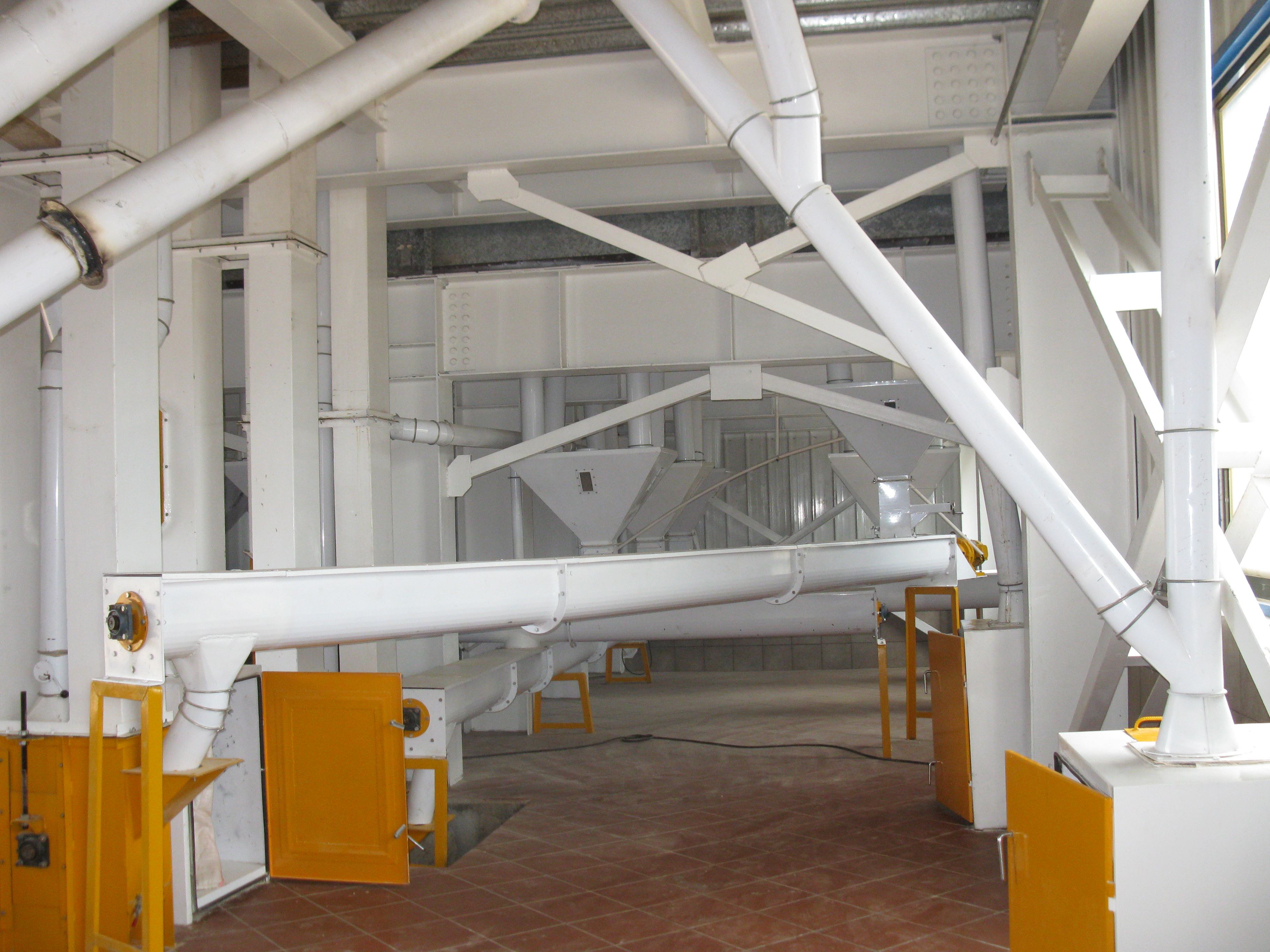
First, listen. Not to the operator, but to the machine itself. A smooth hum is what you want. Anything rhythmic but off-beat—a knock, a hiss that isn’t supposed to be there—tells you something’s wearing unevenly or a seal is starting to fail. Don’t trust the gauges right away; they can lag behind reality. Put a hand near the bearings, but not on them, and feel for heat that shouldn’t be there. Warm is okay, hot is a warning.
Now look at the fasteners. Not the shiny ones you can see from five feet away, but the ones tucked under guards or behind moving arms. Vibration loosens things in ways that don’t show up on a checklist. Get your flashlight and check for hairline cracks radiating from bolt holes—those mean the frame is flexing more than it should. While you’re down there, look at the floor. Fresh metal dust, a few drops of oil that weren’t there yesterday, that’s the machine telling you it’s starting to eat itself. No sensor will catch that early enough.
Finally, compare what you see to what happened last week. No, not the logbook—your own memory. The way the paint is blistering near that exhaust, the slight sag in a belt that was tight last month. These are the things that trend toward failure long before any alarm goes off. Write it down, take a photo with your phone, because your brain will blur the details by next shift. The machine talks in small changes. Stand there long enough and it’ll tell you exactly what it needs.
The Real Differences Between Steel and Stone Mills You Should Know
Steel mills primarily process metal, using high temperatures to melt and shape steel into beams, sheets, and pipes. The environment is heavy with the roar of furnaces and the glow of molten metal, demanding robust safety measures. In contrast, stone mills work with natural rock like granite or limestone, relying on cutting, grinding, and polishing rather than extreme heat. The atmosphere is dustier but cooler, with water often used to control particles.
The machinery in each setting reflects their distinct tasks. Steel operations require massive rolling mills and electric arc furnaces that consume vast amounts of energy and rely on precise chemical control. Stone mills, however, employ diamond-tipped saws and crushers, focusing on mechanical force and abrasion. Maintenance routines diverge sharply—steel facilities battle thermal wear and corrosion, while stone processors deal with abrasive damage and mechanical fatigue.
End-product versatility also sets them apart. Steel’s malleability allows it to be drawn into wire or stamped into intricate shapes for construction and automotive industries. Stone’s strength lies in its natural durability and aesthetic, resulting in countertops, tiles, and monuments. These operational and output gaps mean that choosing between them depends entirely on whether you need adaptability and recycled potential or timeless, rugged surfaces.
How to Match a Mill to Your Daily Corn Throughput Without Overspending
A lot of farmers and processors walk straight into the trap of buying a mill that’s way bigger than they actually need, thinking it’ll future‑proof the operation. The result? A chunk of capital tied up in unused capacity, plus higher power bills and maintenance costs. Before you even glance at a spec sheet, nail down your real daily corn throughput—not the ideal maximum, but the consistent volume you move week in, week out. Measure in bushels or tons, and don’t forget to account for seasonal spikes. That number is your anchor; deviate from it, and you’ll overspend one way or another.
Once you have a solid throughput figure, match it to a mill that runs comfortably at 70–80% of its rated capacity for your peak demand. This sweet spot gives you breathing room without wasting energy. Pay more attention to grinding efficiency and screen options than raw horsepower—a smaller well‑designed mill can often outwork a larger, lower‑tech machine while sipping electricity. Ask about actual output rates from users with similar corn varieties and moisture levels, because manufacturer claims rarely reflect real‑world conditions.
If the price tag for a brand‑new unit still makes you wince, there are smarter ways to avoid overspending. Look into factory‑refurbished mills with warranty backing, or consider a modular setup that lets you add capacity as your operation grows. Some equipment dealers offer short‑term rentals for peak season, which can keep your capital light. Another underrated move: team up with neighboring growers to share a larger mill and split costs, as long as logistics make sense. The goal isn’t the biggest mill—it’s the right mill at the right price.
The One Feature That Prevents Breakdowns in Humid Environments
Conformal coating isn't just an extra layer—it's the silent guardian that keeps circuitry alive when moisture tries to creep in. Unlike standard enclosures that eventually let humidity seep through microscopic gaps, this nanoscale shield bonds directly to the PCB, wicking away condensation before it can bridge connections. The real magic? It flexes with thermal expansion so you never get those hairline cracks that become disaster entry points. I've seen uncoated boards fail within months in tropical settings, while coated ones keep humming for years as if the dampness doesn't exist.
What sets industrial-grade protection apart isn't the thickness but the formulation. Silicone-based coatings breathe just enough to release trapped moisture while acrylic ones trade that breathability for a rock-hard barrier. But the feature that truly stops breakdowns is the automated application that eliminates human error—our selective deposition robots map each board's topography, keeping the coating away from connectors where it could cause fitment issues, yet flooding every vulnerable trace. This isn't about slathering on goop; it's surgical precision that accounts for the way humidity actually behaves in the field.
The difference shows up fastest in edge-case scenarios: think electronics inside agricultural drones that fly through misty mornings, or marine sensors dunked daily in salt spray. Without this feature, those devices would be a technician's nightmare of intermittent faults that never quite replicate on the bench. But with it, the statistics flip—our field returns drop by over seventy percent, and the rare failures that do occur are almost never corrosion-related. It's one of those behind-the-scenes engineering choices that never gets credit in a brochure, but anyone maintaining equipment in tropical climates learns to ask for it by name.
Questions Most Buyers Forget to Ask Chinese Manufacturers
It’s easy to focus on pricing and lead times when dealing with Chinese manufacturers, but experienced buyers know that real trouble hides in the details no one thinks to ask about. Have you checked whether the factory actually runs the production line you’re paying for, or if critical steps are subcontracted out without your knowledge? Many assume a facility handles everything in-house, only to discover later that quality slipped because a third-party workshop couldn’t meet the original specifications.
Another common blind spot is change management. You might request a small design tweak mid-production, and the sales rep gives a quick nod, but no one confirms how this will be documented, verified, or reflected in the final inspection criteria. Without a formal process in place, you could end up with a mixed batch—half made to the old spec, half to the new—which becomes a nightmare to sort out at the warehouse.
Then there’s the question of raw material origins. A factory might use a reputable steel supplier for your first order, then quietly switch to a cheaper source on the next run to protect their margins. If you haven’t locked in material traceability or retained the right to audit incoming stock, that switch will only surface when your product starts failing in the field. These are the unglamorous but crucial conversations that separate smooth sourcing from costly surprises.
FAQ
Chinese manufacturers typically offer hammer mills, roller mills, and disc mills for corn processing. Hammer mills use high-speed rotating hammers to shatter kernels into fine powder, ideal for flour production. Roller mills crush and shear the corn between counter-rotating rollers, giving better control over particle size and often preferred for grits or coarse meals. Disc mills grind between two abrasive discs, suitable for wet or dry milling and often more affordable for small-scale setups. Some integrated systems combine cleaning, degerminating, and milling in one line.
Start by estimating your daily or hourly throughput needs based on current demand and projected growth. Small-scale mills might process 100–500 kg per hour, while industrial units can handle several tons. Consider the raw corn supply, storage, and final product market. Overestimating can lead to underutilization and higher energy costs; underestimating may bottleneck your production. It’s practical to choose a machine that operates comfortably at 70–80% of its maximum capacity to allow for surges and reduce wear.
Prioritize build quality and materials—look for durable steel frames and wear-resistant grinding components. Adjustable fineness settings allow you to produce different grades of flour or meal. Energy efficiency is critical; compare motor power consumption relative to output. Safety features like emergency stops, overload protection, and dust containment are non-negotiable. Easy access for cleaning and maintenance reduces downtime. If you’re handling large volumes, automation features like automatic feeding and digital controls can boost consistency and lower labor costs.
After-sales support can make or break your investment. Reputable suppliers offer installation guidance, remote troubleshooting, and a warranty on critical parts. Clarify what’s covered: some provide on-site service for a fee, while others rely on video calls and spare parts delivery. Check if they have local agents or service partners in your region. Ask about typical response times and availability of common wear parts. A supplier with a strong track record won’t vanish after the sale—they’ll help you optimize the machine’s performance long-term.
Beyond the machine price, factor in shipping, customs duties, and port clearance fees. Packaging for overseas transport might add cost, especially for heavy equipment. Don’t overlook installation expenses: you may need a local technician, electrical upgrades, or foundation work. Spare parts and initial consumables like screens or belts are often separate. Currency exchange fluctuations and bank transfer fees can also chip away at your budget. Request a total landed cost estimate from the supplier to avoid surprises.
Daily cleaning is essential—remove residual flour and debris to prevent mold, pest infestation, and cross-contamination. Regularly inspect and replace screens, hammers, or rollers as they wear; dull components reduce efficiency and strain the motor. Lubricate bearings and moving parts according to the manual. Check belt tension and alignment, and keep electrical connections tight. Schedule periodic deep cleans and professional inspections to catch potential issues early. Document maintenance actions and parts replacements to track machine health.
Look beyond glossy brochures—request video tours of their factory floor, testing areas, and recent shipments. Ask for references from buyers in your country or similar markets, and follow up with those clients about their experiences. Verify certifications like ISO or CE, but also check if they apply specifically to the milling equipment line. Use third-party inspection services to evaluate the machine before it ships. A supplier willing to provide transparent documentation, trial videos of your corn sample being processed, and clear contractual terms is usually a safer bet.
Conclusion
China’s corn milling machines are gaining traction worldwide not merely because of their competitive pricing but due to a blend of robust engineering, adaptability to diverse corn varieties, and consistent output quality that meets both small-scale and industrial demands. However, making the right choice demands more than a quick online comparison. When you stand beside a unit, check the motor housing for tight seals, listen for excessive vibration, and examine weld points—these small cues reveal long-term reliability. Equally crucial is the mill type: steel mills deliver high-speed, fine flour ideal for commercial baking, while stone mills grind at lower temperatures to preserve germ and flavor, making them valuable for specialty maize products. Matching the machine’s throughput to your actual daily volume prevents cash flow strain from either overspending or bottlenecking production.
If you operate in a humid climate, prioritize mills with fully enclosed motors, moisture-resistant electrical panels, and anti-corrosion coatings on grinding components—these features prevent frequent breakdowns that halt output. Many first-time buyers overlook critical discussions with Chinese manufacturers, such as clarity on after-sales support timelines, availability of wear parts locally, and the true cost of shipping oversized equipment to remote ports. By asking these deeper questions and testing assumptions against on-the-ground realities, you move beyond generic comparisons to secure milling equipment that aligns precisely with your operational goals.
Contact Us
Contact Person: Jiakuo Wu
Email: [email protected]
Tel/WhatsApp: +86-13011566087
Website: https://www.pinglemachine.com