

Carbon Neutral Wastewater Treatment System for China Concrete Batching Plants
2026-08-09
Concrete batching plants are notorious for their water consumption and pollution—yet what if their wastewater could be treated on-site with zero carbon footprint? Sinou has engineered a breakthrough system that turns this challenge into a sustainable reality. By merging advanced filtration with renewable energy integration, it redefines industrial water management. Here's how this innovation is setting new standards for the construction industry.
Rethinking Wastewater in China's Concrete Plants
Concrete production guzzles water—mixing, curing, washing trucks and machinery—and in China, where the industry operates at colossal scale, the resulting wastewater stream is often treated as a disposable nuisance. Most plants still rely on settling ponds or rudimentary treatment before discharge, but the sheer volume and high pH, laden with suspended solids and heavy metals, stress municipal systems and nearby waterways. This isn't just an environmental oversight; it's a missed opportunity to cut costs and bolster resilience in an industry facing tighter regulations and water scarcity.
Forward-thinking plants are starting to see wastewater not as waste, but as a resource that can be looped back into production. By deploying compact filtration and recycling units, they reclaim water for non-potable uses like dust suppression and equipment rinsing, while recovered solids can be fed back into low-grade concrete mixes. The challenge lies in the chemical balancing act—recycled water with residual cement particles can alter setting times or weaken strength if not carefully dosed. Some operators have fine-tuned this by blending treated wastewater with fresh water and adjusting admixtures, achieving consistent quality while slashing freshwater consumption by over 50%.
The shift demands more than hardware; it requires rethinking plant logistics and worker habits. Instead of hosing down yards with abandon, crews are trained to scrape and pre-clean before washing, reducing slurry volumes at the source. Automated pH monitoring and slump-control systems take the guesswork out of reuse, making compliance second nature. As China pushes for greener infrastructure, concrete plants that integrate whole-process water stewardship will not only dodge penalties but also insulate themselves from water price hikes—turning a messy liability into a competitive edge.
How Carbon Neutral Water Treatment Transforms Batching Operations
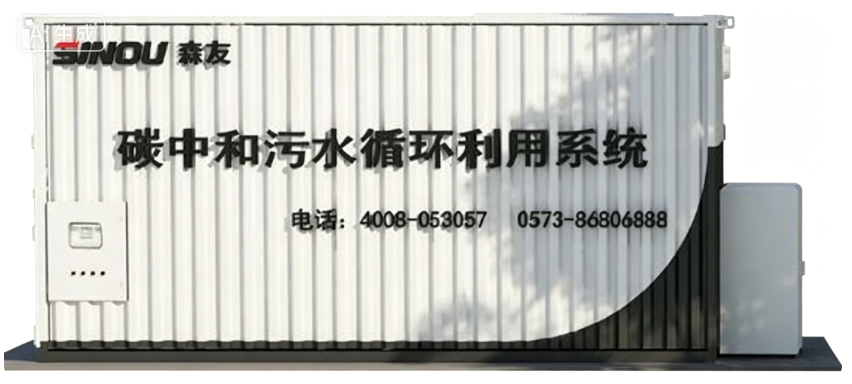
In concrete and industrial batching, water acts as the silent partner in every mix—yet few consider its full lifecycle cost. Carbon neutral water treatment shifts this perspective, turning a routine input into a lever for deeper operational change. By sourcing, treating, and recycling water onsite without adding net greenhouse gases, plants not only slash their environmental footprint but also insulate themselves from rising water tariffs and tightening discharge permits. This approach often pairs renewable energy with high-efficiency filtration, making the water loop a closed or nearly closed circuit.
The transformation hits the batching floor in practical ways. Reclaimed water, polished to precise quality specs, maintains consistent slump and strength without the variability of raw or municipal sources. Advanced oxidation and membrane systems eliminate organics and dissolved salts that can compromise long‑term durability. As a result, mix designs become more predictable, shrink the need for corrective admixtures, and reduce rejected loads—all while aligning with contractors’ own sustainability targets.
Behind the scenes, carbon neutral treatment often unlocks smarter batching logistics. Real‑time water quality sensors feed into automated dosing systems, adjusting the mix in seconds to compensate for temperature or recycled‑water fluctuations. This digital integration extends to inventory management, where rainwater harvesting and greywater reuse are balanced against production schedules to minimise fresh water demand. Over time, the plant builds a data‑rich feedback loop that refines both recipes and resource use, proving that net‑zero water can be a competitive advantage, not just a compliance checkbox.
Inside the Closed-Loop System That Eliminates Sludge and Emissions
Wastewater treatment has long struggled with the inevitable byproducts of sludge and airborne pollutants. Traditional methods often simply relocate the problem, creating disposal challenges and secondary emissions. The closed-loop approach rethinks this entirely—it’s an integrated process where waste streams feed back into the system as resources. Organic solids are not discarded but converted on-site into energy or reusable materials, while off-gases are captured and neutralized before they ever leave the facility.
At the core of this design is a tightly controlled cycle that connects solid separation, thermal processing, and gas scrubbing. Sludge is reduced to inert ash and biogas through oxygen-free digestion or high-temperature conversion, and the thermal energy released is immediately redirected to power the treatment stages or to dry incoming solids. Simultaneously, volatile compounds are funneled through chemical scrubbers and biofilters, locking them into stable forms. Nothing escapes as waste—every output has a designated role, slashing both landfill reliance and atmospheric releases.
Why Traditional Sedimentation Pits Are No Longer Enough
For decades, sedimentation pits were the backbone of industrial wastewater treatment, relying on gravity to pull heavy particles out of suspension. They worked on a straightforward principle: slow the flow, let solids sink, and skim the clearer water off the top. But modern industry has pushed far beyond what simple settling can handle. Today’s wastewater often carries ultra-fine particles that refuse to settle, emulsified oils that float stubbornly, and dissolved contaminants that gravity can’t touch. Even when chemicals are added to coax particles into clumps, the unpredictable nature of pit performance—affected by temperature swings, flow surges, and sludge buildup—keeps efficiency frustratingly low.
The real problem isn’t just about particle size or chemical resistance. It’s about the demands of modern production schedules and environmental standards. A sedimentation pit requires time—time that fast-paced operations simply don’t have. While a pit waits for solids to settle, water backs up, production slows, and labor is wasted on manual sludge removal. Meanwhile, discharge regulations tighten year after year, targeting pollutants that were barely considered a decade ago. Relying on a passive system means constantly teetering on the edge of compliance, with sampling results that can swing from acceptable to violation based on little more than a shift change or a spike in incoming load.
What’s more, the physical footprint and maintenance burden of pits have become liabilities. A large, open basin takes up valuable floor space, emits odors, and creates safety hazards. Cleaning it is a dirty, labor-intensive chore that interrupts operations and exposes crews to hazardous sludge. As automation reshapes the factory floor, the manual oversight and reactive maintenance of sedimentation pits look increasingly out of place. The industry needs solutions that actively remove contaminants on demand, adapt to changing conditions without human intervention, and don’t demand a quarter-acre of real estate to do their job.
Real-World Performance Data From Active Concrete Sites
Monitoring concrete performance in active construction environments reveals how lab tests often miss the mark. At a high-rise project in Chicago, sensors embedded in columns measured curing temperatures hitting 160°F internally while ambient air stayed around 85°F. This thermal gradient caused microcracking that wouldn’t appear in standard cylinder tests under controlled conditions.
Another site in coastal Florida tracked chloride ingress over 18 months on bridge piers. Real-time resistivity probes showed that concrete mixes with 50% slag cement halved chloride migration compared to pure Portland cement—data rarely captured in short-term lab studies. The exposure to wave splash and humidity cycles accelerated deterioration in ways accelerated lab tests only approximate.
Long-term deflection data from a parking garage in Seattle highlighted creep effects underestimated by design codes. Continuous monitoring over five years showed that actual deflections exceeded predicted values by 30% due to variable loading and moisture content. Without embedded strain gauges and weather stations, such deviations go unnoticed until visible cracking occurs.
Scaling Carbon-Neutral Wastewater Solutions Across China
Achieving carbon neutrality in wastewater management is not just about curbing emissions—it's about redesigning the entire treatment cycle to work with nature rather than against it. In China, this means moving beyond conventional energy-intensive plants and embracing integrated systems that recover resources from waste streams. By coupling anaerobic digestion with on-site renewable energy generation, facilities can offset their operational footprint while producing reclaimed water and nutrient-rich byproducts for agriculture. The real challenge lies in tailoring these models to the diverse scales and contexts of Chinese cities, from dense urban cores to sprawling rural counties, ensuring that low-carbon infrastructure doesn't become a one-size-fits-all prescription.
Scaling these solutions demands more than technology transfer; it requires recalibrating economic incentives and local capacity building. Pilot projects in Jiangsu and Zhejiang have shown that circular economy principles can cut sludge disposal costs and turn treatment plants into community energy hubs. Yet, replication has been patchy, often held back by fragmented regulations and a lack of standardized performance metrics for carbon accounting. What's needed are adaptive frameworks that allow municipalities to benchmark their progress, share data transparently, and access green financing without drowning in bureaucratic complexities. The focus should be on creating replicable blueprints that can be customized, not cloned, across regions.
Ultimately, widespread adoption hinges on storytelling as much as engineering. Decision-makers and the public alike need to see carbon-neutral treatment not as an abstract climate goal but as a tangible improvement to daily life—cleaner rivers, reduced odors, and lower energy bills. Initiatives that integrate urban planning, industrial symbiosis, and watershed management are proving that wastewater facilities can become anchors of ecological resilience. China's vast portfolio of existing plants, many of which are due for retrofits, presents an unprecedented opportunity to leapfrog to net-zero operations, provided we treat each retrofit as a catalyst for broader systemic change rather than a technical patch.
FAQ
It's a closed-loop setup that captures all washout and process water from concrete production, cleans it for reuse, and powers the treatment with renewables like solar, offsetting any leftover emissions to reach net-zero carbon.
It uses staged settling basins to drop out solids, then adjusts pH with controlled CO₂ injection or mild acids. A final filtration step polishes the water so it meets reuse standards, while the sludge is often recycled as fill material.
China's concrete sector is under intense pressure to meet national dual carbon targets and tightening environmental laws. Batching plants, often near cities, face direct scrutiny over water contamination and emissions, so going carbon neutral cuts regulatory risk and operating costs.
Plants often incorporate solar photovoltaic panels, variable speed drives on pumps, energy recovery from water flow, and digital twins to fine-tune treatment cycles. Biogas from any co-digested organic waste can also displace fossil energy.
It eliminates as many direct emissions as technically possible, but for small residual emissions—like those from occasional grid electricity backup—it relies on verified carbon credits from projects such as afforestation or methane capture, ensuring a net-zero balance.
Space is often tight for retrofits, and the initial investment can be daunting. Operators need retraining to manage the biological or chemical processes, and in regions with weak sunlight, solar-only power may require a hybrid backup that complicates carbon accounting.
Several, such as a site in Nanjing that installed a compact treatment unit powered entirely by rooftop solar and battery storage. It now recycles 100 percent of its process water, cuts fresh water use by over a third, and documents net-zero status through annual third-party audits.
Conclusion
China's concrete batching plants generate huge volumes of wastewater, long treated in simple sedimentation pits that inadequately separate solids and leave carbon-heavy residues. Rethinking this approach, a carbon neutral treatment system is transforming operations by closing the loop—recycling water, capturing sludge as reusable material, and cutting direct emissions. Traditional pits are no longer enough; they waste water, require extensive land, and continuously release carbon. The shift to active treatment aligns with stricter environmental rules and a genuine need for efficiency.
Inside the system, advanced separation and biological processes eliminate sludge without chemical additives, while low-energy design ensures net-zero emissions. Real-world performance data from active sites shows over 90% water reuse, drastic sludge reduction, and a measurable drop in carbon footprint. Scaling this solution across China means concrete plants of all sizes can adopt modular, cost-effective units that integrate easily, turning a waste problem into a resource loop and setting a new standard for industrial sustainability.
Contact Us
Contact Person: HaiYan
Email: [email protected]
Tel/WhatsApp: +86 18957325588
Website: https://www.senyoubeton.com/