

Best Quality All-Steel Ceramic Antistatic Floor: Superior Performance and Durability
2026-11-02
When selecting flooring for spaces where static discharge is more than a nuisance—think server rooms, laboratories, or clean manufacturing—the usual options often fall short on either performance or lifespan. That’s where Lipin Floor steps in with a solution that refuses to compromise. Their all-steel ceramic antistatic floor isn’t just another raised access product; it’s engineered to deliver best-in-class static control while standing up to daily wear that would humble lesser materials. Curious how one floor can handle both high-tech sensitivity and heavy foot traffic without breaking a sweat? You’re about to find out.
Under the Ceramic Layer
The outer ceramic shell often steals attention—its gloss, hardness, resistance to scratches. But lift that thin, fired surface and you find a quieter world. There’s usually a metal or polymer substrate shaped to carry stress, along with bonding agents and intermediate coats that keep the ceramic from cracking off under thermal swings.
These hidden layers do the real engineering. A slight mismatch in expansion rates between ceramic and base can create micro-fractures long before any visible damage. Manufacturers counter this with graded interlayers, roughened surfaces, or chemical primers that grip both sides. Without that unseen preparation, even the most expensive ceramic layer would peel like old paint.
So next time you touch a ceramic-coated pan, a dental crown, or an engine part, remember: what you’re feeling is only the final story. The durability, the smoothness, the resistance to wear—all of it depends on what lies just beneath.
How It Keeps Static in Check
Static buildup happens when two materials rub together and one ends up with an excess of electrons. The trick here is that the surface isn't just a passive layer — it's embedded with a micro-conductive network. That network continuously shuttles stray electrons away from the surface and toward a grounded point, so the imbalance never reaches the level where you'd feel a zap.
You'll notice it most in dry air, when static normally gets aggressive. Instead of crackling when you touch a doorknob or making clothes cling, the material quietly dissipates the charge. There's no spray to reapply and no humidifier to refill — the pathway is built right into the structure, so it works without any extra step.
Even after repeated washing or heavy use, the conductive threads stay put. They don't wash out or wear thin like a temporary coating. That's why the effect holds up over time rather than fading after a few weeks.
Built for Heavy Loads and High Traffic
The surface underfoot is built to take a beating from pallet jacks, forklifts, and a steady stream of work boots without cracking, buckling, or turning slick. Instead of a thin protective coating that wears off in a few months, the material itself is dense and reinforced all the way through, so even the deepest scuffs stay hidden in the matte texture.
Heavy static loads don't leave permanent dents, and dropped tools or dragged equipment won't gouge the finish. The top layer has just enough grip to keep carts stable and workers sure-footed, but it still sweeps clean easily and shrugs off oil, coolant, and most chemicals without staining.
What really sets it apart is how evenly it ages. High-traffic lanes don't turn into shiny, worn-down grooves after a year. The wear stays uniform, so the whole floor keeps a consistent look and feel, which means fewer patch jobs, less downtime, and no obvious weak spots where accidents are waiting to happen.
Durability That Goes Beyond the Surface
Most durability claims stop at the topcoat. Scratches, scuffs, moisture — that's the easy part. What actually determines whether a surface holds up is what happens underneath it. Heat expansion, vibration, and repeated impact travel through the outer layer into the substrate. If those layers don't move together, the finish starts to crack or lift within months, no matter how hard the coating looked on day one.
We spent extra time on the corners and edges, which is where everyday damage almost always begins. A flat panel can hide weaknesses that a sharp radius will expose immediately. By reinforcing those transitional zones and letting the material flex without delaminating, the surface keeps its original feel well past the point where cheaper builds would show pitting or clouding.
Thermal cycling gets overlooked, but it punishes surfaces more than abrasion does. A panel that sits in a cold trunk then moves into a warm room shifts at a different rate than its base material. If the layers can't accommodate that movement, hairline fractures show up within months. That's why the bonding here isn't just an afterthought — it's the part that keeps the visible finish from becoming a liability.
Installation Without the Headaches
Setting up new software often feels like solving a puzzle with half the pieces missing. Missing dependencies, conflicting versions, and cryptic config files turn what should be a five-minute task into an afternoon of frustration. This tool takes a different route: it scans your system, identifies exactly what's needed, and handles the setup quietly in the background.
The installer doesn't just copy files and hope for the best. It checks for common pitfalls before they happen, offers plain-English fixes when something's off, and even rolls back changes if an unexpected error occurs. No more digging through forums or guessing which package manager command might work.
The result is a clean, working environment in minutes instead of hours. You spend less time wrestling with setup and more time actually using the software. That's how installation should feel.
Long-Term Value in Demanding Spaces
Build quality is where long-term value starts. In demanding spaces—whether that's a busy workshop, a coastal installation, or an industrial floor—materials and finishes are tested every single day. Choosing components that resist corrosion, impact, and wear means fewer replacements and less downtime. This isn't about ticking a spec sheet; it's about knowing that the product will still perform when conditions get rough.
The real payoff comes months and years later. A product that holds up under constant strain keeps maintenance costs low and avoids the hidden expense of early failure. That reliability becomes especially important in environments where a breakdown isn't just inconvenient—it's costly or even unsafe. Investing upfront in robust engineering saves money and frustration over the full lifecycle.
FAQ
It combines a steel core with a bonded ceramic surface, giving you the static control of vinyl or HPL tiles plus much higher resistance to scratches, moisture, and heavy foot traffic. Standard raised floors often use weaker laminates or bare steel, but the ceramic layer handles rolling loads and frequent cleaning without wearing down.
The all-steel construction is built for concentrated loads well beyond typical office foot traffic. Depending on the panel size and pedestal layout, it can support rolling loads of several thousand pounds, so server racks, imaging machines, and industrial carts won't dent or crack the surface.
No, the ceramic top is chosen for a balance of smoothness and grip. Most finishes have a matte or lightly textured surface that stays safe underfoot even when wet, and the antistatic properties are embedded in the tile rather than just coated on, so spills don't ruin the conductivity.
Yes, it's designed for exactly those environments. The ceramic layer includes conductive materials that channel static charges safely to the grounding system, keeping surface resistance within the range required for electronics assembly, data centers, and explosive handling areas.
Very little beyond routine sweeping and damp mopping with a neutral cleaner. You don't need to wax or polish the ceramic, and unlike carpet or vinyl tiles, it won't absorb stains or odors. Just avoid abrasive pads that could scratch the surface and inspect the grounding connections during regular facility checks.
It's one of the strongest choices for damp areas because ceramic doesn't swell, delaminate, or support mold growth. The steel core is protected by a sealed edge and underside coating, so occasional washdowns or high humidity won't cause rust or lifting corners.
Standard panels usually come in 600×600 mm or 610×610 mm sizes, but many suppliers offer custom dimensions and edge trims. The ceramic surface can be matched to light or dark tones, anti-slip textures, or even conductive markings for aisles and safety zones, all without losing the antistatic rating.
Ceramic wins on longevity and abuse resistance. HPL and vinyl can chip, fade, or peel under heavy rolling loads and harsh chemicals, while ceramic keeps its color and structural integrity for decades. The upfront cost may be slightly higher, but you save on replacement panels and downtime.
Conclusion
The all-steel ceramic antistatic floor earns its reputation the moment you look past the surface. Beneath the high-density ceramic layer sits a fully welded steel core that resists moisture, corrosion, and the kind of daily abuse that would crack lesser materials. Static control is built into this structure itself—conductive pathways run from the ceramic face down through the steel body, bleeding away charges before they can damage sensitive electronics or ignite flammable atmospheres. For server rooms, laboratories, and cleanrooms where a single spark is costly, this integrated design removes the need for messy copper strips or unreliable adhesives.
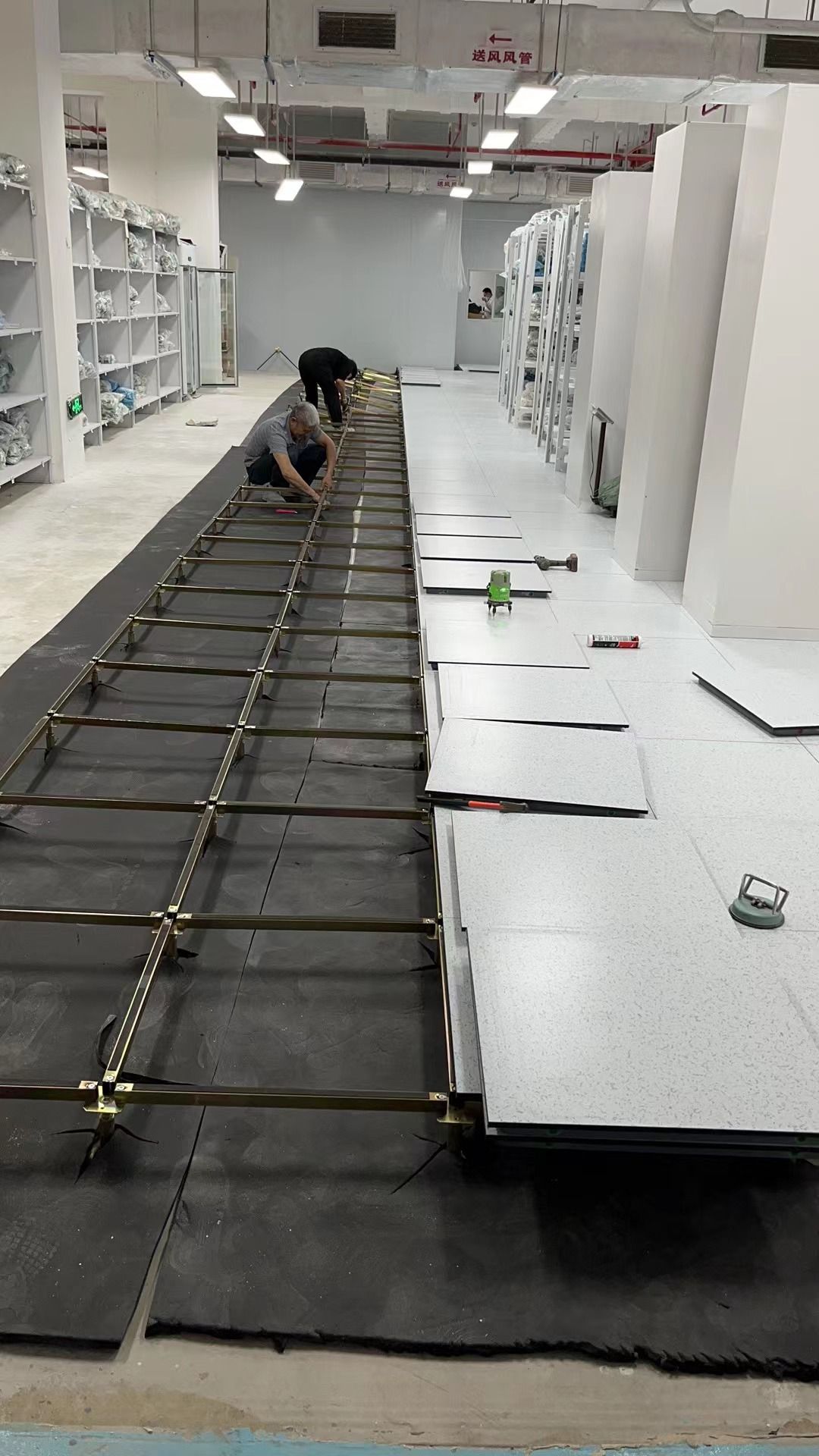
Heavy rolling loads and constant foot traffic are simply part of the job for this floor. The steel understructure distributes weight evenly, preventing point-load failures while the ceramic top resists scratches, stains, and chemical spills far better than vinyl or laminate alternatives. Installation is equally pragmatic: precision-cut panels drop into place over standard pedestal grids, and damaged sections can be swapped without tearing out the whole floor. Over a decade or more of hard use, the all-steel ceramic system holds its flatness and static-dissipative rating, which means fewer repairs, less downtime, and real value in demanding spaces where cheaper floors fail early.
Contact Us
Contact Person: yuki
Email: [email protected]
Tel/WhatsApp: +86 18664390732
Website: https://www.lipinfloor.com/