

Best Energy Drink Production Line Maker: Key Features to Look For
2026-07-14
Crafting the perfect energy drink demands more than just a secret formula—it requires a production line that can keep pace with your ambition. From precision mixing to high-speed canning, the right machinery transforms your recipe into a profitable reality. But with so many options on the market, how do you spot a truly reliable maker? In this guide, we’ll uncover the must-have features that separate industry leaders from the rest, with insights drawn from INTOP Machinery’s proven approach. Whether you’re scaling up or starting fresh, these tips will help you build a line that’s efficient, durable, and ready for market demands.
Production Speed That Keeps Up with Demand
When orders spike, the last thing you need is a bottleneck. Our process trims away delays without cutting corners, blending smart scheduling with just-in-time workflows. The result isn’t just speed—it’s a rhythm that absorbs surges naturally, keeping lead times short even when demand jumps.
We’ve moved past the old trade-off between fast and flawless. By syncing real-time inventory signals with modular assembly lines, we pivot output in hours, not days. That means your most popular items stay in stock, and backorders don’t become a recurring headache. Every stage is measured, not micromanaged, so capacity flexes without breaking.
Behind the scenes, predictive planning tools handle the heavy lifting. They spot demand patterns you might miss, triggering prep work before you even place the next order. This isn’t just reactive manufacturing—it’s a system tuned to the market’s pulse, giving you confidence that supply will match the curve.
Flexibility to Handle Different Can Sizes and Recipes
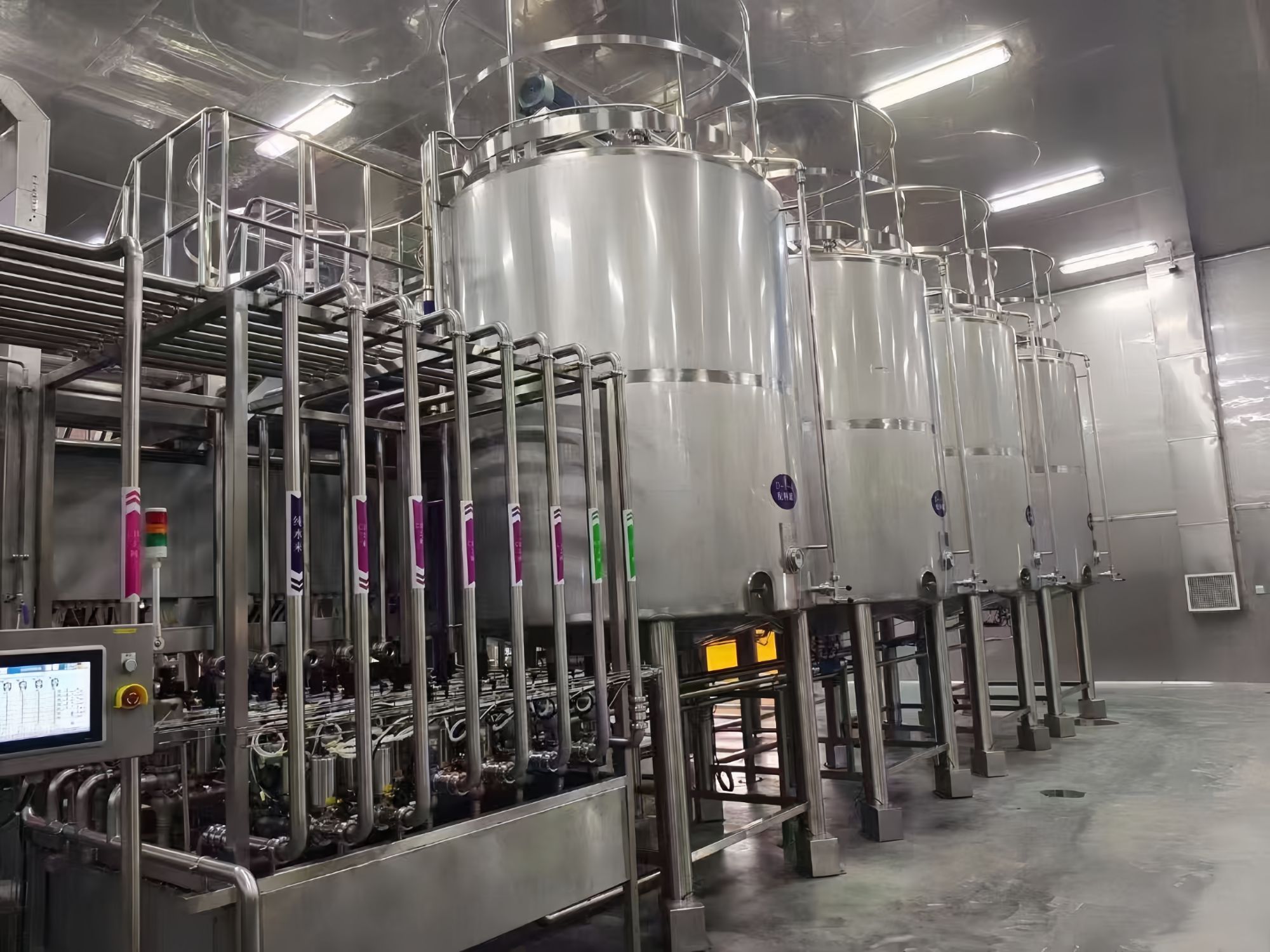
Our canning system is built for real-world production lines where no two runs are exactly alike. Whether you're switching from a slim 250ml can to a taller 500ml format, or moving between a standard soda and a thick smoothie recipe, the changeover is remarkably straightforward. Quick-adjust guides and tool-free parts make size transitions a matter of minutes, not hours, while the recipe management system lets you store and recall precise settings for fill volumes, carbonation levels, and sealing parameters at the touch of a button. That means less downtime and more consistent output across your entire product range.
The real advantage is how the system handles the little nuances that trip up less adaptable machines. Picture a craft beverage maker running a lightly carbonated kombucha one day and a highly carbonated sparkling water the next. Instead of fussy manual calibrations, the line automatically adapts fill speeds, nozzle height, and pressure profiles to match each recipe's characteristics. Even delicate products prone to foaming or splashing are handled gently, cutting back on product waste and keeping your fill accuracy within tight tolerances. This level of control lets you experiment with new recipes or limited-edition runs without risking your line's efficiency.
Beyond just size and recipe changes, the equipment is designed to accommodate a mix of packaging materials—aluminum, tinplate, even slim-line designs—without requiring a full mechanical overhaul. Operators can load a new program, swap out a few lightweight change parts, and be back in production before most morning shifts take their first break. This flexibility means you're never locked into a single can format or product profile, giving you the freedom to chase market trends, fulfill custom orders, or simply optimize your packaging costs as supplier options shift.
Automation Level That Reduces Manual Touchpoints
The right level of automation isn't about replacing every human action—it's about strategically removing the steps where people tend to slow down, make errors, or lose focus. When we talk about reducing manual touchpoints, we're really describing an approach that maps out the entire workflow and asks: "Where does human intervention add genuine value, and where does it just create friction?" By answering that honestly, you end up with a system that handles the predictable, repetitive tasks, while alerting people only when their judgment matters. That shift doesn't just save time; it frees up mental space for higher-level problem-solving.
One overlooked aspect is how over-automation can backfire. Strip away too many touchpoints and you risk losing the contextual awareness that comes from hands-on involvement. The goal should be a balanced layer—automation that hums in the background, catching the routine stuff, but surfaces exceptions gracefully. For instance, an order processing pipeline might auto-validate addresses and payment, then pause only when a shipment falls outside normal parameters. That single, well-placed touchpoint keeps the team in control without bogging them down.
The real test is whether the remaining manual steps feel intuitive rather than interruptive. When automation is done right, the few human interactions that remain are crystal clear in their purpose—review this, approve that, resolve only the unusual. It turns day-to-day work into a rhythm of high-trust tasks, where people aren't babysitting a system but collaborating with it.
Quality Control Built Into Every Stage
Our approach weaves quality assurance directly into the fabric of production, rather than treating it as a final checkpoint. From raw material selection to the last finishing touch, every step is monitored by experienced specialists who understand that consistency comes from proactive oversight, not reactive fixes.
Real-time data collection and automated checkpoints flag deviations the moment they occur, allowing teams to make micro-adjustments on the fly. This tight feedback loop means potential issues are resolved before they can compound, preserving both the integrity of the product and the rhythm of the workflow.
We also maintain a living quality playbook, updated continuously with insights drawn from every completed run. This isn’t a static document filed away for audits—it’s a dynamic tool that empowers every operator to take ownership of excellence, ensuring that each cycle is smarter than the last.
Energy Efficiency Without Sacrificing Output
Modern manufacturing often frames energy use and high throughput as opposing forces, but that outdated view is being dismantled by smarter engineering. Advances in drive systems, thermal recovery loops, and adaptive process controls now allow facilities to sustain peak production rates while significantly cutting electricity and fuel consumption. The key lies in treating energy not as a fixed overhead, but as a variable that can be optimized in parallel with output—tweaking parameters like motor speeds, heating curves, and idle-state management to shave consumption without altering cycle times.
Practical examples span industries: in injection molding, all-electric presses combine regenerative braking and tighter temperature bands to use 30-50% less energy than hydraulic equivalents, all while matching or exceeding their output per hour. In data centers, liquid cooling and workload orchestrators keep server utilization high without triggering wasteful overcooling, proving that computational throughput need not track linearly with power draw. Even in heavy sectors like steel, scrap preheating and oxy-fuel boosters are trimming gas use per ton while keeping furnaces at capacity.
The real shift is cultural—moving from a mindset of brute-force scaling to one of finesse. Teams that audit their energy signature alongside production metrics often find that output plateaus were never an energy ceiling, but a design blind spot. By mapping consumption to actual value-added steps, they unlock reserves invisible on a utility bill, ensuring that efficiency and output reinforce each other rather than trade off.
After-Sales Support That Minimizes Downtime
When equipment issues arise, every minute of inactivity chips away at your bottom line. Our support framework is built to respond with precision—not just quickly, but with an understanding of your specific operational rhythms. We prioritize direct access to engineers who know your setup, bypassing generic triage scripts and getting you back online with minimal disruption.
We don’t wait for a breakdown to start solving problems. Continuous monitoring and proactive diagnostics catch anomalies before they escalate into full-blown failures. Remote troubleshooting capabilities often resolve concerns without an on-site visit, while a strategically located spare parts network ensures that when physical repairs are unavoidable, the necessary components are already within reach.
Clear communication is the unsung hero of downtime reduction. From the moment you reach out, you’ll receive consistent updates and a transparent timeline, eliminating the anxiety of the unknown. Combined with flexible service agreements that adapt to your maintenance windows, we make certain that support bends to your schedule—not the other way around.
FAQ
It's all about their ability to deliver a turnkey solution that covers everything from syrup mixing and carbonation to filling, capping, and labeling. The best ones have a deep understanding of the beverage industry's unique demands, offer flexible equipment configurations, and provide engineering support that goes beyond just selling machines.
Extremely important. Energy drink formulas can be sticky, highly carbonated, or include sensitive ingredients like taurine and caffeine, so the equipment must be tailored to handle these specifics. A great manufacturer will adapt their line to your exact product requirements, site layout, and future expansion plans rather than offering a one-size-fits-all setup.
It’s a game changer. Every component that touches the beverage must be made from food-grade stainless steel to prevent contamination and withstand the corrosive nature of acidic energy drinks. High-quality seals, valves, and quick-connect fittings reduce downtime and ensure a longer lifespan for the whole line.
Even the best machinery needs regular maintenance and occasional troubleshooting. A dependable manufacturer provides prompt on-site or remote technical support, readily available spare parts, and thorough operator training. This partnership can make or break your production uptime and overall profitability.
Look for ISO and CE certifications as a baseline, which indicate the manufacturer adheres to international quality and safety standards. For food-grade machinery, also check for compliance with FDA or local food safety regulations. These credentials are not just paperwork—they reflect a commitment to rigorous engineering and hygiene design.
Absolutely. A realistic and clearly communicated delivery schedule helps you plan your facility setup and market launch. Be wary of promises that seem too short, as they may skip proper factory testing, and excessively long timelines can erode your first-mover advantage. A balanced, transparent timeline with staged installation is ideal.
Automation directly affects output consistency, labor costs, and safety. Advanced lines feature automatic CIP (clean-in-place) systems, real-time monitoring of carbonation levels, and robotic packaging integration. A forward-thinking manufacturer will help you decide on the right level of automation based on your production volume and long-term goals.
Smart design elements often go unnoticed but make a world of difference: easily accessible maintenance points, hygienic sloped surfaces that prevent liquid pooling, quick-changeover parts for different can or bottle sizes, and intuitive HMI touchscreen controls. These features minimize operator error and maximize line efficiency.
Conclusion
When selecting the best energy drink production line maker, one of the most critical considerations is the balance between high-speed output and consistent quality. A line that can't keep up with demand will bottleneck your entire operation, so look for manufacturers that offer robust, scalable solutions with speeds tailored to your projected volume. Equally important is the flexibility to switch between different can sizes and recipes without lengthy changeovers. Modern systems should allow rapid adjustments, enabling you to run slim cans, standard sizes, or even sparkling and still variants on the same line. The right partner will provide modular machinery that grows with your brand, ensuring you never miss a market trend or seasonal spike. Automation also plays a pivotal role—reducing manual touchpoints not only lowers labor costs but minimizes contamination risks and human error. Advanced lines integrate automated cleaning, filling, and capping stations that communicate seamlessly, keeping your operation lean and responsive.
Beyond production efficiency, a top-tier maker embeds quality control at every stage, from syrup batching to final packaging. In-line sensors for fill levels, carbonation, and seal integrity catch defects instantly, safeguarding your product's reputation. Energy efficiency is another non-negotiable—machines that consume less power and water without sacrificing throughput directly improve your bottom line and sustainability metrics. Finally, comprehensive after-sales support separates exceptional partners from the rest. Prioritize suppliers who offer rapid remote diagnostics, readily available spare parts, and proactive maintenance programs. Downtime in beverage production is prohibitively expensive, so a maker with a proven service network and training resources will keep your line running at peak performance. Ultimately, the best energy drink production line maker delivers a seamless blend of speed, adaptability, precision, and reliability, empowering you to conquer the competitive beverage landscape with confidence.
Contact Us
Contact Person: Laura
Email: [email protected]
Tel/WhatsApp: +86 13957758832
Website: https://www.intopmachinery.com