

Artificial Flowers Factory Unveils How Lifelike Blooms Are Made
2026-10-23
Step inside an artificial flowers factory and watch lifelike blooms come to life. From hand-poured petals to color-matched stems, every detail is engineered to mimic nature's finest work—no wilting required. PHLEEYA invites you to discover the secrets behind the realism.
Why the Best Molds Start With a Real Flower
There's a reason experienced mold makers keep coming back to real flowers. A fresh bloom carries a level of detail that no hand-carved model can match—tiny veins, uneven edges, the slight curve of a petal mid-wilt. Those imperfections become the soul of the finished mold.
When you pour silicone over a real flower, it picks up the true thickness and spacing between petals. The result is a mold that feels organic, not manufactured. Each cast pulls out shapes that seem to breathe, because they came from something that actually grew.
Using a real flower also means every mold is one of a kind. No two blooms are identical, so the molds inherit that variety. That unpredictability is what makes the final pieces feel collected rather than mass-produced.
Mixing That First Coat to Kill the Plastic Look
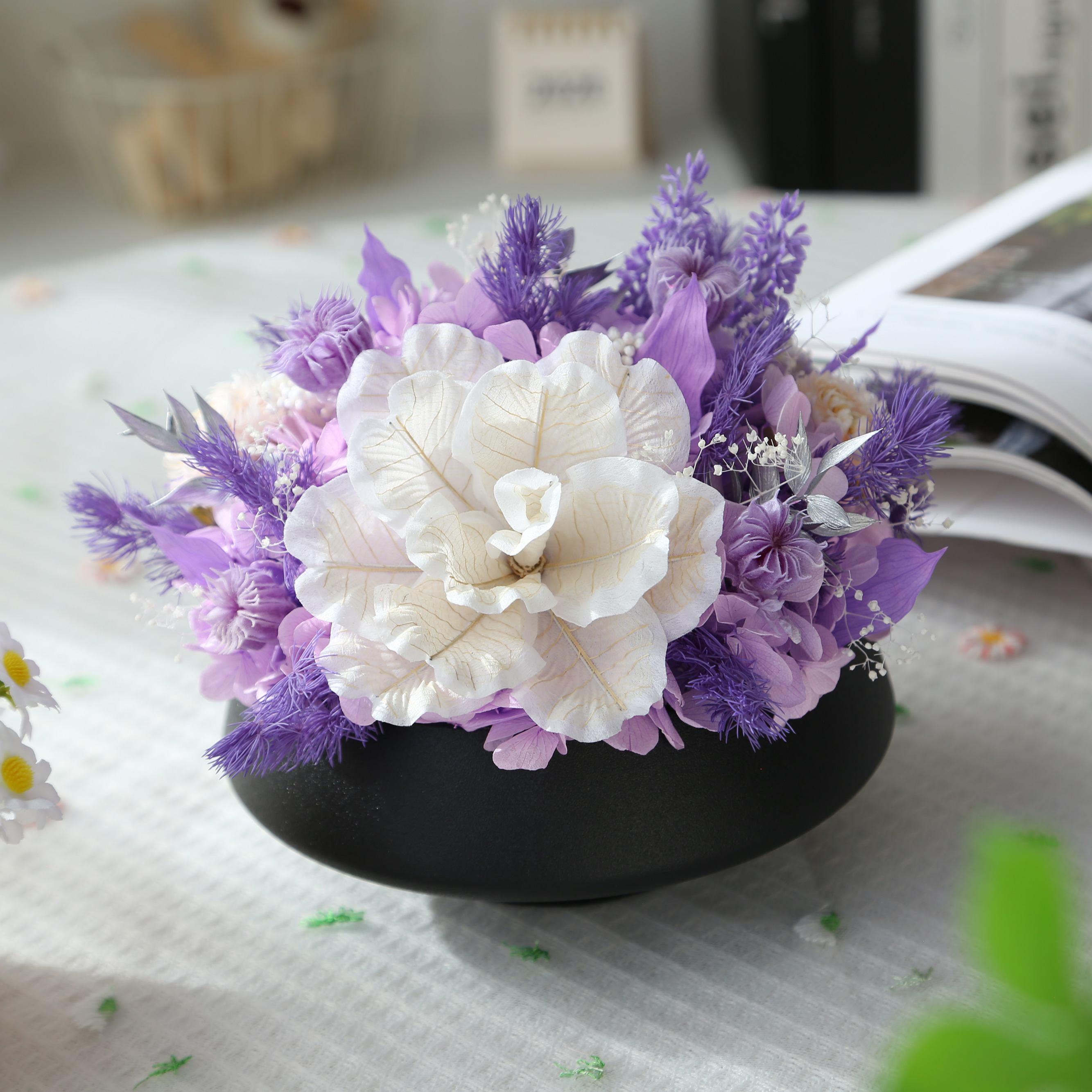
The quickest way to make a plastic surface look even more like plastic is to slap on a thick, glossy coat straight from the can. That first layer needs to be broken up a bit. I usually mix in about ten to fifteen percent of a compatible primer or adhesion promoter directly into the first coat, then stir it just enough to leave faint streaks instead of a perfectly uniform blend. Those slight inconsistencies scatter light differently and start killing that too-smooth, molded sheen right away.
Apply it with an older brush and use a crosshatch motion, then resist the urge to go back and smooth everything out. You want a little tooth left behind, not a glassy film. Once it dries, run a fingertip over the surface. If it feels faintly gritty or drags just a touch, you’ve got the right base. The next coat will sit on top without sliding around, and the final finish will read as painted wood or metal rather than raw plastic.
The Art of Painting a Leaf Without Repeating It
No two leaves settle the same way on a branch, and the moment you try to paint one from memory, it becomes a ghost of every leaf you have seen before. Start by placing the stem where it wants to lean, not where your composition expects it. Let the first wash of green run unevenly, thinning near the edge where light cuts through, gathering into a darker seam along the vein. That small refusal of symmetry is what keeps the shape alive.
Instead of adding detail, take something away. Drag a dry brush through the wet pigment and watch the paper show through like a tear in the surface. The torn edge becomes the leaf's bite mark, the place where wind or insect interrupted the outline. If you try to copy that tear on the next leaf, it will look rehearsed. So change the angle of your wrist, dip into a cooler green, and let the second leaf tear in a different direction. The repetition you avoid is not of the leaf itself, but of your own hand's habit.
Work until the paper begins to resist, then stop before the leaves become a pattern. A painted leaf should feel like a pause in someone's looking, not a stamp pressed down for decoration. The next time you return to it, wad a scrap of paper and blot out a section you thought was finished. What remains will have the unfinished quality of a leaf turning in the air, familiar enough to recognize, singular enough that you could never paint it twice.
How a Stem Gets Its Weight, Bend, and Slight Crook
A stem rarely grows straight by default. Its final weight comes from the slow accumulation of wood and the tug of its own leaves, while a bend often starts with a young shoot reaching sideways for light and then stiffening in that position. Once the cambium adds new layers on one side, the curve becomes permanent.
Slight crooks are more local. They can appear where a node pauses its elongation, where an old leaf scar interrupts the flow of auxin, or where a passing wind load pushed the stem just enough to leave a small kink before the tissues hardened. Gravity also plays a quiet role: if a stem is tilted, starch-heavy cells settle and signal the lower side to grow a little faster, straightening the tip but leaving a gentle wave lower down.
Water availability and seasonal growth spurts add the final signature. A dry week may produce a narrow ring on one side, while a wet week swells the other, creating a faint ripple. Over time, these small asymmetries compound, giving the stem its characteristic weight and the slight crook that tells the story of its environment.
Baking Petals Until They Forget They Were Flat
The first time I slid a tray of pressed pansies into the oven, the kitchen smelled like honey and old paper. Between two sheets of parchment, each petal had been flattened for weeks in a heavy book, drained of its curve and shadow. Heat is supposed to preserve, but here it does something stranger: it coaxes the bloom back into a memory of itself. The edges lift first, then the centers, until they hold air like tiny lungs.
You learn quickly that not every flower agrees with the process. Thick, waxy petals from orchids turn translucent and brittle; delicate sweet pea petals crisp into stained-glass shards. The ones that work best are unassuming—violas, rose geraniums, calendula—flowers that have already lived through a few hard mornings. Bake them low and slow, and their flatness becomes a choice they unmake.
What comes out of the oven isn’t a decoration. It’s a small argument against permanence. A petal that forgot it was flat has a different kind of patience, one that invites you to touch it just to prove it’s real.
The Last Touch That Makes a Fake Bloom Feel Alive
That final brush of matte powder across the highest ridge of a silk petal does more than soften an artificial shine. It breaks the uniform surface just enough to catch light the way a living bloom does at mid-morning, with tiny shifts in tone where the fabric bends. Without this, even the most carefully dyed material still reads as manufactured. The last touch is rarely loud; it whispers texture into a surface that has none.
The true last touch often isn't visible at first glance. It lives in a slight bend of the wire stem, a leaf turned just shy of symmetrical, or a single dewdrop bead placed off-center. These small imperfections pull the eye the way nature does, giving the arrangement a quiet breath instead of a stiff pose. A fake bloom feels alive only when it stops trying to be perfect.
FAQ
It starts with fabric or poly-silk that gets die-cut into petal shapes. Workers then hand-paint veins and gradient tones, often using three or four shades per petal to mimic natural color shifts. A gentle heat press adds subtle curling so the edges don't lie flat.
Each stem is built around a thin wire core that's wrapped in textured paper or plastic. The wire is flexible enough to hold nearly any pose but stiff enough not to droop under the flower head.
Many steps are automated, but the final assembly is still largely done by hand. Workers layer petals one by one around a central stamen, adjusting the angle and spacing so no two flowers look identical.
Leaves are often injection-molded from a soft PVC blend, then coated with a fine flocking powder for fuzzy varieties or a light silicone glaze for glossy species. This gives them the right texture and sheen.
We use an airbrush technique with diluted dyes. After the base color dries, artists mist a lighter or deeper tone toward the center or edges, then seal it with a matte finish to keep the gradient from rubbing off.
Yes, if they're rated for UV exposure. We add stabilizers to the pigments and use weather-resistant plastics for stems and leaves so they won't fade or crack after a season of sun and rain.
It's the tiny imperfections. Real petals have uneven veins, slight bruises, or color irregularities. Reproducing those controlled flaws without making the flower look damaged takes the most practice and patience.
Conclusion
At first glance, the factory floor looks less like a production line and more like a botanical studio. Every artificial bloom begins with a real flower, carefully selected and cast to capture the tiny asymmetries that machines alone can’t invent. That silicone mold becomes the blueprint for dozens of petals, each one later brushed with a first coat mixed to dull the telltale sheen of plastic. Workers compare swatches under daylight, adjusting pigment until the surface reads as soft and matte, closer to living tissue than synthetic film.
Leaves receive their own slow, deliberate treatment: no two are painted the same, with veins and mottling added by hand so a stem never looks stamped out. Below the bloom, wire and weighted tape give each stem its heft and a slight, off-center crook, mimicking the way a real branch leans toward light. Petals are then baked at low heat, letting them curl and settle until they forget their flat origins. The final touch is almost invisible—a faint gradient at the center, a dusting of natural-looking speckles, or a barely-there fragrance infusion—just enough to make the eye hesitate and the hand reach out.
Contact Us
Contact Person: Mr. Luo
Email: [email protected]
Tel/WhatsApp: 86 18100895505
Website: https://www.feiliyaflowers.com/en/